


Two American space companies have signed an agreement to test a compact nuclear reactor designed to power satellites on long-duration missions. Texas-based Space Ocean Corporation and Space Nuclear Power Corporation, also known as SpaceNukes, will collaborate on integrating and testing the reactor technology in orbit.
The partnership, formalized through a Letter of Intent (LOI), aims to provide a reliable power source for spacecraft traveling far from the Sun, where solar panels are less effective. This development could support future lunar and planetary operations by enabling more complex and extended missions.
Key Takeaways
- Space Ocean Corporation and Space Nuclear Power Corporation (SpaceNukes) have signed a Letter of Intent (LOI) to collaborate.
- The plan involves testing a 10-kilowatt nuclear microreactor on Space Ocean's ALV-N satellite.
- The reactor technology is based on the KRUSTY fission reactor developed by Los Alamos National Laboratory for NASA.
- If successful, the technology could power long-term missions to the Moon and other planets, with a first demonstration flight planned for 2027.
A Strategic Partnership for Space Energy
Space Ocean Corporation, a company specializing in in-orbit fluid logistics, has partnered with SpaceNukes to explore new power solutions for its satellite fleet. The non-binding LOI outlines a plan to integrate a 10-kilowatt (kWe) nuclear reactor from SpaceNukes onto one of Space Ocean's satellites.
The primary goal is to test the reactor's performance in a real-world space environment. Success in this demonstration could lead to SpaceNukes becoming a primary supplier of nuclear power units for Space Ocean's future missions, which are focused on building infrastructure for lunar and interplanetary travel.
Paul S. Mamakos, the CEO of Space Ocean Corp, emphasized the critical need for reliable energy sources beyond Earth's orbit. According to Mamakos, consistent power is one of the most significant challenges for missions operating in deep space.
Why Nuclear Power in Space?
Most satellites today rely on solar panels to generate electricity. However, this method becomes increasingly inefficient as a spacecraft moves farther from the Sun. For missions to the outer planets or for operations in shadowed regions of the Moon, nuclear fission offers a continuous and powerful energy source, independent of sunlight.
The KRUSTY-Based Reactor Technology
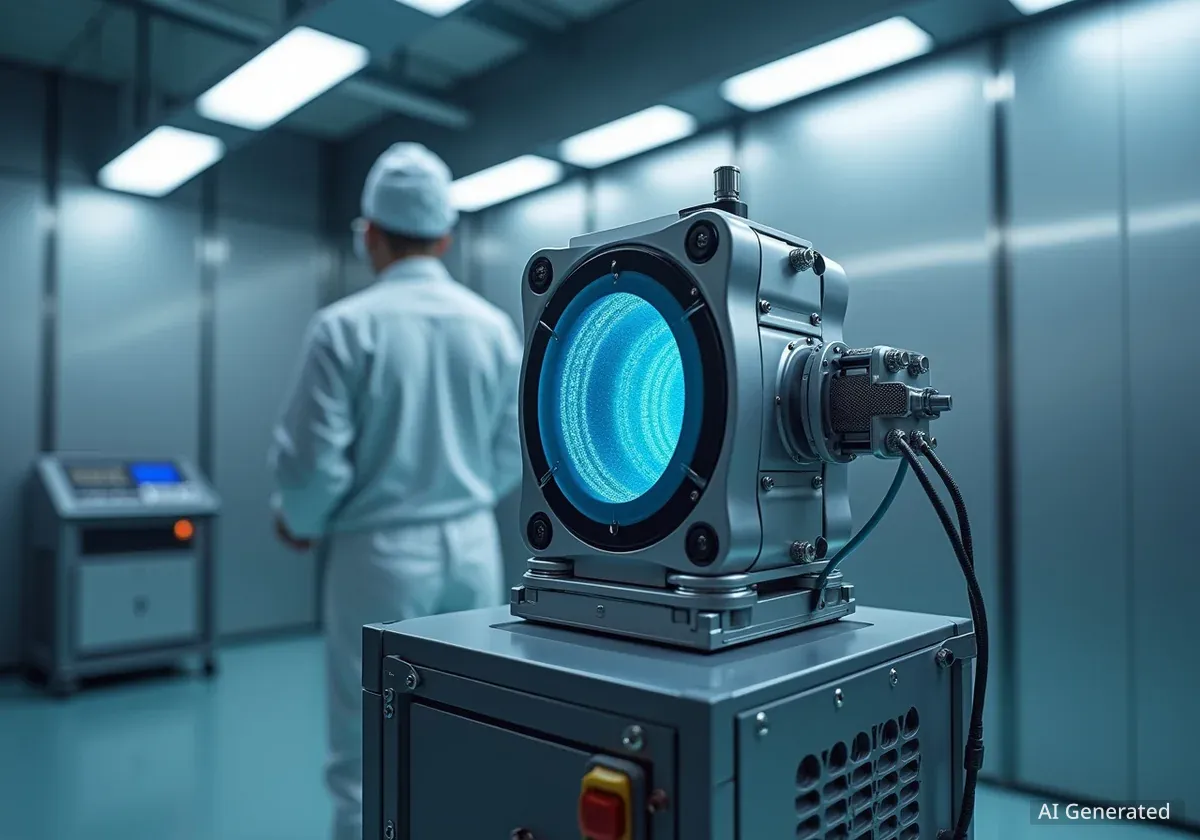
The technology at the heart of this partnership is a compact fission reactor based on a proven design. SpaceNukes states its first-generation reactors are identical to the Kilopower Reactor Using Stirling Technology (KRUSTY), a project developed by the Los Alamos National Laboratory (LANL) for NASA.
The KRUSTY project, which began in 2015, was designed to create a scalable fission power system for space exploration. During ground tests, the reactor successfully operated at a thermal power output of over four kilowatts while maintaining a temperature of 800°C (1,472°F).
Reactor Specifications
- Power Output: The Gen1 reactors can be scaled from 1 to 20 kWe. The unit for this mission is a 10-kWe variant.
- Weight: The 10-kWe reactor, including its Highly Enriched Uranium (HEU) core, weighs approximately 1,300 kg (2,866 pounds).
- Lifespan: The reactors are designed to operate for decades without requiring external control commands, making them ideal for long-duration, autonomous missions.
Because the SpaceNukes reactor mirrors the tested KRUSTY design, the company asserts that extensive new ground testing is not required, potentially accelerating its readiness for spaceflight.
Space Ocean's Vision for In-Orbit Services
Space Ocean's long-term strategy involves creating a robust infrastructure for in-orbit services, particularly the refueling and servicing of satellites. The company aims to provide various propellants for satellites weighing up to 5,000 kilograms (11,023 pounds), effectively extending their operational lifetimes and reducing the need for frequent replacement launches.
Integrating a powerful nuclear reactor aligns with this vision. A reliable onboard power source would enable Space Ocean's service vehicles to perform complex robotic operations and rendezvous maneuvers with client satellites efficiently.
"Space Ocean’s vision aligns with our belief that small, scalable, and extremely reliable nuclear power is essential for long-duration missions," said Andrew Phelps, CEO of Space Nuclear Power Corporation. "Together, we’re laying the groundwork for a future where spacecraft can generate, manage and distribute energy far beyond Earth orbit."
The company has scheduled its first demonstration mission for 2027, which will be a key step in validating its logistics and delivery systems.
Joint Objectives and the Path Forward
The Letter of Intent between the two companies establishes several mutual objectives beyond the initial reactor test. The collaboration will explore how to best integrate fluid delivery systems with nuclear power modules, creating a self-sufficient platform for advanced in-space services.
A significant goal is to collect operational data from the mission to support a Technology Readiness Level 9 (TR-9) certification. TR-9 is the highest level of technology maturity, signifying that a system has been proven through successful mission operations.
To facilitate these goals, Space Ocean and SpaceNukes will form a joint working group. This group will be responsible for identifying additional commercial and infrastructure opportunities that can leverage their combined expertise in logistics and nuclear power, paving the way for a new era of sustainable space exploration.