
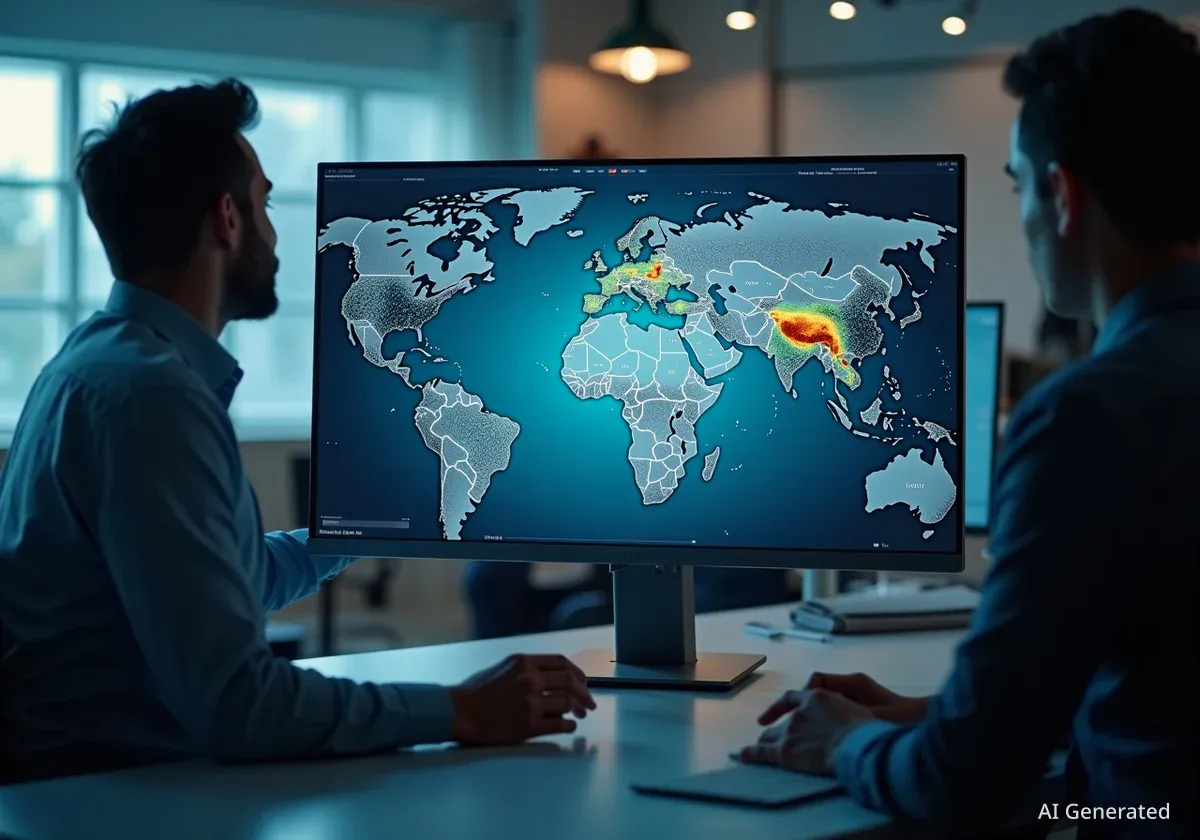


The United Nations is leveraging private sector partnerships to provide advanced disaster preparedness tools to developing nations. A project led by the UN's space affairs office is creating virtual models, known as digital twins, of vulnerable island states using satellite data and artificial intelligence.
These detailed 3D models allow countries like Tonga to simulate natural disasters such as tsunamis and floods, helping them plan emergency responses and protect their populations. The initiative relies on donated data and services from technology companies, overcoming the UN's budget limitations.
Key Takeaways
- The UN Office for Outer Space Affairs (UNOOSA) is using digital twins for disaster management in vulnerable nations.
- A pilot project created a detailed 3D model of Tonga to simulate tsunamis and sea-level rise.
- The project was completed at no cost to Tonga, relying on partnerships with companies like SpaceData Inc., Airbus, and Maxar.
- Future plans include expanding the program to an additional 100 islands if funding is approved.
A New Approach to Disaster Management
A United Nations program is changing how small island nations prepare for natural disasters. The UN Platform for Space-based Information for Disaster Management and Emergency Response, or UN-SPIDER, is spearheading an initiative to create digital twins for at-risk countries.
A digital twin is a highly detailed virtual replica of a physical location. By combining high-resolution satellite imagery with artificial intelligence, these models can be used to simulate potential disasters. This allows governments to visualize the impact of events like floods or tsunamis and develop effective response plans.
Lóránt Czárán, head of UN-SPIDER, explained the program's focus. "It was the most attractive and sexy U.N. project that you could think of, matching space technology with disaster management," he said. The program, established in 2006 under UNOOSA, aims to make space technology accessible for global challenges.
The Tonga Pilot Project
The first major test of this initiative focused on the island nation of Tonga. The country, a collection of over 170 South Pacific islands, faces constant threats from earthquakes, tsunamis, and rising sea levels.
Why Tonga Was Chosen
Tonga has a population of just over 100,000 people and a surface area of approximately 290 square miles. Much of the nation is within two meters of sea level, making it extremely vulnerable. A 2022 volcanic eruption and tsunami caused damages exceeding $182 million, according to a World Bank report.
"When visiting the country, we realized that they have very little in their hands to be prepared against the almost daily earthquakes that happen, the tsunami risks, the sea level rise risk," Czárán shared. An initial mission in 2011 failed due to a lack of resources.
However, a renewed effort began in December 2023 following a regional workshop in Fiji. The UN-SPIDER team discovered that Tonga had skilled remote sensing experts but lacked one critical element. "All they lack is access to data," Czárán said.
The goal was to create a digital twin of Tonga to showcase at the August 2024 Pacific Islands Forum. The project was completed in under four months, from January to April 2024, entirely through voluntary contributions.
The Power of Public-Private Partnerships
The success of the Tonga project hinged on collaboration with private technology firms. With its own budget constraints, UNOOSA depends on these partnerships to acquire data and expertise.
"For us at UNOOSA, it’s even more important to have a stronger relationship with the private sector ... if they are willing to provide resources, we should be happy to take them."
- Lóránt Czárán, Head of UN-SPIDER
For the Tonga model, several companies played crucial roles:
- SpaceData Inc.: A Japanese startup that used its AI platform to fuse the data and generate the 3D digital twin and flood simulations.
- Airbus: Provided high-resolution satellite imagery and the digital elevation model as a donation.
- Maxar Technologies Inc.: Also supplied essential satellite data for the project.
These collaborations are formalized through Memorandums of Understanding (MOUs) and U.N. system contracts, which streamline the process of acquiring data. Ciro Daragiati Farinelli of Airbus noted the alignment between the company's values and UNOOSA's mission, citing a 2019 MOU to share radar data for disaster response.
The Technology Behind the Model
SpaceData Inc., founded in 2017, was instrumental in the project. The company specializes in using AI to automatically generate digital twins from space-based data. Atsushi Takata, an executive at SpaceData, explained that while AI can generate a basic model in a day or two, creating a high-precision version requires human oversight.
Building a Digital Twin
According to SpaceData, the process begins with AI-driven generation using satellite imagery. This initial model is fast but not perfectly accurate. Engineers then spend time making manual modifications to create a high-resolution, reliable tool. For a project like Tonga's, this can take at least a month.
Takata said the company provided its services for free because its vision is to "do something very beneficial for life on Earth." He added, "We think the U.N.’s activity is very important, especially to empower the people who don’t have access to space or use space capability."
Expanding the Initiative's Reach
Following the success in Tonga, digital twins were also created for Ghana and the island of Tobago. The results from the Tonga project were presented at the Pacific Islands Forum, demonstrating the value of Earth observation technology to regional leaders.
The use of digital twins for infrastructure and disaster planning is not new. For example, Tyndall Air Force Base in the U.S. developed a digital twin with Booz Allen and Unity to manage its facilities after suffering $5 billion in damage from Hurricane Michael in 2018. The UNOOSA project, however, is notable for applying this high-end technology in resource-limited environments.
Looking ahead, Czárán's office has submitted a proposal to expand the program significantly. The plan aims to generate digital twins for an additional 100 islands over the next year. If approved and funded, this would mark a major step in using space technology to build resilience against climate change and natural disasters worldwide.
"To me, industry would be key going forward, especially in outer space. There’s no way we can work without them," Czárán emphasized, highlighting the critical role of private companies in achieving the UN's humanitarian goals.