
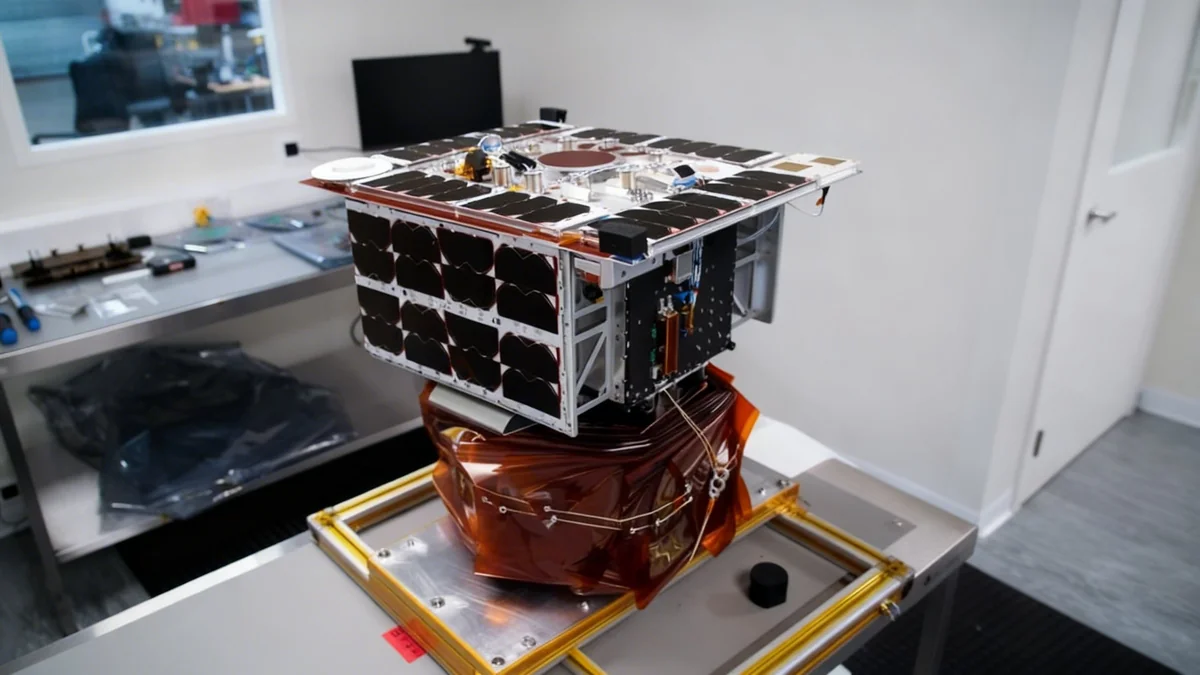


A British technology company is pioneering a new frontier in manufacturing by developing orbital factories to produce advanced materials. Space Forge, based in Cardiff, aims to leverage the unique conditions of space to create exceptionally pure semiconductor crystals, a move that could significantly enhance the performance of technologies ranging from AI data centers to defense systems.
The company achieved a critical milestone in June 2025 with the successful launch of its ForgeStar-1 satellite. Once in orbit, the microwave-sized prototype factory demonstrated its ability to generate plasma, a key process for fabricating materials in microgravity. This success paves the way for commercial production, which the company hopes to begin within two years.
Key Takeaways
- UK-based Space Forge is developing orbital factories to manufacture high-purity semiconductor materials.
- Its ForgeStar-1 satellite, launched in June 2025, successfully generated plasma, a vital step for in-space manufacturing.
- The company aims to have a commercial production system in orbit within two years, capable of producing materials for 10 million semiconductors per mission.
- A reusable heat shield named 'Pridwen' is being developed to return the factories and their valuable cargo safely to Earth.
- Key challenges include regulatory hurdles, uncertain taxation laws for space-made goods, and the logistics of reliable return from orbit.
The Case for Manufacturing in Orbit
The global demand for more powerful and efficient semiconductors is surging, driven by advancements in artificial intelligence, telecommunications, and aerospace. However, manufacturing these components on Earth has physical limitations. Gravity can introduce imperfections into the crystal structures of materials, and terrestrial environments risk contamination.
Space Forge proposes a solution by moving the most critical manufacturing step into orbit. According to CEO and co-founder Joshua Western, the microgravity environment of space allows atoms to arrange themselves more perfectly. He explains that this, combined with the vacuum of space, can lead to the production of "semiconductor crystals that are hundreds, if not thousands, of times higher in purity compared to those that can be produced on the ground."
High-Value Cargo
The materials produced in these orbital factories are projected to be extremely valuable. Existing compounds could be worth tens of millions of dollars per kilogram, while new material combinations, previously only theoretical, could command even higher prices.
These ultra-pure crystals, or "seeds," would be returned to Earth to be used in the final stages of semiconductor production. The result would be chips with significantly improved efficiency and power handling capabilities, essential for next-generation technology.
From Prototype to Commercial Production
The ForgeStar-1 mission, launched from California aboard a SpaceX rocket, served as a crucial proof of concept. The satellite, roughly the size of a microwave oven, proved that its core manufacturing technology could function as designed in the harsh environment of space. The successful generation of plasma at 1,000 degrees Celsius (1,832 Fahrenheit) confirmed the satellite's ability to process materials.
"ForgeStar-1 is about proving the manufacturing tool," Western stated, emphasizing the mission's role as a technological demonstrator.
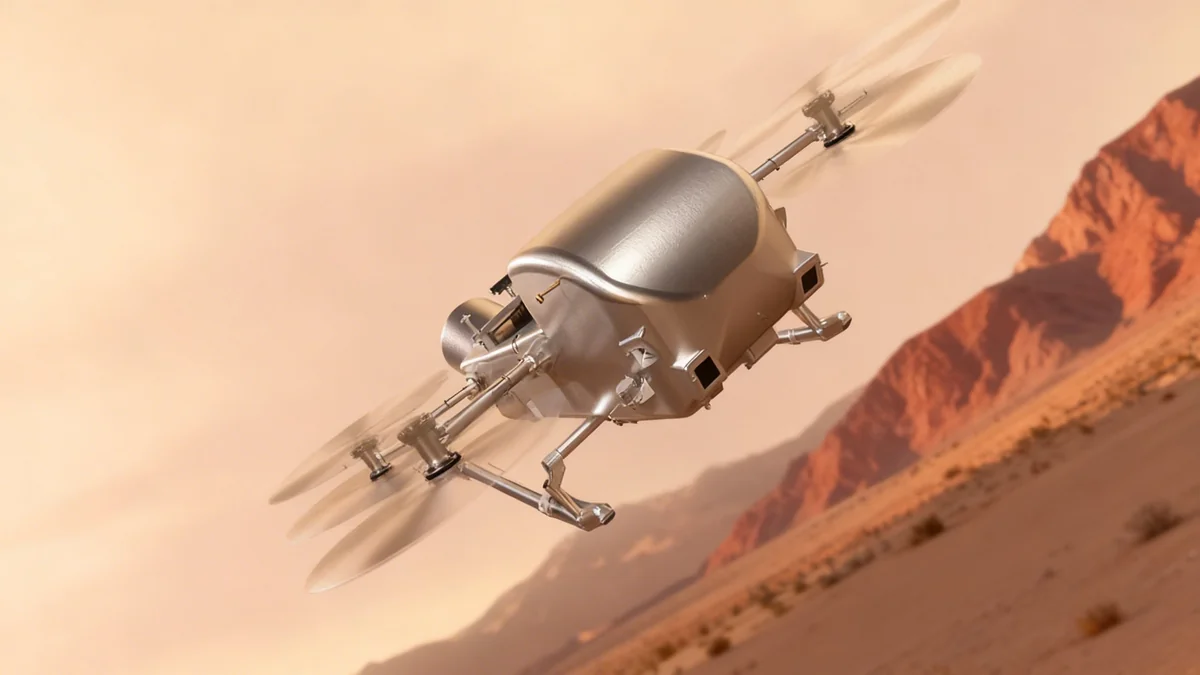
With this milestone achieved, the company is now focused on scaling up its operations. The goal is to launch a commercial system within the next 24 months. These future factories will be larger, weighing around 100 kilograms (220 pounds) and resembling a large washing machine. Each unit is designed to produce enough material for approximately 10 million semiconductors during a mission lasting a few weeks.
The company has already secured significant financial backing, raising $30 million from investors that include the NATO Innovation Fund.
The 'Mary Poppins' Solution for a Fiery Re-entry
One of the most significant challenges for any in-space manufacturing venture is getting the finished product back to Earth safely and affordably. Spacecraft re-entering the atmosphere experience extreme temperatures, requiring robust protection.
The Challenge of Returning from Orbit
While companies like SpaceX have dramatically increased access to space with frequent launches, the availability of return flights remains limited. This bottleneck presents a major obstacle for businesses that need to bring physical goods back from orbit, making reliable and cost-effective re-entry technology a critical area of innovation.
To solve this problem, Space Forge is developing its own reusable return technology. Named Pridwen, after the legendary shield of King Arthur, the system is a deployable heat shield designed to protect the satellite and its precious cargo during its descent.
Western describes the technology with a memorable analogy:
"It is best described as Mary Poppins, but for space. It’s basically a space-grade umbrella that deploys at the end of a mission and it allows us to effectively float back from orbit all the way down to the ground."
This innovative heat shield aims to provide a gentler, more controlled re-entry, allowing the factory and its materials to be recovered and reused. The deployment mechanism was successfully tested in a microgravity environment during a parabolic flight in October 2025, and the next step is to test the full system in space following the conclusion of the ForgeStar-1 mission.
Navigating Earthly Obstacles
While the technical challenges are being addressed, significant hurdles remain on the ground. Western points to regulation as the single biggest obstacle his company has faced. He noted that while the ForgeStar-1 satellite was constructed in just seven weeks, securing the necessary launch licenses was a process that took two and a half years.
Another complex issue is taxation. Since the materials are manufactured in the international territory of space, it is unclear how they should be taxed upon arrival in a specific country.
- Regulatory Delays: Licensing processes can take significantly longer than the manufacturing of the hardware itself.
- Taxation Uncertainty: No legal framework exists for taxing goods produced outside of any national jurisdiction.
- Market Adoption: Potential buyers will need to be convinced of the reliability and consistent delivery of space-made materials before committing.
Despite these challenges, the potential market is enormous. The global semiconductor industry is projected to become a trillion-dollar market by 2027, largely fueled by the boom in AI. Experts believe that cutting-edge applications will drive demand for the kind of high-performance materials Space Forge aims to produce.
If successful, the company could not only revolutionize the semiconductor industry but also establish a new paradigm for specialized manufacturing. As Western hopes, the concept of a "space-made chip" may one day become so common that it no longer seems extraordinary. When that happens, he says, "then I know that we’ve succeeded.”