
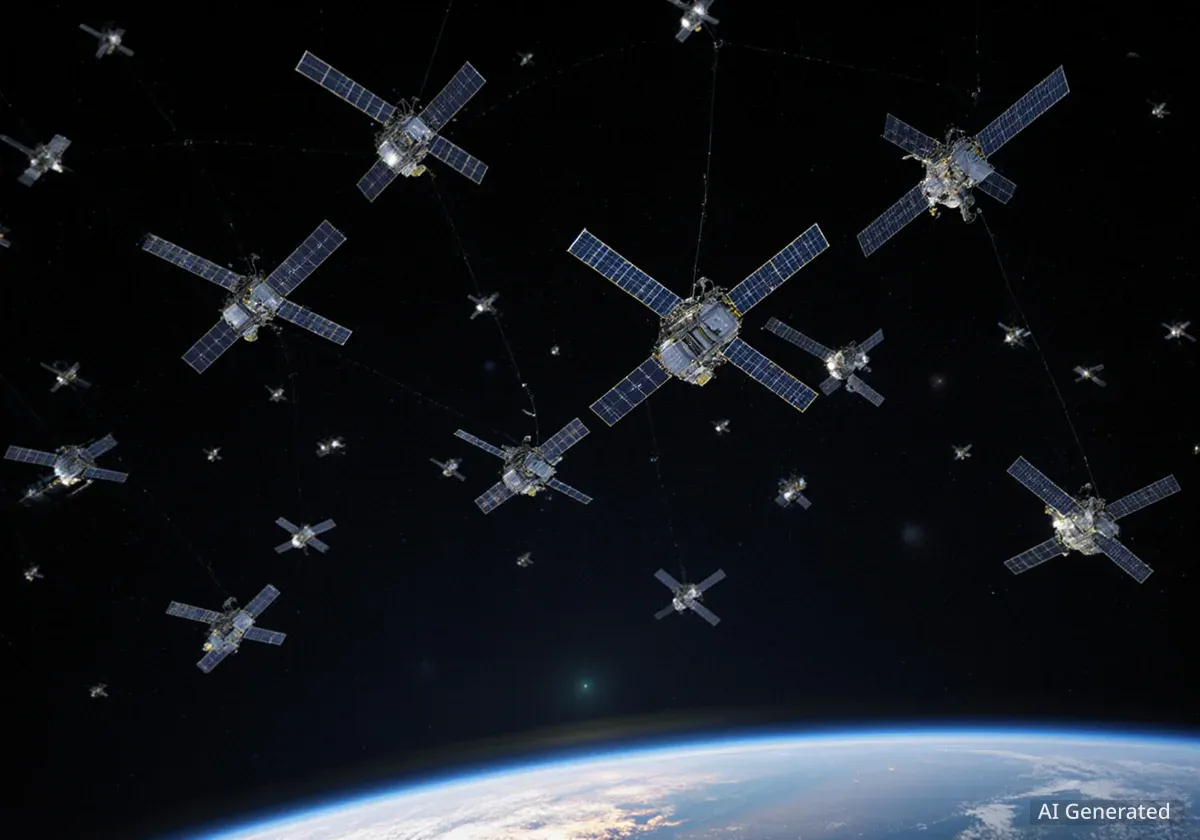


SpaceX has unveiled an ambitious plan to address the surging global demand for artificial intelligence computing by establishing a vast network of data centers in orbit. The company aims to launch a constellation of one million satellites, a move CEO Elon Musk describes as the only viable long-term solution to scale AI infrastructure.
The initiative comes as terrestrial data centers face growing constraints related to energy consumption, land use, and resource availability. Musk projects that space will become the most economically attractive location for AI computation within the next 30 to 36 months.
Key Takeaways
- SpaceX intends to build a satellite constellation of one million units to function as orbital data centers.
- The project aims to add 100 gigawatts of AI computing capacity annually.
- Elon Musk argues that space is the "only way to scale" AI due to Earth's energy and land limitations.
- The plan is a direct response to the explosive growth in demand for AI, which is straining global power grids.
The Growing Strain on Earth's Resources
The global race for AI dominance has triggered an unprecedented construction boom for data centers on Earth. These facilities, essential for training and running AI models, are incredibly resource-intensive. The largest can consume as much electricity as a small city and require millions of gallons of water daily for cooling.
This demand is putting a significant strain on national power grids. In the United States, data centers accounted for approximately 4.4% of the country's total electricity consumption in 2023. Globally, that figure stands at around 1.5%, according to the International Energy Agency, and is projected to rise sharply.
Data Center Growth by the Numbers
- $6.7 Trillion: Estimated investment needed in data centers by 2030 to meet demand, according to McKinsey and Company.
- 1,240: The projected number of data center construction permits filed in the U.S. by the end of 2024, nearly a fourfold increase from 311 in 2010.
- $600 Billion: Expected capital expenditures by Big Tech companies by 2026, largely driven by AI infrastructure.
Communities, particularly in areas like Northern Virginia, are already feeling the pressure. The competition for land and power between new data centers and residential developments is intensifying, leading to concerns about rising electricity costs and resource allocation.
Musk's Vision for an Orbital Solution
Elon Musk proposes moving this entire infrastructure into orbit. The core of his argument is not about reducing the cost of energy but ensuring its availability. He has pointed out that electricity generation outside of China has remained relatively flat, creating a bottleneck for the exponential growth of AI.
"If you look at electrical output outside of China, everywhere outside of China, it's more or less flat," Musk stated during a recent podcast appearance. "If you're putting data centers anywhere except China, where are you going to get your electricity?"
SpaceX's plan involves a massive constellation of satellites, each generating about 100 kilowatts of compute power per ton. The company claims this network would add 100 gigawatts of AI compute capacity to the world annually, a significant figure that could help alleviate the terrestrial bottleneck.
In a company memo, Musk framed the logic in simple terms: "I mean, space is called 'space' for a reason."
Technical and Economic Hurdles
While the vision is grand, it faces considerable skepticism. During an interview on the Dwarkesh Podcast, host Dwarkesh Patel challenged the economic feasibility of the plan. He noted that energy costs typically represent only 10% to 15% of a data center's total operational expenses.
The costs associated with launching, maintaining, and servicing a million satellites in orbit would be astronomical, potentially negating any savings from free solar power. Musk's response, however, shifted the focus from cost savings to the fundamental problem of energy availability, which he sees as the primary limiting factor for AI's future growth.
A Timeline for Space-Based AI
Elon Musk, who is known for setting aggressive timelines, has made a bold prediction about the project's viability.
"You can mark my words. In 36 months, but probably closer to 30 months, the most economically compelling place to put AI will be space," he said. "It will then get ridiculously better to be in space."
SpaceX Begins Assembling the Team
The project is moving beyond the conceptual stage. SpaceX has begun actively recruiting engineers to turn the vision into reality. Michael Nicolls, the company's vice president of Starlink Engineering, recently announced on X that SpaceX is hiring for numerous "critical engineering roles" to develop these space-bound data centers.
One notable job posting is for a "Space Lasers Engineer" based in Redmond, Washington. This suggests that high-speed, laser-based communication will be a critical component of the orbital network, allowing the data centers to communicate with each other and with Earth.
As the world grapples with the energy demands of the AI revolution, SpaceX is betting that the ultimate solution lies not on the ground, but in the vast expanse above it. The success of this ambitious venture could redefine the future of computing and infrastructure.