
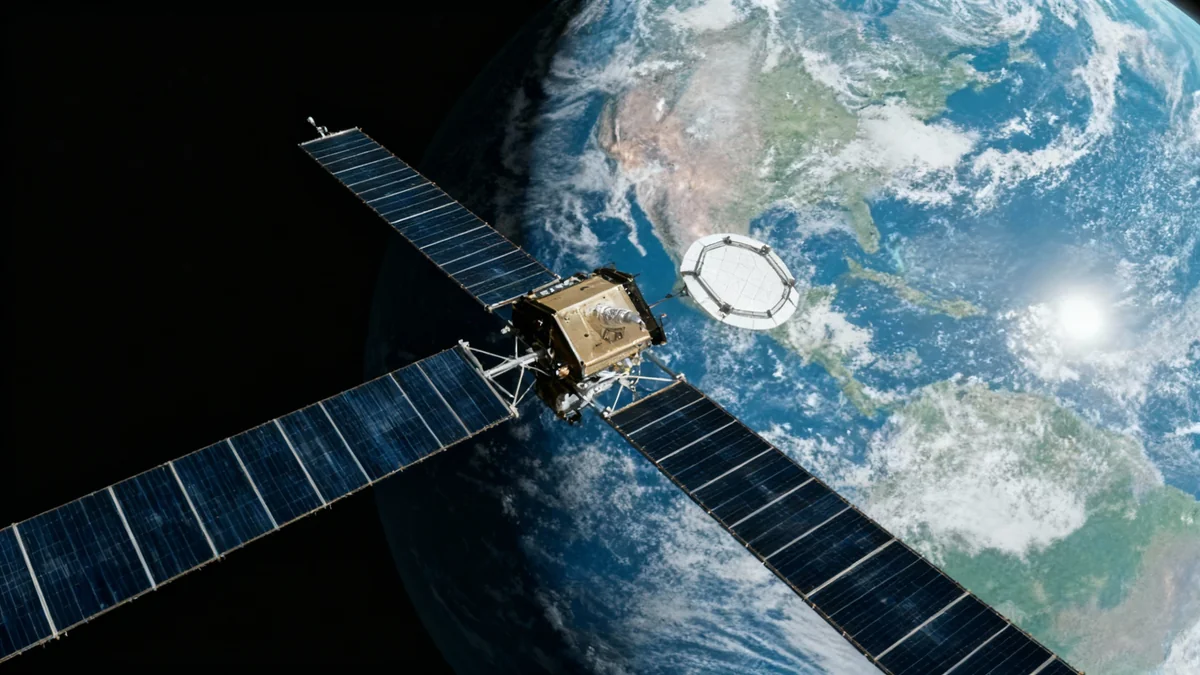


Portal Space Systems has announced the development of a highly maneuverable small satellite named Starburst, with its inaugural mission scheduled for the fourth quarter of 2026. The vehicle is designed to provide unprecedented agility for in-orbit operations, addressing a growing demand for satellites that can rapidly change their position in space.
The first mission, designated Starburst-1, will launch aboard a SpaceX Transporter-18 rideshare flight. It aims to demonstrate key capabilities essential for the next generation of space infrastructure, including complex rendezvous and proximity maneuvers.
Key Takeaways
- Portal Space Systems is developing Starburst, a highly maneuverable small satellite.
- The first launch, Starburst-1, is targeted for Q4 2026 on a SpaceX rideshare mission.
- The satellite will feature one kilometer per second of delta-V for rapid orbital changes.
- Starburst is designed to complement Portal's larger Supernova orbital transfer vehicle, set for a 2027 debut.
- The initial mission will test technologies from partner companies TRL11 and Zenno Astronautics.
Introducing the Starburst Satellite Bus
Portal Space Systems is entering the competitive small satellite market with a vehicle focused on mobility. The company's new satellite, Starburst, is engineered to execute significant orbital changes, a feature that sets it apart from many conventional smallsats.
The satellite bus is designed as an "ESPA-class" vehicle. This designation means it is compatible with the EELV Secondary Payload Adapter, a common standard used to mount multiple smaller satellites onto a single rocket for rideshare missions. This compatibility ensures broad access to launch opportunities, such as SpaceX's popular Transporter program.
The key performance metric for Starburst is its propulsive capability. It is designed to deliver one kilometer per second of delta-V, which is a measure of a spacecraft's ability to change its velocity. This substantial capacity allows the satellite to perform a wide range of maneuvers after reaching its initial orbit.
Inaugural Mission and Objectives
The first flight, Starburst-1, is slated to launch in late 2026. Once in a sun-synchronous orbit, the spacecraft will undergo a year-long mission to validate its systems. During this period, it will perform a series of demanding demonstrations.
These tests will include:
- Rendezvous and Proximity Operations (RPO): The ability to approach other objects in orbit safely and precisely.
- Rapid Orbital Changes: Shifting its altitude or inclination far more aggressively than typical satellites of its size.
- Dynamic Retasking: Quickly changing its mission objectives and maneuvering to new locations in response to new commands.
These capabilities are critical for a variety of emerging applications, from satellite servicing and inspection to national security and debris removal.
Starburst-1 Mission Details
Vehicle: Starburst Satellite Bus
Launch Provider: SpaceX
Mission: Transporter-18
Launch Window: Q4 2026
Planned Orbit: Sun-Synchronous Orbit (SSO)
Mission Duration: 1 year
A Two-Pronged Strategy for In-Space Logistics
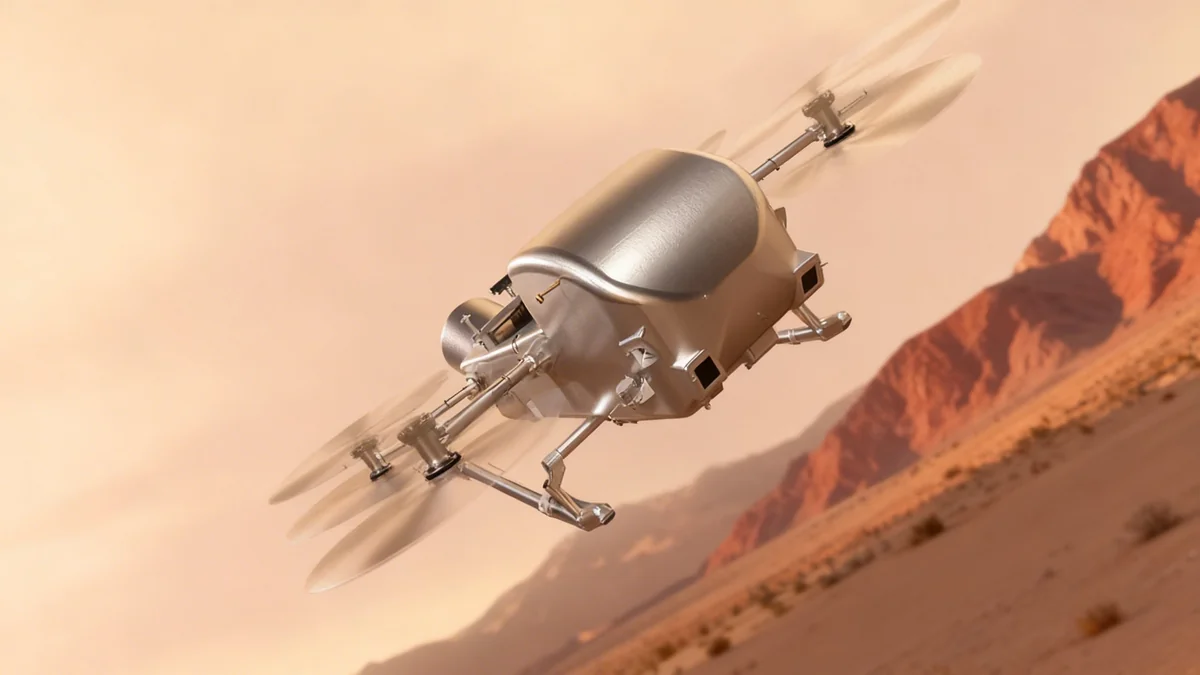
The development of Starburst is a key part of Portal's broader vision for in-space transportation and logistics. The company is simultaneously developing a larger, more powerful vehicle called Supernova, which utilizes solar thermal propulsion.
While Starburst is designed for agility within a specific orbital regime, Supernova is intended for long-haul transfers between different orbits, such as moving payloads from low Earth orbit (LEO) to geostationary orbit (GEO) or beyond.
Supernova: The Heavy-Lift Counterpart
Portal's Supernova vehicle is designed for a different role. It uses solar thermal propulsion to achieve both high thrust (for speed) and high efficiency (for large orbital changes). It acts as an orbital transfer vehicle, or "space tug," capable of moving large satellites across vast distances in space.
There is significant technological overlap between the two programs. Key systems developed for the Supernova vehicle will first be tested and proven on the Starburst-1 mission. This includes the thrusters that will serve as the reaction control system for Supernova but will function as the primary propulsion for Starburst.
Jeff Thornburg, CEO of Portal Space Systems, outlined the company's strategic approach.
"Our strategy is to deliver what customers need now and accelerate what they’ll need next. Starburst gives operators a maneuverable bus that supports proliferated architectures in the orbit that matters to them. Supernova brings the trans-orbital reach."
This incremental approach allows the company to field a useful product quickly while mitigating risks for its more ambitious Supernova program, which is targeting a 2027 debut.
"Flying Starburst-1 in 2026 lets us field capability quickly and advance the shared systems that raise confidence for Supernova’s 2027 debut," Thornburg added.
Technology Demonstrations and Partnerships
The Starburst-1 mission will not only test Portal's own hardware but will also carry payloads for two partner companies, providing them with a valuable flight opportunity.
TRL11, a company specializing in space domain awareness, will provide advanced cameras and edge processing systems. This technology will be used to monitor the health and status of the spacecraft in real-time, providing crucial data during its complex maneuvers.
Zenno Astronautics will fly a demonstrator of its innovative attitude control system. The New Zealand-based company is developing superconducting magnets that can interact with Earth's magnetic field to control a satellite's orientation without using traditional propellants, offering a more efficient and long-lasting solution.
These partnerships highlight a growing trend in the space industry, where companies collaborate to test and mature new technologies in the harsh environment of space.
The Growing Market for Orbital Agility
The development of satellites like Starburst reflects a significant shift in the space industry. For decades, most satellites were placed in a single orbit where they remained for their entire operational life. The ability to move was limited and reserved for large, expensive spacecraft.
Today, with the rise of satellite constellations and the increasing complexity of in-space activities, maneuverability is becoming a critical requirement. Commercial and government operators are seeking agile platforms that can inspect other satellites, avoid debris, reposition to meet changing demand, or service other spacecraft.
Portal's plan to launch Starburst on a rideshare mission underscores the accessibility of space today. Companies no longer need to purchase an entire rocket launch. Instead, they can buy a port on a rocket carrying dozens of other satellites, dramatically lowering the cost of entry and enabling faster innovation cycles. By providing a highly mobile platform, Portal aims to empower a new generation of in-space services and applications.