


Gilmour Space Technologies is planning a return to flight in 2025 after its first orbital launch attempt on July 30 ended seconds after liftoff. Despite the failure of the Eris rocket, the company's CEO, Adam Gilmour, stated that the brief flight provided valuable data and the team remains optimistic about future missions.
Key Takeaways
- Gilmour Space's first Eris rocket launch on July 30 failed moments after clearing the launch pad.
- The company considers the attempt a valuable data-gathering success, with engines firing for 23 seconds.
- Significant regulatory delays, requiring 24 separate permits, kept the rocket at the coastal launch site for 18 months.
- Gilmour Space is well-funded and plans its next launch attempt for 2025, anticipating a smoother regulatory process.
Details of the Eris Rocket's First Launch
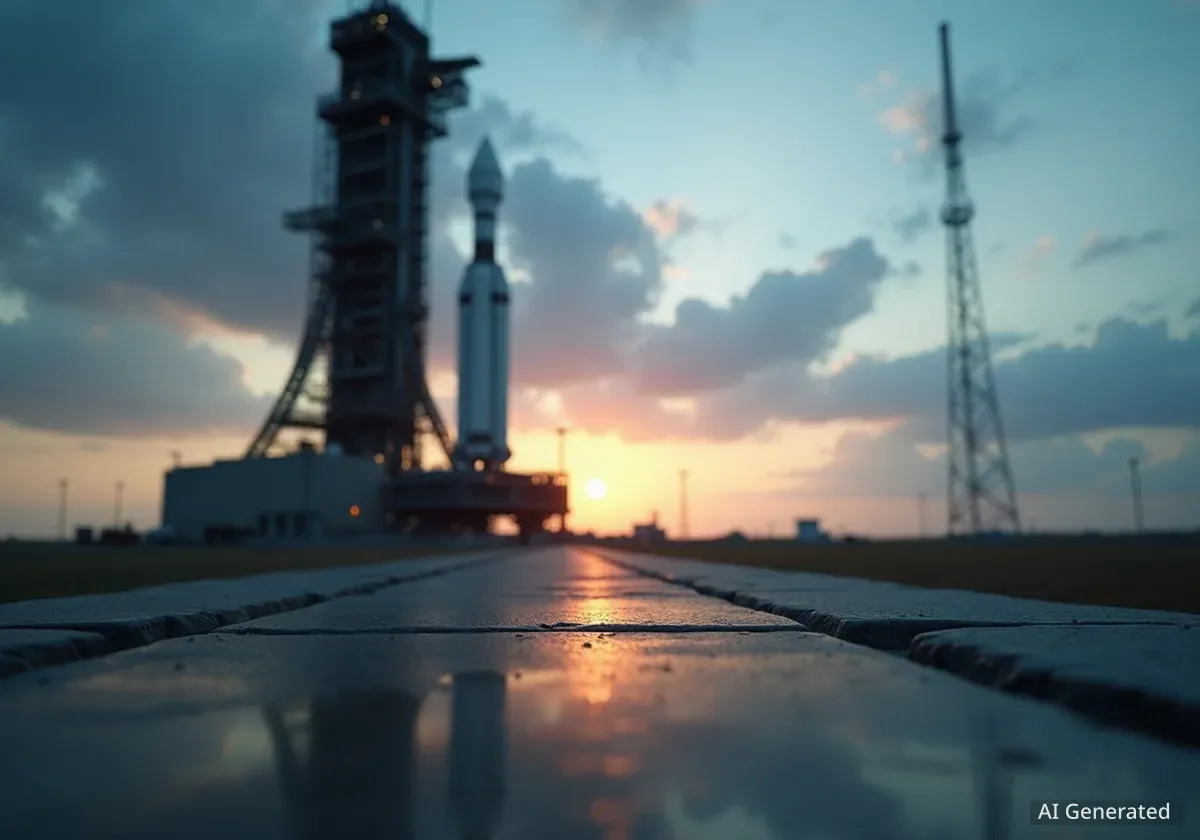
On July 30, Gilmour Space Technologies conducted the inaugural launch of its Eris small launch vehicle from the Bowen Orbital Spaceport in Queensland, Australia. The rocket successfully lifted off the pad, marking a significant milestone for the company and the Australian space industry.
However, the flight was short-lived. Seconds after liftoff, the vehicle appeared to suffer an anomaly. Video footage suggested a malfunction in at least one of its four hybrid rocket engines. The rocket then drifted away from the launch pad before falling back to the ground.
Speaking at the International Astronautical Congress on October 3, CEO Adam Gilmour confirmed the rocket's engines fired for a total of 23 seconds, and the vehicle was airborne for 14 seconds. Despite the outcome, he framed the event as a critical learning experience.
"We’re pretty happy with that," Gilmour said, referring to the data collected. "We have obviously gotten a lot of data out of it, a lot of information."
Investigation Focuses on Untested Conditions
Gilmour Space is actively investigating the root cause of the launch failure. While the investigation is ongoing, early indications point to an issue that was not fully anticipated during ground testing.
"It looks like what went wrong on the launch is something we’ve never tested close enough to the launch conditions before," Gilmour explained, without providing further technical details.
Hybrid Rocket Engine Technology
The Eris rocket utilizes hybrid propulsion, which combines a solid fuel with a liquid oxidizer—in this case, liquid oxygen. This design is often considered a safer and less complex alternative to fully liquid-fueled engines, but it presents its own unique engineering challenges, particularly in ensuring stable and consistent thrust from all engines simultaneously.
The Impact of Extended Pad Time
A significant contributing factor to the mission's challenges was the extended period the rocket spent at the launch site. The vehicle was positioned at the Bowen Orbital Spaceport, located just one kilometer from the ocean, for approximately 18 months prior to launch.
Gilmour noted the harsh, salty coastal environment was not ideal for a vehicle over such a long duration. "Rockets aren’t designed to be at the launch site for 18 months," he commented, highlighting the potential for corrosion and degradation of components.
Regulatory Delays and Lessons Learned
The prolonged stay at the launch site was a direct result of extensive regulatory delays. Gilmour revealed that the company had to secure 24 different permits from the Queensland government alone, in addition to a primary launch license from the Australian Space Agency.
The process also involved securing approvals for airspace and maritime exclusion zones. Gilmour acknowledged that the company had underestimated the resources required for this complex bureaucratic process.
"The approval processes just took way too long," he stated. He also expressed regret that the company did not use the extended waiting period for additional hardware testing.
A Complex Approval Web
- Primary License: Australian Space Agency
- State-Level Permits: 24 from the Queensland government
- Other Approvals: Airspace, maritime, and environmental permits
This experience has prompted a review of the licensing framework. Gilmour confirmed that he had met with the Australian Space Agency to discuss the lessons learned. He expressed confidence that future launches would face a more streamlined process.
"They’re very on board for improving the process," he said of the agency. "I’m very confident we’ll be able to launch in the future when we need to."
Looking Ahead to 2025 and Beyond
Despite the setback, Gilmour Space Technologies is moving forward with its plans. The company is in a strong financial position to fund its next attempt.
"We are well capitalized. We are going to be launching again next year," Gilmour affirmed. The data gathered from the 14-second flight is now being used to refine the Eris vehicle for its next mission in 2025.
Before the launch, Gilmour had managed expectations with investors and government officials, emphasizing the challenges of a maiden flight with a vehicle that had endured long delays. "I said that if we get off the pad, it’s fantastic, since it’s an old, clunky rocket," he recalled.
The CEO remains highly optimistic about the broader Australian space sector, which is poised for growth with several companies planning launches from Australian soil in the coming years. "I’m as optimistic as I’ve ever been about the industry in Australia," he concluded.