
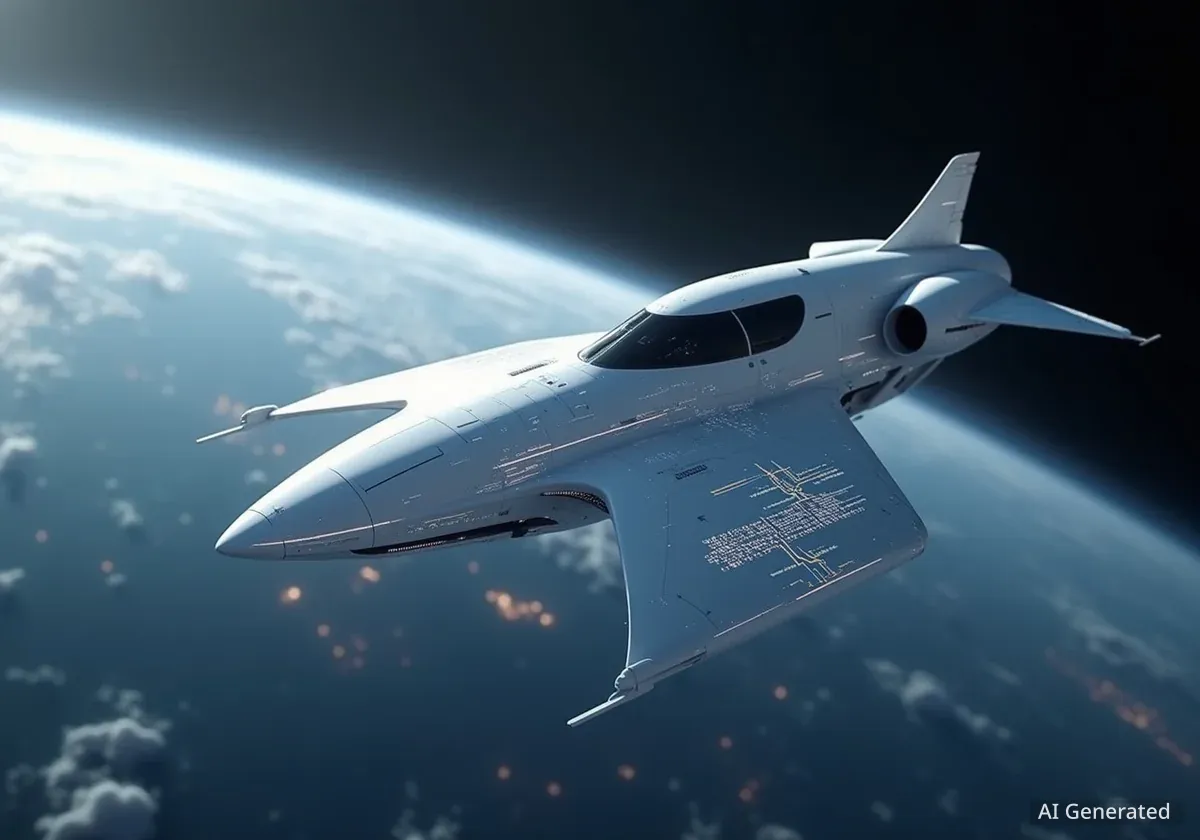
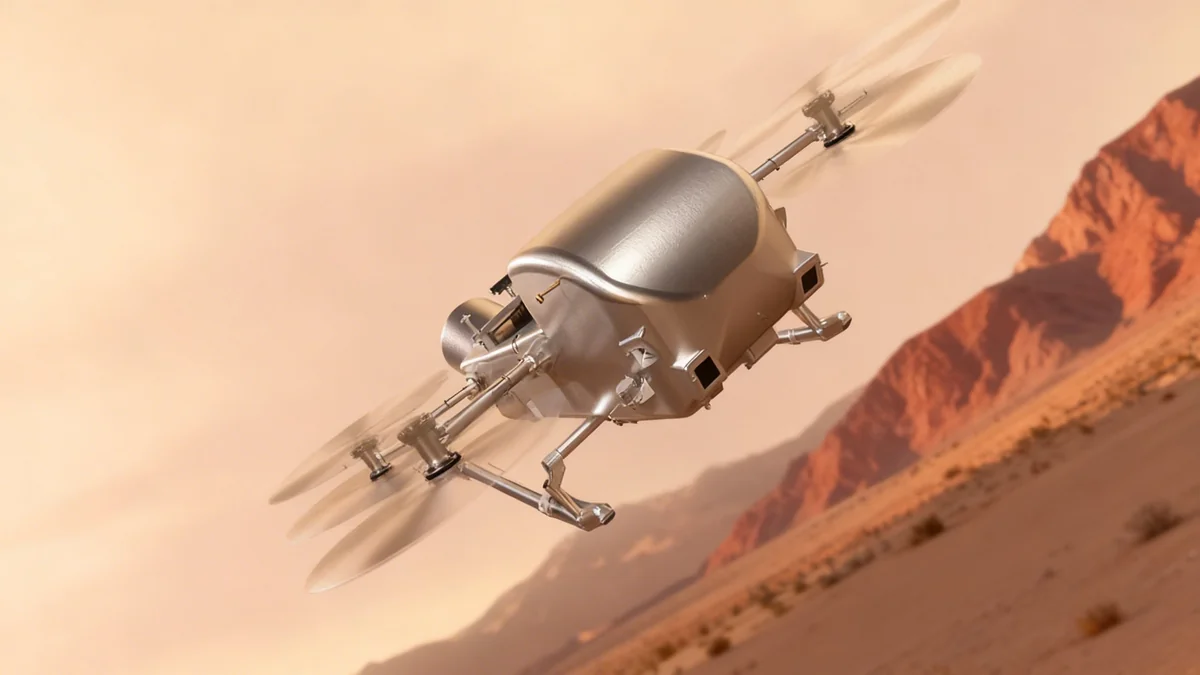


A new approach to space mission management is gaining traction, moving critical decision-making from ground control to the spacecraft itself. This shift toward Earth-independent operations, powered by artificial intelligence, addresses the growing challenges of communication delays and system vulnerabilities in an increasingly complex orbital environment.
As space activities expand to include megaconstellations and lunar missions, the traditional model of remote control from Earth is becoming a significant liability. Onboard AI systems that can detect, predict, and act on issues in real-time are now considered essential for ensuring mission resilience, safety, and economic viability.
Key Takeaways
- Modern space missions face critical challenges from communication latency and cyber threats that ground-based control cannot solve in real-time.
- Onboard artificial intelligence is becoming essential for spacecraft to operate autonomously, making decisions without waiting for commands from Earth.
- The core capabilities of this AI framework are to Detect anomalies, Predict future problems, and Act on them within safe, pre-approved limits.
- Delaying the integration of AI into new spacecraft creates significant technical and data-related debt, increasing future risks and costs.
- Autonomous systems are expected to enable new missions, such as self-reliant orbital data centers and automated inspection and repair services.
The Growing Limits of Ground-Based Control
For decades, space missions have relied on constant communication with control centers on Earth. However, this model is being pushed to its limits by fundamental physics and modern system design. The speed of light imposes unavoidable delays in communication, a problem that becomes more pronounced with missions farther from Earth, such as those around the Moon.
This latency means that by the time ground control receives data about a critical issue and sends a command back, it may be too late to prevent a failure. According to industry experts, this delay makes real-time decision-making from the ground impossible when it is needed most.
Why Communication Delays Matter
Even at the speed of light, a signal from Earth to the Moon takes approximately 1.3 seconds each way. For missions to Mars, this delay can range from 5 to 20 minutes. During critical maneuvers like landing or docking, a multi-minute delay can be the difference between success and mission failure.
New Vulnerabilities in Orbit
Modern spacecraft are complex, software-defined systems. While this makes them highly capable, it also exposes them to a new range of risks. These include radiation-induced software faults, cascading system anomalies, and increasingly sophisticated cyber threats.
Distinguishing between an internal system fault and a malicious cyber attack can be difficult from millions of kilometers away. The ability to diagnose and respond to these events must reside on the spacecraft itself to ensure a rapid and effective response.
A New Framework for Onboard Autonomy
To overcome these challenges, a new operational framework is emerging that places artificial intelligence at the edge—right next to the data source on the spacecraft. This architecture is built on three core capabilities that work together to create a self-reliant system.
- Detect: The AI system continuously fuses and analyzes telemetry data from all subsystems, including power, communications, thermal, and payload. It is designed to identify weak signals—such as minor drifts or outliers—long before they escalate into serious incidents.
- Predict: By analyzing these early signals, the system can forecast potential issues hours or even days in advance. This foresight allows operators (both human and automated) to take preemptive action, such as rescheduling high-risk activities or pre-positioning resources.
- Act: The system is encoded with validated operational playbooks. When a problem is detected and predicted, the AI can execute bounded, auditable actions on-orbit. These actions, such as rerouting power or reconfiguring a system, are performed within strict safety limits and can be designed to require human approval when communication windows are available.
This model shifts the role of human operators from micromanagers to strategic supervisors. The AI handles immediate, time-critical responses, while humans provide oversight and approve higher-level actions.
The Technology Powering Autonomous Decisions
Implementing Earth-independent AI requires a disciplined approach to both software and hardware. The goal is not to install a generic, all-powerful AI but to deploy focused, explainable models that operate within clear guardrails.
Edge Computing in a Harsh Environment
The AI models run on compact, flight-qualified, or radiation-tolerant computers located on the spacecraft or a nearby orbital data center. Priority is given to interpretable AI methods that allow engineers to understand why a decision was made. More complex deep learning models are typically reserved for training and retraining on the ground, where computational resources are abundant.
The Medallion Architecture for Data
A tiered data model, known as the "medallion architecture," is often used to process telemetry. Data moves through three stages: Bronze (raw, immutable data streams), Silver (cleaned, validated, and time-aligned data), and Gold (decision-grade, mission-aware health scores and insights that feed the AI).
Designing for Human Collaboration
Autonomous systems are not meant to replace human oversight but to enhance it. Algorithms are designed to present clear, ranked recommendations to ground control. They provide context for their suggestions, including feature attributions and confidence scores, allowing human operators to make fast, informed approval decisions when communication links are open. This approach is often called "human-on-the-loop" or "human-in-the-loop" design.
"Autonomy doesn’t remove humans; it upgrades them. Algorithms should be made to provide clear, ranked recommendations; show ‘why now’; and allow fast approvals when windows open," explains Miguel A. Lopez-Medina, an AI researcher at Rice University who develops frameworks for autonomous space operations.
Integrating Autonomy from Day One
Experts argue that autonomous capabilities must be integrated into the blueprint of new spacecraft, not treated as an add-on after launch. Waiting to implement these systems creates significant long-term problems.
The first problem is integration debt. Retrofitting decision-making software into a complex system not designed for it is expensive, time-consuming, and inherently risky. It can introduce new, unforeseen failure points into a satellite's flight software.
The second is data debt. Without onboard analytics running from the start of a mission, operators miss out on collecting critical data and labeled events that are essential for training and refining AI models. This slows down the learning curve and delays the achievement of full mission potential.
A Path Forward for the Industry
The recommended path for manufacturers and operators is to start now, even with small steps. This includes equipping new spacecraft with AI-ready edge computers, defining safe operational playbooks for autonomous actions, and maintaining ground-based "digital twins" for validating and testing the AI's behavior.
The Future of Self-Reliant Space Infrastructure
The successful implementation of Earth-independent operations is expected to unlock a new generation of space missions that are currently impractical. This includes on-orbit data centers that can continue to function during solar storms that disrupt communications with Earth, and robotic systems that can autonomously inspect and repair other satellites.
Furthermore, logistics for future lunar or Martian bases could operate more efficiently without being stalled by communication delays or noisy signal environments. In the coming decade, spacecraft that must constantly "phone home" for instructions may be seen as technologically obsolete, much like dial-up internet is today.
The consensus among industry leaders is clear: the future of space exploration and commerce depends on building a resilient, self-reliant infrastructure. The organizations that design for autonomy now will be best positioned to lead in this new era of space operations.