

The rapidly growing number of satellites in low-Earth orbit is creating a new form of light pollution that now threatens the very instruments designed to escape it: space-based telescopes. A recent study highlights how these orbiting objects, reflecting sunlight, are beginning to interfere with observations from above Earth's atmosphere, a problem previously thought to affect only ground-based astronomy.
This development raises serious concerns within the scientific community about the future of astronomical research. As thousands more satellites are launched, the pristine view of the cosmos that space telescopes provide is becoming increasingly cluttered, potentially hindering our ability to make new discoveries.
Key Takeaways
- The number of satellites in low-Earth orbit has surged, creating dense orbital traffic.
- Sunlight reflecting off these satellites creates bright streaks that can ruin astronomical images.
- Previously a problem for ground observatories, this light pollution now affects space telescopes.
- A paper published in the journal Nature confirms the growing risk to space-based astronomy.
A New Challenge in the Final Frontier
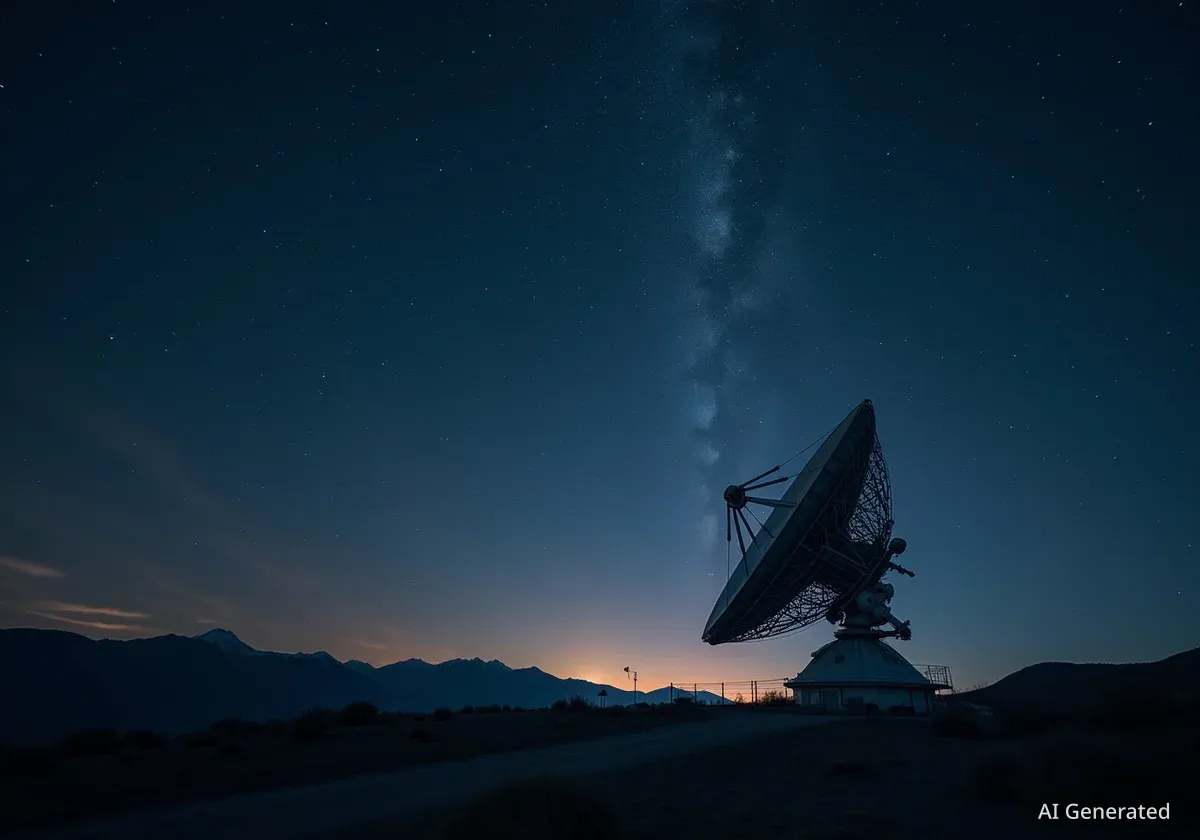
For decades, launching telescopes into space was the ultimate solution to a persistent problem for astronomers. Earth's turbulent atmosphere distorts light from distant stars, causing them to twinkle and blurring our view of the universe. Placing observatories like the Hubble Space Telescope above this atmospheric interference provided an unprecedentedly clear window into the cosmos.
However, that clear view is now being compromised from a new source. The proliferation of satellite mega-constellations, designed to provide global internet and other services, has filled low-Earth orbit (LEO) with tens of thousands of new objects. While a technological marvel, this orbital rush hour has an unintended side effect.
These satellites, particularly those with large, reflective surfaces like solar panels, act like mirrors in the sky. They catch the sun's rays and reflect them, creating bright streaks of light that can pass through a telescope's field of view. For ground-based telescopes, these satellite trails have become a familiar and frustrating source of contamination in their long-exposure images.
What is Low-Earth Orbit?
Low-Earth orbit (LEO) is an area of space up to 2,000 kilometers (about 1,200 miles) above the planet. Its proximity to Earth makes it ideal for satellite imaging, communications, and the International Space Station. However, this convenience also means it is becoming the most congested region of space.
From Ground Problem to Space Crisis
The assumption was always that space telescopes, operating far above the atmosphere, would be immune to this issue. A new paper published in Nature has challenged that belief, providing evidence that space-based observatories are also vulnerable.
The study demonstrates that even from orbit, telescopes can be dazzled by sunlight glinting off nearby satellites. Because these satellites share the orbital environment with the telescopes, they can pass directly through the observation path, leaving a bright, data-ruining streak across a carefully captured image of a distant galaxy or nebula.
This is a significant escalation of the problem. While ground-based astronomers can try to schedule observations to avoid known satellite paths, this becomes much more complex for space telescopes that are also moving at high speeds. The sheer density of satellites is turning the orbital environment into a minefield of potential light contamination.
The Scale of the Problem
The number of active satellites in orbit has more than doubled in just the last few years, with projections for tens of thousands more to be launched this decade. This exponential growth is the primary driver behind the increased risk to both ground and space astronomy.
The Future of Cosmic Observation
The implications for the future of astronomy are profound. Space telescopes are incredibly expensive, complex instruments built to answer some of humanity's biggest questions. They are designed to detect the faintest light from the most distant objects in the universe. A single streak from a satellite can be bright enough to completely saturate a telescope's sensitive detectors, rendering an entire observation useless.
Potential Consequences for Research
- Loss of Data: Critical information about distant stars, exoplanets, and galaxies could be lost or corrupted by satellite trails.
- Increased Costs: Failed observations may need to be repeated, consuming valuable telescope time and increasing the operational costs of multi-billion dollar missions.
- Missed Discoveries: Transient events, like supernovae or asteroid flybys, might be obscured by a passing satellite, causing a once-in-a-lifetime discovery to be missed entirely.
Scientists and space agencies are now grappling with this emerging threat. While some satellite operators have begun experimenting with anti-reflective coatings and revised satellite orientations to reduce their brightness, these solutions are not yet universally applied or completely effective.
"We put telescopes in space to get the clearest possible view. It's a challenging new reality to find that we are now exporting one of Earth's biggest observational problems—light pollution—into orbit with them."
The findings published in Nature serve as a critical warning. As humanity's presence in space grows, so does our responsibility to manage its environment. The scientific community is calling for greater collaboration between astronomers and the commercial space industry to develop sustainable practices for operating in LEO.
Without new regulations, international agreements, and technological innovations, our view of the stars—even from the vantage point of space—risks being permanently obscured by the infrastructure we are placing there. The silent, dark sky that has inspired curiosity for millennia is becoming brighter and noisier, and the consequences are only now coming into focus.