


NASA's new administrator, Jared Isaacman, has indicated that a modern Artemis Orion capsule, destined for future moon missions, may be a more viable option for display in Houston than the historic Space Shuttle Discovery. The statement comes amid growing concerns over the immense cost and logistical challenges of relocating the retired orbiter from its current home at the Smithsonian.
Key Takeaways
- NASA Administrator Jared Isaacman has proposed sending a future Artemis Orion spacecraft to Houston for display.
- This serves as a potential alternative to a controversial plan to move the Space Shuttle Discovery from the Smithsonian in Virginia.
- The proposal to move Discovery faces significant hurdles, including an estimated moving cost of up to $150 million, far exceeding the $85 million budget.
- Logistical issues, such as the lack of specialized transport aircraft and the risk of damaging the orbiter, are major factors in the decision.
A Contentious Plan for a Storied Orbiter
A legislative provision championed by Texas Senators Ted Cruz and John Cornyn aims to bring a piece of spaceflight history to the city synonymous with Mission Control. The plan, included in a bill signed into law last summer, calls for the relocation of the Space Shuttle Discovery to Houston's Johnson Space Center.
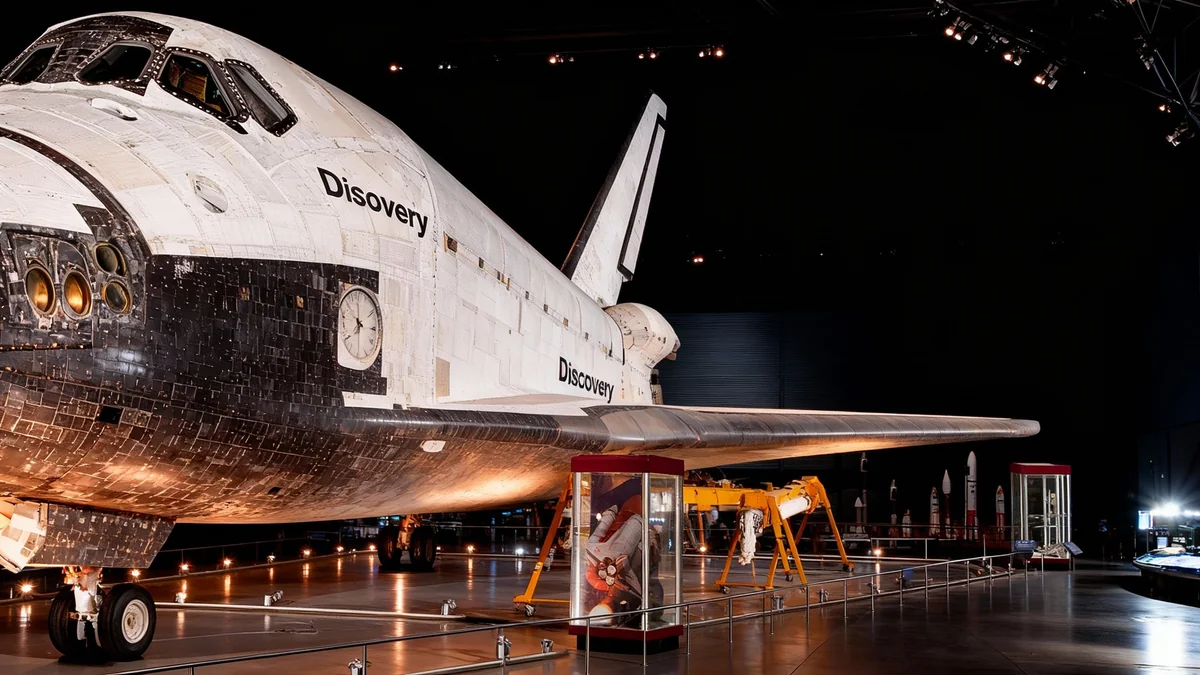
The argument is straightforward: Houston, the heart of astronaut training and mission operations for decades, deserves to house one of the nation's most iconic human spaceflight vehicles. Discovery is the most-flown orbiter in the fleet, having completed 39 missions between 1984 and 2011.
While NASA's other surviving shuttles are displayed in Florida, California, and New York, Houston has been without an actual flight-tested orbiter. This initiative was designed to rectify that.
Where Are the Other Shuttles?
Following the retirement of the Space Shuttle program in 2011, NASA's orbiters were distributed to museums across the country. Atlantis is at the Kennedy Space Center in Florida, Endeavour is at the California Science Center in Los Angeles, and the test vehicle Enterprise is at the Intrepid Sea, Air & Space Museum in New York City. The orbiters Challenger and Columbia were tragically lost in accidents.
Logistical and Financial Hurdles Emerge
Despite political backing, the proposal to move Discovery is fraught with practical difficulties. In a recent interview, NASA Administrator Jared Isaacman, who took office on December 18, highlighted his primary responsibilities in evaluating the move.
"My job now is to make sure that we can undertake such a transportation within the budget dollars that we have available and, of course most importantly, ensuring the safety of the vehicle," Isaacman stated.
The challenges are substantial. The first is ownership. NASA formally transferred title of Discovery to the Smithsonian Institution in 2012, meaning the U.S. government would need to reclaim the asset—a complex and potentially contentious process.
The Staggering Cost of Relocation
The financial disparity is perhaps the most significant obstacle. While the legislation set aside $85 million for the move, officials at the Smithsonian's Steven F. Udvar-Hazy Center, where Discovery is currently housed, project a much higher figure.
Estimates suggest the cost to safely transport the 100-ton orbiter could reach $150 million. This figure does not include the additional expense of constructing a climate-controlled facility in Houston to house the priceless artifact.
Furthermore, the physical logistics of the move are daunting. Discovery measures 122 feet in length with a 78-foot wingspan. Originally, NASA used two specially modified Boeing 747s, known as Shuttle Carrier Aircraft, to transport the orbiters. Both of these unique planes have since been retired, with one now on display at Space Center Houston itself, ironically carrying a mock shuttle.
Without the carrier aircraft, a move would likely require partial disassembly of the orbiter, a process that Smithsonian officials have warned could cause substantial and irreversible damage to the historic spacecraft.
An Artemis Future for Houston
Faced with these challenges, Administrator Isaacman has floated a forward-looking alternative. Rather than dwelling on the past, Houston could become home to a symbol of the next generation of space exploration: an Artemis Orion capsule.
"And if we can't do that, you know what? We've got spacecraft that are going around the moon with Artemis 2, 3, 4 and 5," Isaacman explained. This solution would bypass the logistical and financial issues associated with Discovery while still providing Houston with a historic, flight-proven vehicle.
NASA is deep into its Artemis program, which aims to return humans to the moon. Key upcoming missions include:
- Artemis 2: Scheduled to send four astronauts on a flight around the moon as early as February 2026.
- Artemis 3: Planned to be the first crewed lunar landing mission of the 21st century, targeted for 2028.
An Orion capsule from one of these pioneering missions would represent a new era of exploration, directly tied to the ongoing work at Johnson Space Center. Isaacman remains committed to honoring Houston's legacy, concluding with a promise.
"One way or another, we're going to make sure the Johnson Space Center gets their historic spacecraft right where it belongs," he said. The final decision will now weigh the allure of a shuttle from a bygone era against the promise of a moonship pointing toward the future.