



If you ever encounter an online listing for an authentic moon rock from an Apollo mission, the U.S. government has a clear message: do not buy it. All 842 pounds of lunar material brought back by NASA astronauts between 1969 and 1972 are considered national treasures and federal property. Attempting to buy, sell, or even privately own these samples is a serious federal crime with severe consequences.
While the idea of holding a piece of another world is captivating, these materials are strictly controlled for scientific and educational purposes. The legal framework surrounding them is robust, designed to protect one of humanity's greatest scientific achievements from falling into the black market.
Key Takeaways
- All lunar samples collected during NASA's Apollo missions are the property of the U.S. government.
- It is illegal for any private citizen to own, buy, or sell Apollo-era moon rocks or dust.
- Violators face felony charges, significant fines, and potential prison sentences under multiple federal statutes.
- These laws do not apply to lunar meteorites, which fall to Earth naturally and can be legally owned and traded.
- NASA operates a loan program that allows certified educators, museums, and researchers to borrow lunar samples for study and display under strict guidelines.
A National Treasure Under Lock and Key
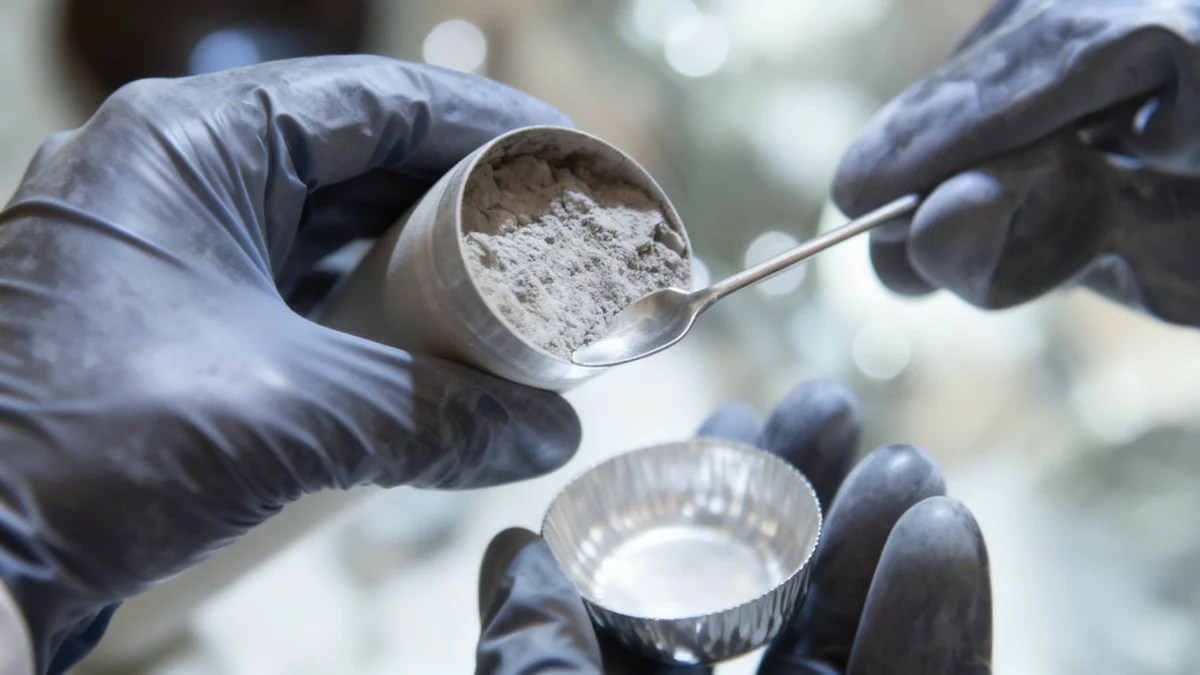
The six Apollo missions that landed on the moon returned with a total of 382 kilograms (842 pounds) of rocks, core samples, pebbles, sand, and dust. This collection represents an irreplaceable scientific and historical resource, offering insights into the formation of our solar system. To protect this investment, all materials are housed in a highly secure facility.
NASA's Lunar Sample Laboratory Facility at the Johnson Space Center in Houston, Texas, was established in 1979 as the primary repository. Here, pristine samples are stored in stainless steel cabinets purged with pure nitrogen gas to prevent contamination from Earth's atmosphere. This meticulous preservation ensures that scientists can continue to study the material for decades to come.
A Priceless Collection
The Apollo 17 mission alone, the final lunar landing in December 1972, returned with 110.4 kilograms (243 pounds) of lunar material. The value of these samples is considered priceless, though a 2002 theft involved rocks estimated to be worth $21 million.
Because these materials were collected as part of a government-funded federal program, they are legally classified as government property. This status is the foundation of why they cannot be sold on the open market or owned by individuals, including the astronauts who collected them.
The Strict Federal Laws You Cannot Ignore
The U.S. government enforces the prohibition on owning Apollo samples through several powerful federal laws. These statutes carry felony charges, making any involvement in the trafficking of lunar materials a high-risk crime. Anyone caught attempting to sell or possess these items will face a serious federal investigation.
The Three Pillars of Prosecution
Prosecutors can draw on multiple laws to charge individuals involved with stolen lunar materials. The core statutes include:
- 18 U.S.C. § 641 – Theft of Government Property: This is the most direct law. It makes it a felony to steal or knowingly possess any property belonging to the U.S. government. Since NASA is a federal agency, the moon rocks fall squarely under this protection.
- 18 U.S.C. § 668 – Theft of Major Artwork: While scientific in nature, lunar samples are also considered objects of immense cultural and historical significance. This statute prohibits theft from museums or government institutions and criminalizes the possession or sale of such stolen heritage items.
- 18 U.S.C. § 2314 & § 2315 – Interstate Transportation of Stolen Property: If stolen items valued at over $5,000—a threshold easily met by moon rocks—are moved across state lines, it triggers additional federal charges for trafficking stolen goods.
The Case of the NASA Interns
One of the most famous cases of moon rock theft occurred in 2002, when three NASA interns stole a 600-pound safe containing lunar samples from the Johnson Space Center. The thieves, led by Thad Roberts, attempted to sell the rocks online. They were caught in an FBI sting operation in Orlando. Roberts was sentenced to over eight years in federal prison, illustrating the severity of the crime.
How You Can See or Study Moon Rocks Legally
While private ownership is forbidden, NASA is committed to sharing these resources with the public for educational and scientific purposes. The agency runs a closely monitored loan program that allows approved institutions and researchers to access lunar samples.
Educators, museums, and scientific researchers can apply to borrow small samples. To become eligible, they must complete NASA’s Lunar and Meteorite Certification Workshop. This training covers the strict protocols for handling, security, and transportation required to protect the samples from contamination or loss.
"The material is still actively used," Andy Saunders, a NASA digital restoration expert, told Space.com. "In 2022 an Apollo 17 core sample, that had remained sealed for 50 years, was opened for the very first time at JSC. How wonderful - we're still learning from the Apollo missions."
Certified individuals can borrow Lunar and Meteorite Sample Disks, which are small rock and soil fragments encased in clear Lucite plastic for safe handling and display. Researchers whose experiments require direct contact with the material may be granted permission, but all leftover material must be returned to NASA for cataloging.
What About Lunar Meteorites?
There is one important exception to the rule: lunar meteorites. These are pieces of the moon that were ejected into space by an asteroid impact and later fell to Earth on their own. Since they were not transported by a government mission, they are not considered government property.
Lunar meteorites can be legally bought, sold, and owned by private collectors. However, they are extremely rare and command very high prices. It is crucial for buyers to ensure the authenticity of such items through reputable dealers and proper documentation, as the market for extraterrestrial materials can attract fraudulent sellers.
The distinction is simple: if an astronaut brought it back, it belongs to the government. If it fell from the sky, it can be privately owned. For anyone dreaming of owning a piece of the moon, sticking to verified lunar meteorites is the only legal path. Attempting to acquire an Apollo sample could lead to a trajectory that ends not in space, but in a federal prison.