

NASA has initiated a significant infrastructure overhaul, beginning with the demolition of two historic rocket testing facilities at the Marshall Space Flight Center in Alabama. The move, ordered by newly confirmed Administrator Jared Isaacman, marks the first major step in a broader agency-wide modernization effort aimed at supporting ambitious new goals for space exploration.
The demolition of the nearly 70-year-old structures is scheduled to begin on January 10, 2026. This action is part of a plan to clear 25 outdated buildings at the Huntsville center to make way for new, state-of-the-art facilities designed for the next generation of space missions.
Key Takeaways
- NASA will demolish the Dynamic Test Stand and the Propulsion and Structural Test Facility (T-Tower) at Marshall Space Flight Center.
- The action is the first phase of a plan to remove 25 outdated structures at the Alabama facility.
- The modernization is funded by the "One Big Beautiful Bill Act" signed into law last year.
- The overhaul aligns with a new executive order directing NASA to return to the Moon by 2028 and land an astronaut on Mars.
A New Era for NASA Infrastructure
In his first month as the head of the nation's space agency, Administrator Jared Isaacman is moving quickly to reshape NASA's physical footprint. The directive to dismantle the historic test stands signals a decisive shift toward upgrading the agency's aging ground-based assets.
"NASA is embarking on an exciting infrastructure modernization effort to prepare for the future of exploration," Isaacman stated. He explained that the initial phase is focused on retiring outdated structures to enable investment in capabilities essential for future scientific discovery.
This initiative is backed by federal funding from the "One Big Beautiful Bill Act," which was signed into law by President Donald Trump in July 2025. The legislation provides the financial resources for a comprehensive update of NASA's facilities, starting with the Marshall Space Flight Center but intended to extend across the agency.
Historic Structures Make Way for the Future
The two facilities slated for removal have played a crucial role in the history of American spaceflight. Their demolition represents the end of one chapter and the beginning of another.
The T-Tower
The Propulsion and Structural Test Facility, known as the T-Tower, was constructed in 1957 by the U.S. Army Ballistic Missile Agency. It was later transferred to NASA, where it was instrumental in testing the powerful boosters for the Saturn launch vehicles that carried astronauts to the Moon and, later, the solid rocket boosters for the Space Shuttle program.
The Dynamic Test Stand
Built in 1964, the Dynamic Test Stand was essential for conducting critical mechanical and vibrational tests on entire rocket systems. The towering structure subjected the Saturn V moon rockets and the Space Shuttles to simulated launch conditions to ensure their structural integrity. For decades, it was a cornerstone of NASA's safety and reliability testing.
The Marshall Space Flight Center in Huntsville, Alabama, has been a hub of rocket propulsion research and development since its establishment. It was the primary development center for the Saturn V rocket, which remains the most powerful launch vehicle ever successfully flown.
New Leadership and Ambitious Goals
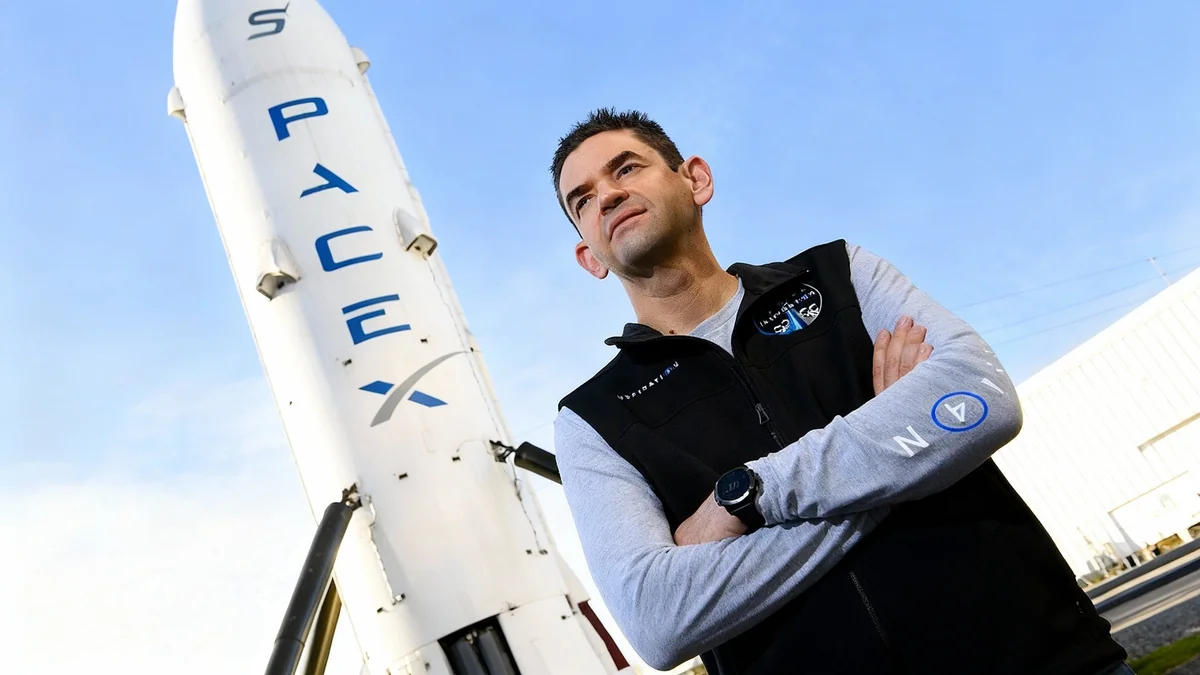
Jared Isaacman, a 42-year-old billionaire entrepreneur and accomplished civilian astronaut, was confirmed by the Senate as NASA's 15th administrator on December 17, 2025. His confirmation followed a 67–30 vote, positioning the founder of Shift4 Payments and commander of the first all-civilian orbital mission to lead the agency.
Isaacman's appointment came just one day before President Trump issued a new executive order outlining an aggressive timeline for American space exploration. The directive sets several key objectives for NASA:
- Return American astronauts to the Moon by 2028.
- Be the first nation to land an astronaut on Mars.
- Deploy nuclear reactors on the Moon and in orbit by 2030.
- Promote private sector investment and develop a commercial replacement for the International Space Station by 2030.
"We will lead humanity back to the moon, and the United States will be the first nation to land an astronaut on Mars," President Trump stated upon signing the order.
This executive order provides the strategic framework for Isaacman's modernization efforts. The demolition of legacy infrastructure is seen as a necessary first step to build the facilities required to achieve these goals, from developing lunar power systems to preparing for long-duration missions to Mars.
Jared Isaacman: From Entrepreneur to NASA Chief
- Age: 42
- Background: Founder and CEO of Shift4 Payments.
- Spaceflight Experience: Commanded the Inspiration4 mission in 2021, the first all-civilian orbital flight. Completed the first-ever commercial spacewalk in 2024 as part of the Polaris Dawn mission.
- Confirmed as NASA Administrator: December 17, 2025.
Paving the Way for Commercial and Deep Space Missions
The push to upgrade NASA's launch and testing infrastructure is not just about government missions. It is also critical for supporting the growing commercial space industry, which the White House has identified as a key partner in future exploration.
By clearing away obsolete structures, NASA can invest in new pads, testing stands, and processing facilities that can accommodate a wider range of vehicles from private companies like SpaceX, Blue Origin, and others. This creates a more robust and flexible national spaceport capability.
The long-term vision involves a symbiotic relationship where commercial partners handle routine operations in low-Earth orbit, such as servicing a future commercial space station, freeing up NASA's resources to focus on pioneering missions to the Moon, Mars, and beyond. Modernizing its ground infrastructure is fundamental to making that vision a reality, ensuring the United States has the terrestrial foundation to support its celestial ambitions for decades to come.