

NASA and Sierra Space have mutually agreed to modify a long-standing contract for resupplying the International Space Station (ISS). This change requires Sierra Space to successfully complete a demonstration flight of its Dream Chaser spaceplane, now targeted for late 2026, before the agency will consider ordering missions.
The decision follows years of delays for the Dream Chaser vehicle, which was originally scheduled to begin flights in 2019. Under the new terms, NASA is no longer obligated to purchase a specific number of missions from the company.
Key Takeaways
- NASA and Sierra Space have modified the Commercial Resupply Services 2 (CRS-2) contract.
- Sierra Space must now conduct a successful demonstration flight of its Dream Chaser spaceplane, targeted for late 2026.
- Following the test flight, NASA is no longer obligated to a specific number of missions but may order them in the future.
- The decision comes after the Dream Chaser program missed its initial 2019 launch target by several years.
- Funding from NASA will be minimal until the demonstration is complete.
Revised Agreement Puts Onus on Sierra Space
NASA recently announced a significant change to its agreement with Sierra Space for cargo missions to the International Space Station. The modification introduces a new prerequisite for the company's Dream Chaser vehicle: a successful uncrewed demonstration flight to prove its capabilities.
In a formal statement, the space agency clarified the new path forward. "After a thorough evaluation, NASA and Sierra Space have mutually agreed to modify the contract, as the company determined Dream Chaser development is best served by a free flight demonstration, targeted in late 2026," NASA explained.
This development shifts the terms of the original contract. Previously, Sierra Space was scheduled to conduct a series of operational missions. Now, the company must first invest in and execute a test flight without guaranteed orders. According to the agency, it will provide only "minimal support through the remainder of the development and the flight demonstration."
Shift in Commitment
Under the revised contract, NASA is no longer obligated to purchase a specific number of resupply missions from Sierra Space. The agency stated it "may order Dream Chaser resupply flights to the space station" after a successful demonstration, changing the commitment from a certainty to a possibility.
A History of the CRS-2 Contract and Delays
The original contract was awarded to Sierra Space's parent company, Sierra Nevada Corp., nearly a decade ago as part of NASA's $14 billion CRS-2 program. Sierra Space was selected alongside established providers SpaceX and Northrop Grumman to transport supplies and experiments to the ISS.
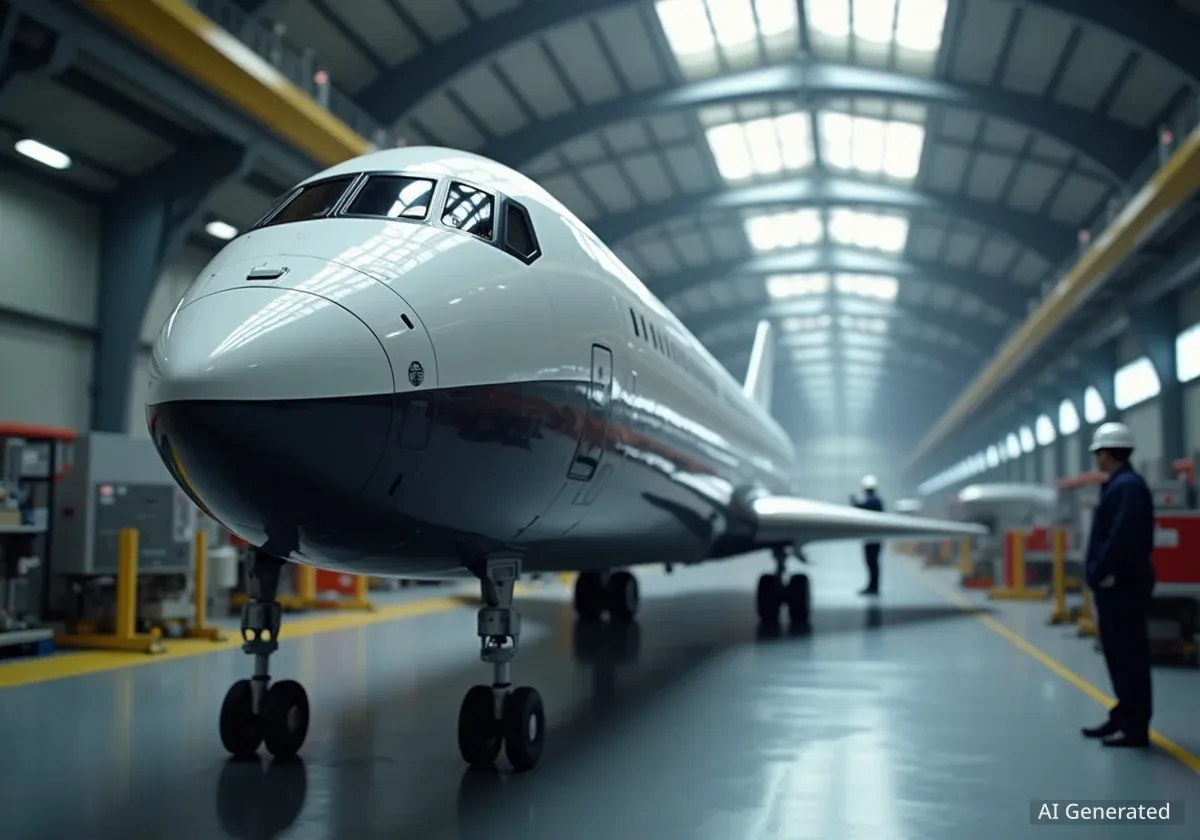
While SpaceX uses its Dragon capsule and Northrop Grumman uses its Cygnus spacecraft, Sierra Space's entry was the reusable Dream Chaser spaceplane, a lifting-body vehicle designed to land on a runway. The company was initially slated to perform seven cargo missions, with the first launch planned for 2019.
However, the program experienced persistent delays. As years passed without a flight, NASA's reliance on its other two commercial partners grew. In 2022, NASA extended the CRS-2 program, ordering a total of 32 additional missions through 2026. In that extension, SpaceX was assigned 15 launches and Northrop Grumman received 14, while Sierra Space was allocated only three.
The Evolving Supply Chain for the ISS
The CRS program is essential for maintaining operations and scientific research aboard the International Space Station. Commercial partners are responsible for delivering thousands of pounds of supplies, including:
- Crew supplies and food
- Scientific experiments and hardware
- Spacewalk equipment
- Computer resources
Since the program's inception, SpaceX and Northrop Grumman have reliably completed dozens of missions, ensuring a steady flow of cargo to the orbiting laboratory. The delays with Dream Chaser have meant these two providers have shouldered the entire logistical burden for the U.S. segment of the station.
About Sierra Space
Sierra Space is a private aerospace company focused on developing commercial space transportation and infrastructure. In 2023, the company raised $290 million in a funding round that brought its private market valuation to $5 billion. Its flagship projects include the Dream Chaser spaceplane and the LIFE (Large Integrated Flexible Environment) habitat, a planned commercial space station module.
Implications for Sierra Space and Future Missions
The contract modification places Sierra Space at a critical juncture. The company must now fund and complete the development of Dream Chaser for its 2026 demonstration flight with reduced financial support from NASA for this phase. A successful flight could unlock future opportunities, but failure would be a significant setback.
The timeline is also a key factor. The International Space Station is currently scheduled to be deorbited in 2030. If Dream Chaser becomes operational in late 2026 or 2027, it would leave only a few years to conduct missions to the ISS before the station is retired.
"This mutual agreement is a constructive path forward that recognizes the realities of reusable, complex space systems development while maintaining a shared commitment to the future of the commercial space economy." - NASA statement on the contract modification.
Sierra Space has stated that Dream Chaser is designed for multiple applications beyond ISS resupply. The company envisions the vehicle servicing future commercial space stations, which are currently being developed by several entities as part of NASA's efforts to ensure a continued human presence in low-Earth orbit.
The outcome of the 2026 demonstration flight will be a crucial indicator of Sierra Space's future role in the commercial space ecosystem. It will also influence investor confidence and the long-term prospects for a potential initial public offering (IPO), which has been a topic of speculation in the financial industry.