
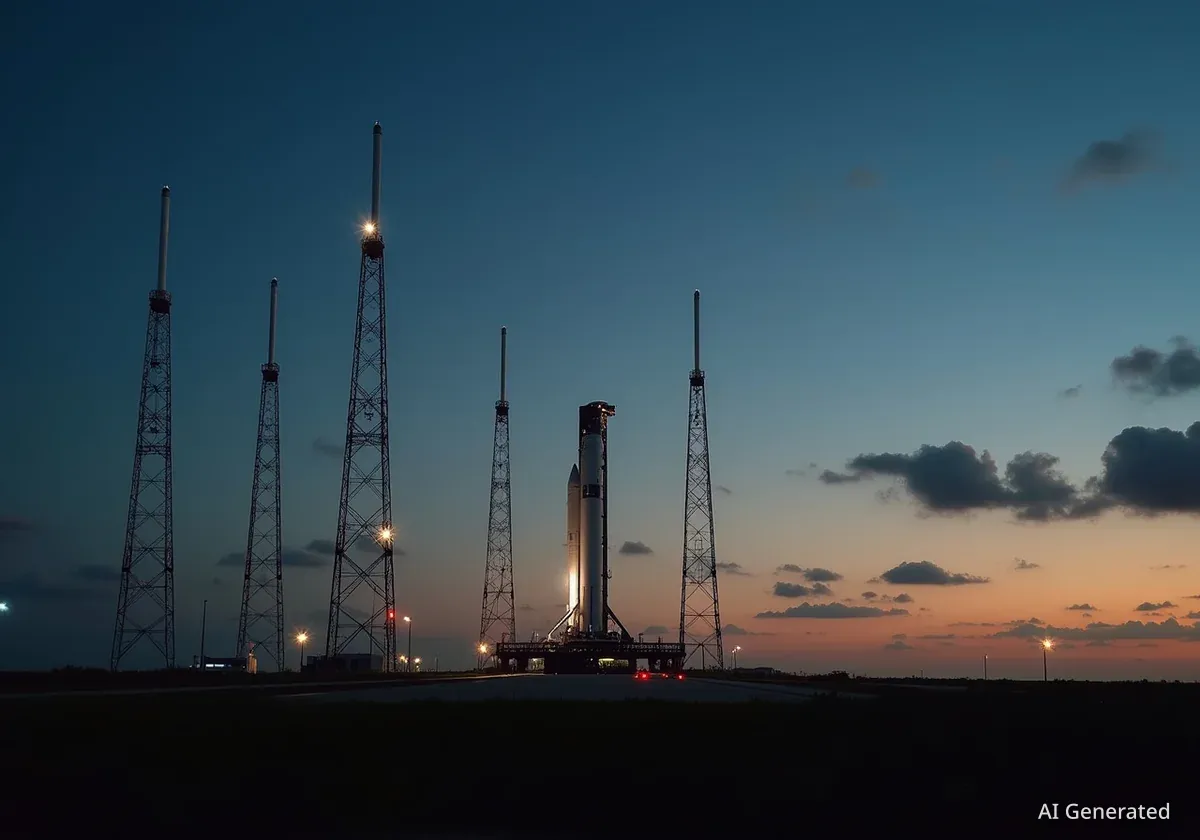
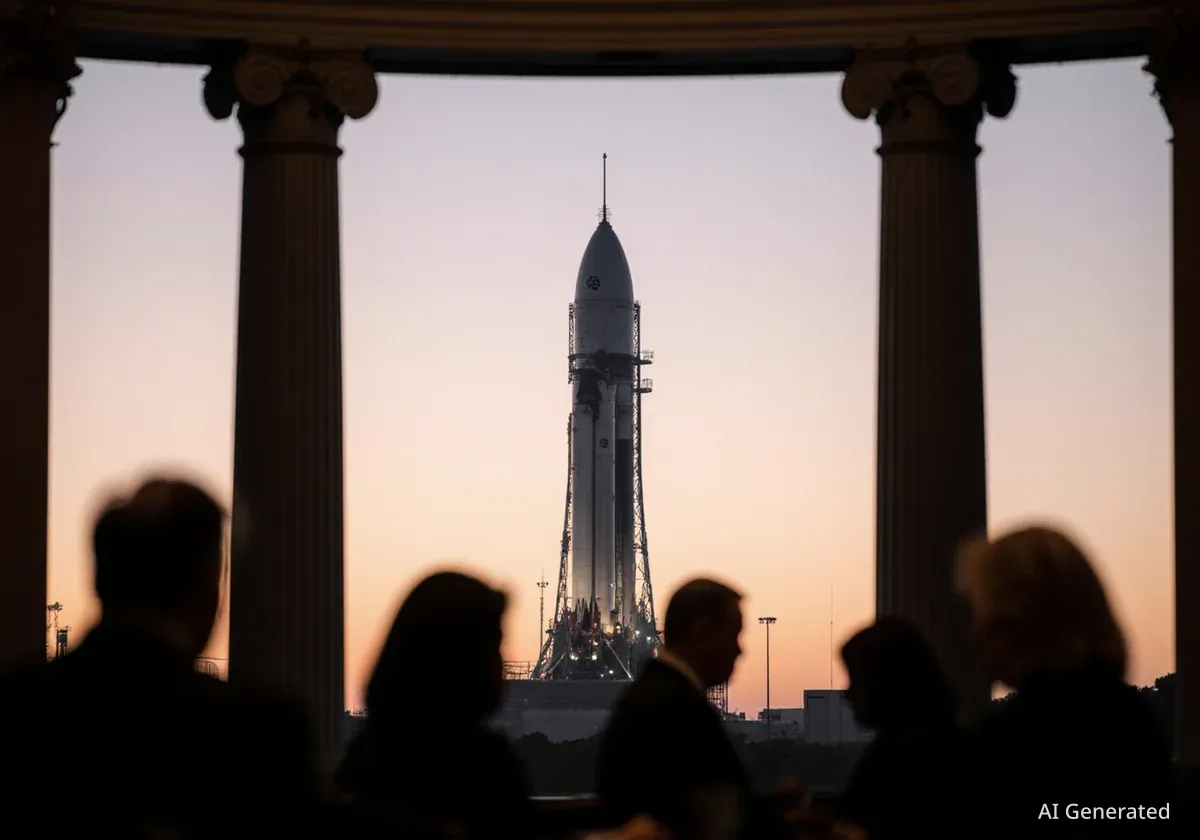



The Federal Aviation Administration (FAA) has lifted its temporary restrictions on commercial space launches, allowing companies to resume daytime and early-evening operations. The decision, effective Monday, November 17, ends a week-long mandate that limited all commercial launches and re-entries to a narrow overnight window.
This move signals a return to normal scheduling for the nation's increasingly busy spaceports, particularly along Florida's Space Coast. The previous order had confined all commercial space activity to the hours between 10 p.m. and 6 a.m. local time, a measure intended to minimize disruption to the national airspace system.
Key Takeaways
- The FAA has canceled its order restricting commercial space launch times, effective 6 a.m., Monday, November 17.
- A temporary rule, in place from November 10, had limited launches to an overnight window of 10 p.m. to 6 a.m.
- The initial restriction was implemented to ensure the safety and efficiency of commercial air traffic.
- The reversal allows companies like SpaceX and Blue Origin to return to more flexible daytime and evening launch schedules.
Return to Normal Operations
Space launch providers across the country can now operate without the time constraints imposed on November 10. The FAA confirmed the cancellation of the order on Sunday, officially clearing the way for a return to standard procedures at the start of the work week.
The brief but significant restriction was a direct response to the growing frequency of rocket launches. As more commercial companies send satellites and missions into orbit, the management of shared airspace with commercial airlines has become a critical logistical challenge for federal regulators.
For one week, the space industry adapted to the nighttime-only schedule. While many launches, particularly those for SpaceX's Starlink constellation, already occur after dark, the mandate removed the flexibility crucial for missions with sensitive payloads or specific orbital insertion requirements that depend on precise timing.
The Rationale Behind the Initial Ban
The FAA's original directive was rooted in public safety and airspace efficiency. When a rocket is launched, a large portion of the surrounding airspace, known as a Temporary Flight Restriction (TFR), is closed to all other air traffic. These zones can be vast, affecting major airline routes along coastal areas.
Managing Crowded Skies
The National Airspace System (NAS) is one of the most complex transportation networks in the world. The FAA's primary role is to ensure the safe and orderly flow of air traffic within it. The rise of commercial spaceflight has introduced a new variable, requiring the agency to balance the needs of aviation with the ambitions of the space industry. Each launch requires careful coordination to deconflict airspace and prevent potential hazards.
By limiting launches to late-night and early-morning hours, the FAA aimed to minimize the impact on peak commercial air travel times. This period typically sees a significant reduction in the number of passenger and cargo flights, making it easier to manage airspace closures without causing widespread delays or rerouting.
The agency's statement on the initial order highlighted the need to “ensure the safety of aircraft and the efficiency of the National Airspace System.” This underscores the delicate balancing act regulators face as launch cadences from providers like SpaceX continue to accelerate.
Impact on the Space Industry
While the restriction was short-lived, it highlighted a potential point of friction between the burgeoning commercial space sector and the established aviation industry. Companies operating out of busy spaceports like Cape Canaveral Space Force Station and Vandenberg Space Force Base rely on predictable and flexible launch windows.
Several factors can influence a launch schedule, including:
- Weather conditions at the launch site and downrange.
- Technical readiness of the rocket and its payload.
- Specific orbital requirements for the mission.
- Availability of tracking and support assets.
A mandated overnight window added another layer of complexity. A technical issue or a weather delay could force a company to scrub a launch attempt and wait a full 24 hours for the next available window, potentially impacting mission timelines and operational costs.
A Record-Breaking Pace
The Space Coast alone has seen a dramatic increase in launch activity. In recent years, the number of annual launches has climbed into the dozens, with SpaceX leading the charge. The company recently surpassed the milestone of launching its 10,000th Starlink satellite, illustrating the high volume of traffic leaving Earth's atmosphere.
The lifting of the restriction is a welcome development for an industry that thrives on agility. It allows launch directors to make real-time decisions based on the most critical factors—vehicle readiness and weather—rather than being constrained by a regulatory clock.
Looking Ahead: The Future of Airspace Integration
The week-long experiment with nighttime-only launches may be over, but the conversation about integrating space and air travel is just beginning. As companies like Blue Origin with its New Glenn rocket and others prepare to enter the market, the frequency of launches is projected to increase even further.
“The dynamic nature of both aviation and space operations requires a forward-thinking approach to airspace management. We are continuously working to modernize our systems to safely accommodate all users of the national airspace.”
This situation serves as a case study for the FAA and industry stakeholders. Finding a long-term solution that allows for a high tempo of space launches without adversely affecting the airline industry is a top priority. This involves developing more dynamic scheduling tools, reducing the size and duration of flight restriction zones, and improving real-time communication between air traffic control and launch providers.
For now, the skies are open. The cancellation of the order restores the operational flexibility that has helped make the U.S. commercial space industry a global leader. It allows missions, like the recent Blue Origin launch carrying NASA’s ESCAPADE Mars satellites, to proceed with the scheduling latitude they require.
As rockets continue to light up the sky over Florida and California, the focus will remain on the careful choreography required to manage one of the world's most valuable resources: the air above us.