
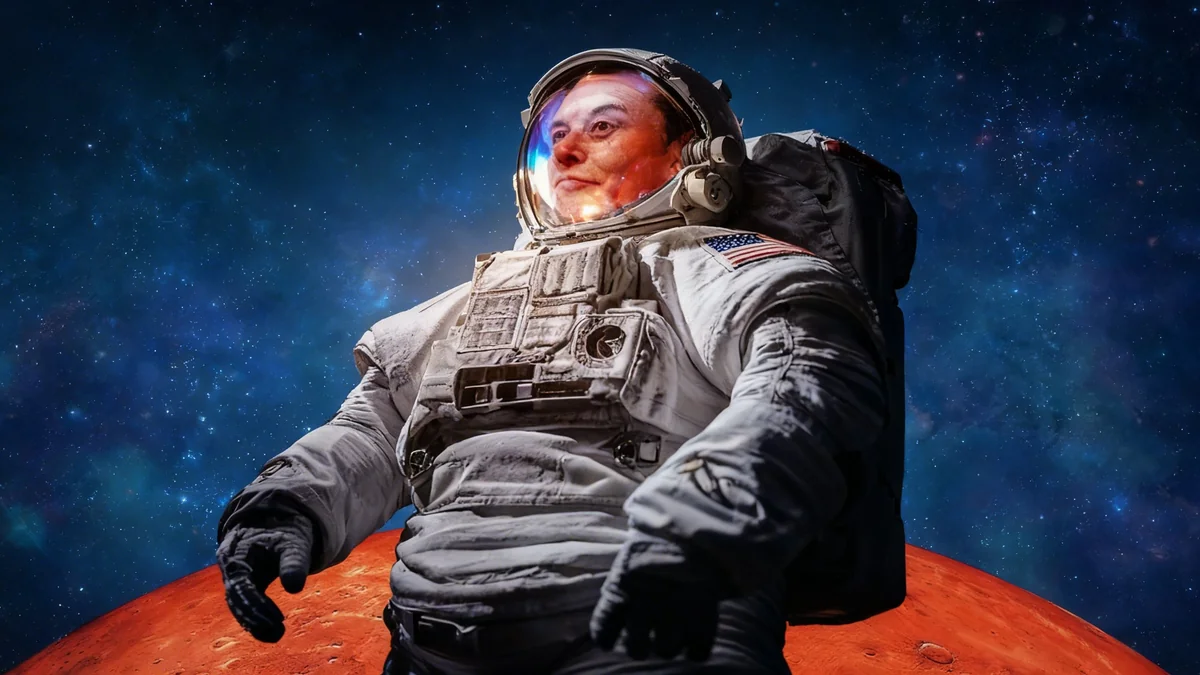

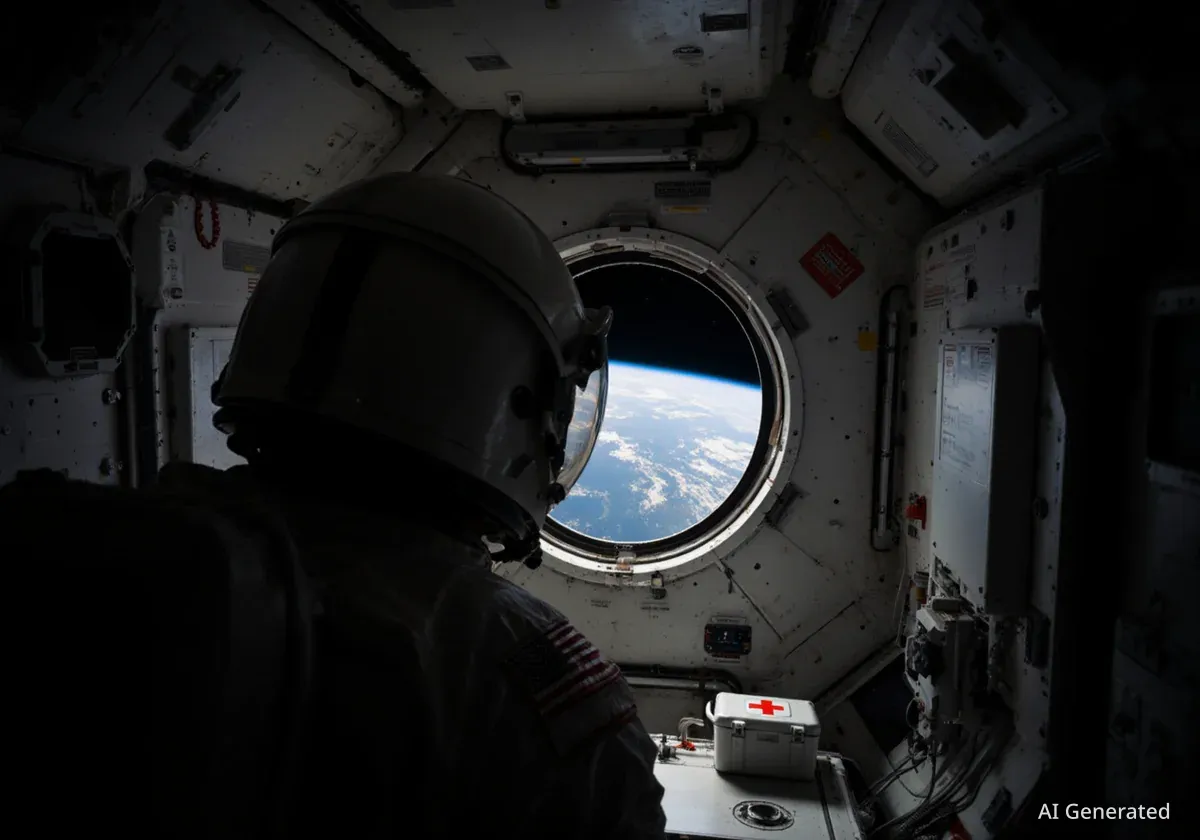


The dream of sending humans to Mars or establishing long-term habitats on the Moon captures the public imagination, but a growing body of scientific evidence reveals a formidable obstacle: the human body itself. Beyond the engineering complexities of space travel lies a series of profound physiological challenges that researchers are struggling to overcome, from relentless radiation exposure to the debilitating effects of microgravity.
Current understanding suggests that long-duration missions, such as a multi-year journey to Mars, would expose astronauts to health risks that could cause irreversible damage. These findings are shifting the conversation from 'how do we get there' to 'how do we survive the journey and the destination'.
Key Takeaways
- Long-duration space missions, like a trip to Mars, could last up to three years, posing significant health risks.
- Astronauts face intense space radiation, with a Mars mission potentially delivering a dose equivalent to 3,600 X-rays.
- Microgravity causes severe physiological changes, including a 1% monthly loss of bone density, muscle atrophy, and permanent kidney damage.
- Current countermeasures like exercise and medication can only partially mitigate these effects, and are designed for shorter stays in low-Earth orbit.
The Unseen Danger of Cosmic Radiation
Once a spacecraft leaves the protective bubble of Earth's magnetic field and atmosphere, its inhabitants are exposed to a constant barrage of cosmic radiation. This invisible threat is one of the most significant barriers to interplanetary travel.
The radiation dose absorbed by astronauts is substantial. During a typical six-month stay on the International Space Station (ISS), an astronaut receives a radiation dose equivalent to between 240 and 480 chest X-rays. This is concerning, but manageable for short-term missions.
A three-year round-trip mission to Mars, however, would amplify this danger exponentially. NASA estimates from 2017 suggest that astronauts on such a journey would be exposed to the equivalent of approximately 3,600 X-rays. This level of exposure significantly increases the lifetime risk of cancer and can cause damage to the central nervous system and other vital organs.
While shielding is a theoretical solution, the practical challenges are immense. Materials dense enough to block galactic cosmic rays, such as thick layers of water or specialized composites, are prohibitively heavy and expensive to launch into space. Without a breakthrough in shielding technology, radiation remains a primary health risk for any mission beyond the Moon.
Microgravity's War on the Body
The human body evolved over millions of years under the constant pull of Earth's gravity. Removing that fundamental force has immediate and long-term consequences for nearly every biological system. While the sensation of weightlessness may seem appealing, it triggers a cascade of negative health effects.
The Skeletal and Muscular Systems
Without the need to support the body's weight, bones and muscles begin to deteriorate. Astronauts can lose about 1 percent of their bone density per month in critical bones like the femur and spine. To combat this, they must engage in rigorous exercise routines for up to two hours every day using specialized equipment like treadmills and resistance machines.
Despite these efforts, bone loss is not completely preventable. Studies have explored using bisphosphonates, drugs that slow bone loss on Earth, but even these are considered stopgap measures. Similarly, muscle atrophy occurs as muscles are used less. The concern is not just about staying fit in space, but whether an astronaut arriving on Mars would have the physical strength to perform tasks after months of transit.
The Ultimate Solution: According to a consensus in scientific literature, the most effective treatment for the health problems induced by microgravity is returning to Earth's gravity. This highlights the core problem: current solutions are designed to keep astronauts healthy for a mission's duration, not for permanent off-world habitation.
Irreversible Damage to Internal Organs
More recent research has uncovered even more alarming effects. A 2024 study on both human and animal models revealed that microgravity can cause permanent changes and irreversible damage to the kidneys. The study suggested that even a month in space could alter kidney function in ways that do not recover upon returning to Earth.
The cardiovascular system is also at risk. Without gravity pulling fluids downward, astronauts experience a headward fluid shift, leading to facial puffiness and nasal congestion. More seriously, long-term spaceflight can cause arteries to stiffen, a condition consistent with more than a decade of aging on Earth. The endocrine system is also affected, leading to issues like insulin resistance.
The Psychological Challenge of Deep Space
Beyond the physical toll, the psychological strain of a long-duration mission is a major concern. A journey to Mars would confine a small crew to a cramped environment for up to three years. The isolation, confinement, and distance from Earth present unprecedented mental health challenges.
Space agencies employ psychologists and conduct simulation experiments, such as the famous HI-SEAS missions, to understand and develop strategies for maintaining crew cohesion and mental well-being. These strategies are critical, as a breakdown in teamwork or an individual's psychological health could jeopardize the entire mission.
While virtual reality and advanced communication systems may help alleviate some of the monotony and isolation, the fundamental challenge of being millions of miles from home for years remains a significant and unresolved issue.
The Road Ahead: A Medical Frontier
The dream of interplanetary travel is a powerful motivator for scientific and technological advancement. However, the health data presents a sober reality. The challenges posed by space radiation and microgravity are not minor side effects; they are fundamental obstacles that threaten human viability on long journeys.
Researchers agree that before we can confidently send humans to Mars, significant breakthroughs are needed in radiation shielding, artificial gravity, and medical countermeasures that go beyond simply managing symptoms. For now, space remains an environment that is profoundly hostile to the human body, and the journey to making it habitable is just beginning.