


NASA astronaut Mike Fincke has publicly identified himself as the crew member whose medical issue prompted the early return of the Crew-11 mission from the International Space Station (ISS) in January. The disclosure comes more than a month after the four-person crew made a precautionary landing, ending their mission ahead of schedule.
In a statement released on February 25, Fincke confirmed he experienced a “medical event” while in orbit. He is now recovering at NASA’s Johnson Space Center in Houston and reports that he is doing well.
Key Takeaways
- NASA Astronaut Mike Fincke revealed he was the crew member who had a medical event on the ISS on January 7.
- The Crew-11 mission returned to Earth on January 15, cutting their stay short for medical evaluation.
- NASA emphasized the return was a planned precaution, not an emergency, to access advanced medical imaging.
- Fincke is currently undergoing post-flight reconditioning and is in good health.
The Incident Aboard the ISS
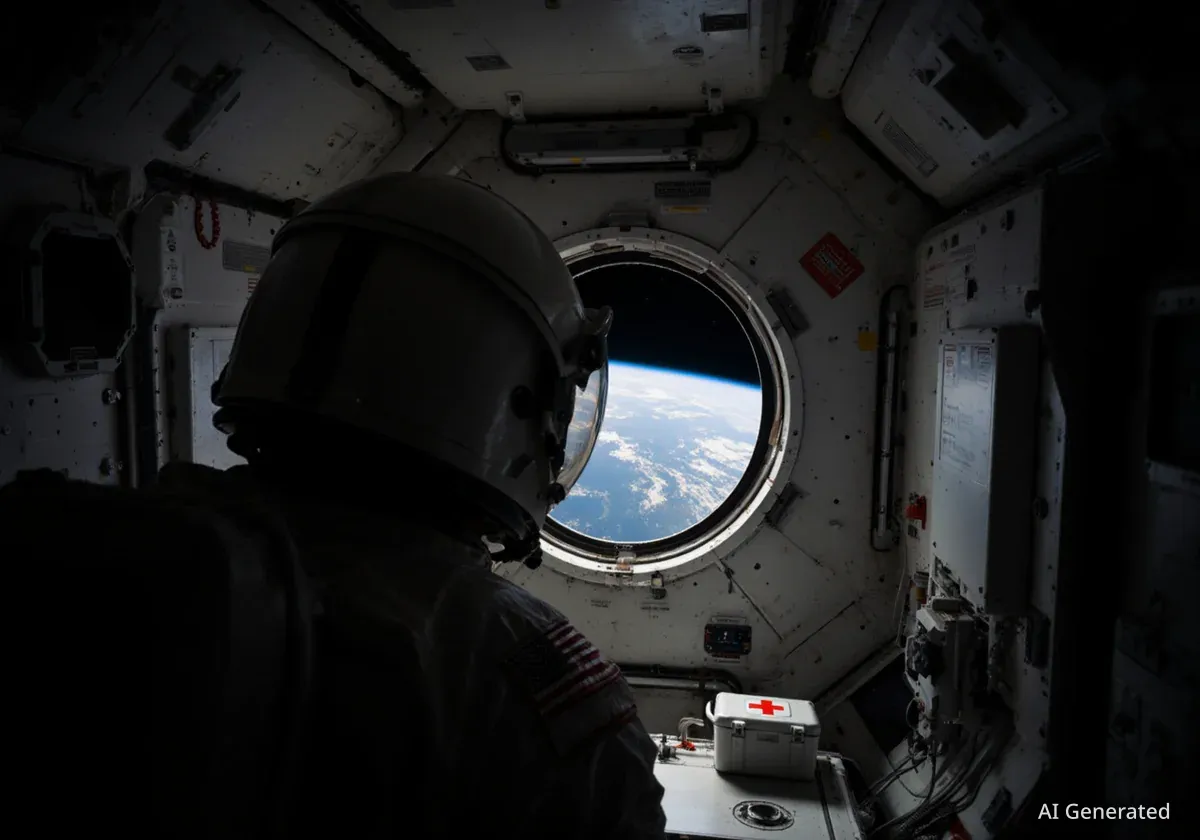
The situation began on January 7, when Mike Fincke experienced a health issue that required what he described as “immediate attention” from his fellow astronauts. The quick actions of his crewmates, guided by NASA flight surgeons on the ground, successfully stabilized his condition.
Initially, NASA maintained the privacy of the astronaut involved, simply announcing on January 7 that a planned spacewalk was postponed due to a “medical concern” with a crew member. The following day, the agency confirmed that the entire Crew-11 team would be returning to Earth earlier than planned.
“On Jan. 7, while aboard the International Space Station, I experienced a medical event that required immediate attention from my incredible crewmates. Thanks to their quick response and the guidance of our NASA flight surgeons, my status quickly stabilized.”
Fincke did not provide specific details about the nature of his medical condition. However, he expressed deep gratitude for the professionalism of his team and the medical staff who assisted him both in orbit and upon his return to Earth.
A Precautionary Return to Earth
NASA officials were clear that the decision to bring Crew-11 home was not an emergency evacuation but a carefully managed plan. The primary reason for the early return was the need for diagnostic tools unavailable on the space station.
“After further evaluation, NASA determined that the safest course was an early return for Crew-11,” Fincke explained in his statement. He clarified it was a “carefully coordinated plan to be able to take advantage of advanced medical imaging not available on the space station.”
Mission by the Numbers
- Mission: Crew-11
- Total Days in Space: 167
- Crew Members: 4 (from USA, Japan, and Russia)
- Event Date: January 7
- Splashdown Date: January 15
This event marks the first time in the history of the International Space Station that a mission has been shortened due to a crew member's medical issue. It highlights the inherent risks of human spaceflight and the robust contingency plans NASA has in place to protect its astronauts.
The Crew-11 Mission
The international Crew-11 team consisted of four members who spent the majority of their 167-day mission conducting scientific research aboard the ISS. The crew included:
- Mike Fincke (NASA, USA)
- Zena Cardman (NASA, USA)
- Kimiya Yui (JAXA, Japan)
- Oleg Platonov (Roscosmos, Russia)
The crew began their departure from the station on January 14 and successfully splashed down in a SpaceX Dragon capsule off the coast of San Diego the following day, on January 15. Upon landing, Fincke was transported to Scripps Memorial Hospital La Jolla for evaluation.
Recovery and Future Implications
In his recent statement, Fincke assured the public of his positive progress. “I’m doing very well and continuing standard post-flight reconditioning at NASA’S Johnson Space Center in Houston,” he said. His recovery appears to be proceeding as expected for an astronaut returning from a long-duration mission.
The Human Element of Spaceflight
Astronauts undergo extensive medical screening and monitoring before, during, and after missions. However, the unique environment of space—with its microgravity and radiation exposure—can present unforeseen health challenges. This incident serves as a real-world test of NASA's ability to manage medical situations in orbit and underscores the importance of crew training and ground support.
Fincke's experience is a powerful reminder of the human aspects of space exploration. As he eloquently put it, “Spaceflight is an incredible privilege, and sometimes it reminds us just how human we are.”
The successful handling of the situation, from the initial response by the crew to the coordinated return and medical care on Earth, demonstrates the effectiveness of NASA's safety protocols. A replacement crew arrived at the ISS about a month after Crew-11's departure, ensuring the continuity of research and operations on the orbital laboratory.