



SpaceX, the aerospace firm founded by Elon Musk, is reportedly considering an initial public offering (IPO) for 2026. The move could value the company at as much as $1.5 trillion and inject billions into its ambitious projects, but it also raises significant questions about the future of its critical work with NASA and the U.S. military.
The potential transition from a private entity to a publicly traded company comes at a pivotal moment. SpaceX is central to America's space exploration goals, including the Artemis program to return astronauts to the moon, yet faces developmental hurdles and increased competition that could reshape the space industry.
Key Takeaways
- SpaceX is considering a 2026 IPO that could value the company up to $1.5 trillion.
- An IPO would provide significant capital but also introduce shareholder oversight and pressure for profitability.
- The company's role in NASA's Artemis moon program is under scrutiny due to delays with its Starship rocket.
- Investors would be backing a company known for both spectacular successes and high-profile failures.
The Financial Frontier
A public offering for SpaceX would mark a major shift for a company that has defined the modern private space race. Once on the verge of bankruptcy, SpaceX now holds a dominant position, launching satellites for its Starlink internet service and executing vital missions for the U.S. government.
An IPO could raise tens of billions of dollars, providing the capital needed to accelerate its long-term vision of colonizing Mars. This influx of funds could also support other forward-looking projects, such as Musk's suggestion of building solar-powered data centers in orbit to support artificial intelligence development.
However, becoming a public company means navigating the demands of shareholders. "If you’re buying into an IPO for SpaceX, then you’re buying into the way they do business, which has explosive failures as well as spectacular successes," noted Clayton Swope, deputy director of the Aerospace Security Project at the Center for Strategic & International Studies.
"The fact that it’s maybe an all-in, holistic SpaceX IPO is a bit of a surprise."
Matthew Weinzierl, Harvard Business School researcher
Experts previously speculated that SpaceX might only take its profitable Starlink subsidiary public. A full IPO would place the entire company, including its experimental and high-risk rocketry division, under the microscope of public markets.
Critical Contracts in the Balance
SpaceX has become an indispensable partner for the United States government. The company holds multi-billion dollar contracts with NASA to transport astronauts and cargo to the International Space Station and is a key launch provider for the Pentagon's national security satellites.
SpaceX's Government Portfolio
The company's government contracts are extensive and vital to U.S. space and defense operations. Notable agreements include:
- Commercial Crew & Cargo: Ferrying astronauts and supplies to the ISS.
- National Security Space Launch: Deploying sensitive defense satellites.
- Nancy Grace Roman Space Telescope: A $255 million deal to launch the observatory in 2027.
- Artemis Program: Contracts for the Human Landing System for missions to the moon.
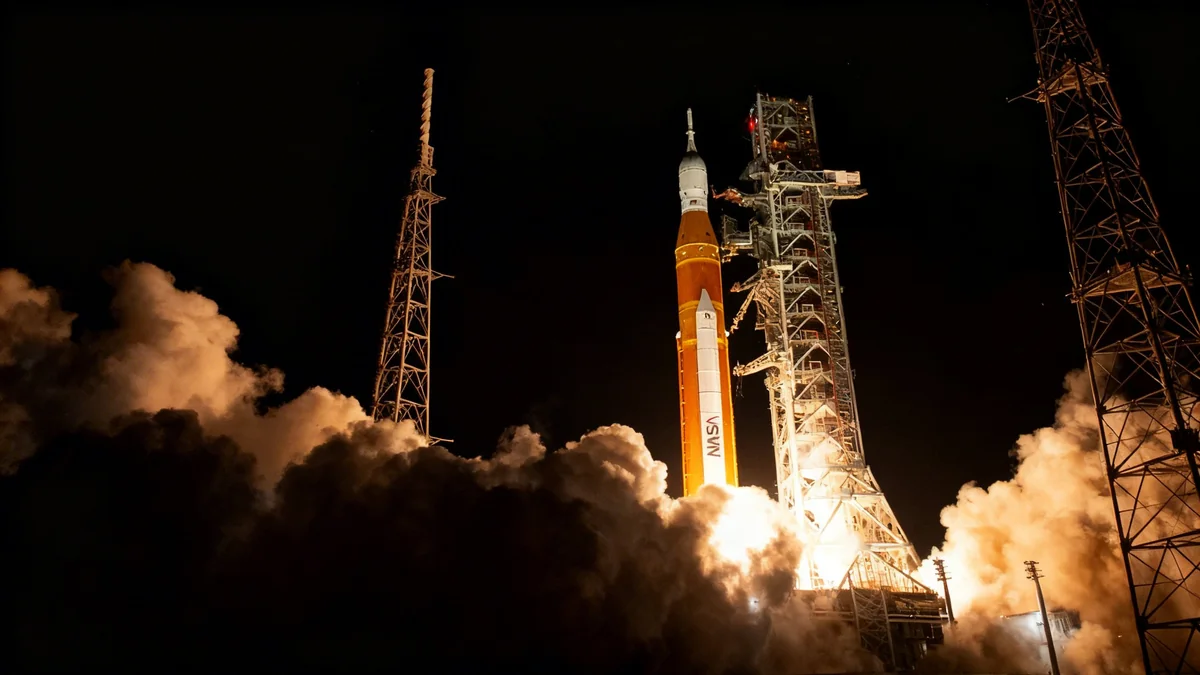
The most high-profile of these is the Artemis program, which aims to land astronauts on the moon for the first time since 1972. SpaceX was awarded the contract to develop the lunar lander for the Artemis III and IV missions using its massive Starship rocket.
Yet, the program has been plagued by delays, partly due to the developmental challenges of Starship. The rocket has yet to demonstrate key capabilities required for a lunar mission, such as in-orbit refueling. This has created uncertainty, leading U.S. officials to reopen the Artemis III landing contract to competition in October, citing the need to keep pace with China's space ambitions.
Navigating New Pressures
A publicly traded SpaceX would face a new dynamic. The company's culture of rapid iteration—often described as "move fast and break things"—could clash with the risk-averse nature of public investors seeking steady returns.
Did You Know? SpaceX currently operates nearly 10,000 Starlink satellites in orbit. While this constellation provides global internet coverage, it also increases the risk of orbital collisions and space debris.
Shareholders would gain a voice in the company's direction, potentially creating friction with Elon Musk's centralized leadership style. Wendy Whitman Cobb, a professor at the School of Advanced Air and Space Studies, has noted that Musk is "not fond" of checks on his authority.
Furthermore, shareholders could demand greater accountability on environmental and security matters. The growing Starlink megaconstellation has raised concerns among astronomers and space safety experts about orbital debris. Aaron Boley, a planetary scientist at the University of British Columbia, hopes that shareholders would hold the company to account on these issues.
An Uncertain Trajectory
While an IPO could provide the fuel for SpaceX's interplanetary dreams, the decision is far from certain. The company continues to attract top engineering talent and significant private investment, which may reduce the immediate need for public funds.
The success of the Starship program remains a major variable. A series of successful test flights could boost investor confidence, while further setbacks could make a near-term IPO less attractive. The final decision will likely depend on a complex calculation of market conditions, technological progress, and the strategic priorities of its leadership.
As Clayton Swope of CSIS suggests, the situation remains fluid. "Things seem to change fast in D.C. and the space community. It might not be a done deal," he said. For now, the space industry and potential investors are watching closely to see if SpaceX will take this historic step onto the public stage.