
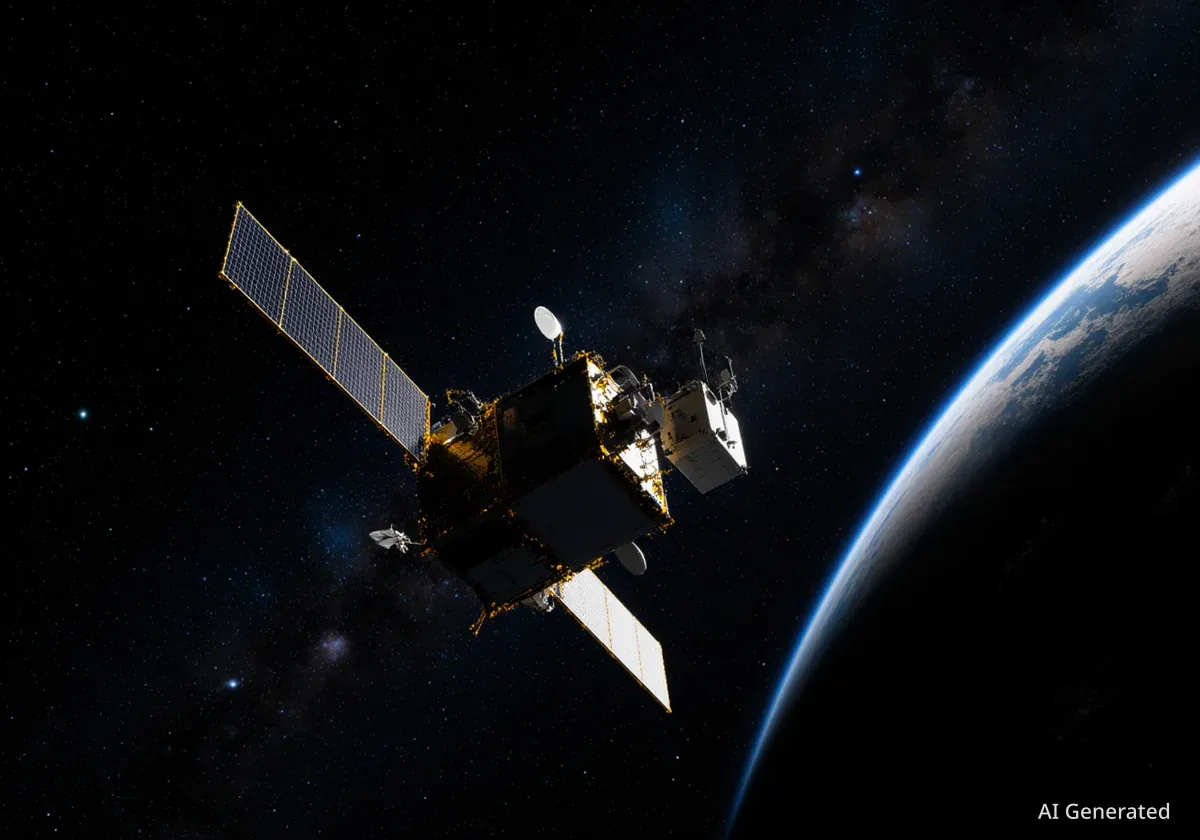



The United States remains dangerously exposed to Russian aggression in space, with current defense strategies insufficient to counter the threat of a nuclear detonation in orbit that could disable critical satellite infrastructure. A new analysis warns that the U.S. and its allies are not adequately prepared for a conflict that extends beyond Earth's atmosphere.
According to security analysts, Russia's military doctrine and capabilities make it plausible that it would consider nuclear or debris-creating attacks against American, allied, or commercial space systems during a crisis. Such an action could have devastating consequences for global communications, military operations, and daily economic activity.
Key Takeaways
- The United States is considered "unacceptably vulnerable" to Russian escalation in space.
- Key threats include a nuclear detonation in low Earth orbit, debris-generating anti-satellite attacks, and interference with commercial satellites.
- Current U.S. deterrence strategies are seen as mismatched with Russia's higher tolerance for risk and self-inflicted damage.
- Experts recommend a shift to "deterrence by denial," focusing on building highly resilient and redundant space systems.
The Escalating Threat Above
The possibility of conflict in space is no longer a distant concept. Security experts warn that in any major crisis with Russia, the United States should anticipate aggressive actions targeting its orbital assets. This assessment is based on Russia's established military doctrine, which appears to have a lower threshold for initiating disruptive actions in space.
The concerns are not theoretical. They are rooted in demonstrated capabilities and a strategic mindset that differs significantly from that of Western nations. The reliance of modern society on space-based infrastructure makes these assets a high-value target for any adversary seeking to gain an advantage in a terrestrial conflict.
Three Critical Scenarios
Analysts have identified three particularly alarming scenarios that could unfold. The first, and most severe, is the detonation of a nuclear weapon in low Earth orbit (LEO). This is the region of space where a vast number of military, civil, and commercial satellites operate.
"From that day, no one can count on space the next day."
- Gen. Chance Saltzman, U.S. Chief of Space Operations, on the potential deployment of a Russian nuclear anti-satellite weapon.
A nuclear explosion in LEO would release an intense pulse of radiation, capable of frying the electronics of satellites that are not specifically hardened against such an event. It would also create a persistent radiation environment that could render vast portions of orbit unusable for months or even years, effectively shutting down services we rely on for navigation, communication, and weather forecasting.
The second scenario involves debris-generating anti-satellite (ASAT) attacks. Russia publicly demonstrated this capability in November 2021 when it destroyed one of its own defunct satellites with a ground-launched missile. The event created a cloud of over 1,500 pieces of trackable debris, endangering all satellites in that orbital path, including the International Space Station.
A Crowded and Dangerous Orbit
The 2021 Russian ASAT test generated thousands of pieces of space debris. This event forced astronauts aboard the International Space Station to take shelter in their transport capsules as a precaution against a potential collision.
The third major threat is a systematic campaign of interference against commercial space systems. The U.S. military and its allies have become increasingly dependent on commercial providers for satellite imagery, communications, and data services. An adversary could target these systems with jamming, cyberattacks, or other forms of electronic warfare to disrupt military command and control.
A Mismatch in Deterrence Philosophy
A central problem identified by security analysts is a fundamental difference in how the West and Russia view the concepts of deterrence and escalation. Western strategy has traditionally relied on "deterrence by punishment," which involves threatening a response so severe that it outweighs any potential benefit of an attack.
However, Russia's strategic thinking appears to place a greater emphasis on demonstrating a willingness to escalate and impose what it deems "unacceptable damage." This approach suggests a higher tolerance for risk, including actions that could cause collateral damage to its own systems. This mindset lowers the barrier for engaging in norm-breaking behavior in space, as the goal is to coerce an opponent by showing a readiness to absorb costs.
The Asymmetry of Space Warfare
Space presents an attractive arena for an adversary facing a conventional military disadvantage. Even a limited number of counterspace weapons, such as jammers or a single ASAT missile, can disrupt the vast and complex satellite networks that a nation like the United States depends on for its military and economic power.
This strategic imbalance means that threats of retaliation may not be as effective as U.S. planners hope. If an adversary believes the U.S. is unwilling to risk a wider conflict, it may feel emboldened to take aggressive actions in space to gain a critical advantage on the ground.
Building Resilience as the New Deterrence
In response to this vulnerability, experts are advocating for a strategic shift away from punishment-based deterrence. Instead, they propose a focus on "deterrence by denial of benefit." The core idea is to make U.S. and allied space systems so resilient that an attack would not achieve its intended goal of crippling their capabilities.
This approach involves several key components:
- Proliferation and Diversification: Deploying large numbers of smaller satellites across various orbits, creating a distributed network that is much harder to disable than one based on a few large, expensive satellites.
- Hardening Systems: Designing and building spacecraft that can withstand the harsh radiation environment created by a nuclear event in space.
- Rapid Reconstitution: Developing the capability to quickly launch replacement satellites to restore any capabilities that are lost or degraded in an attack.
This strategy aims to convince a potential aggressor that an attack on U.S. space assets would be futile. If an adversary knows that the U.S. can absorb an attack and continue to operate effectively, the incentive to launch that attack in the first place is significantly reduced.
A Call for Broader Action
Beyond technical solutions, the analysis calls for a multi-faceted response. This includes establishing a clearer public policy on what constitutes an act of aggression in space and how the U.S. would respond. It also means deeper integration of commercial space companies into national security planning, ensuring their systems are protected and can contribute to a resilient national space architecture.
Furthermore, closer coordination with international allies is crucial. By building a coalition of spacefaring nations committed to responsible behavior, the U.S. can complicate an adversary's targeting calculus and present a united front against aggression. Finally, there is a recognized need to better communicate the nature of these threats to the public, building awareness of how dependent modern life has become on the peaceful use of space.