
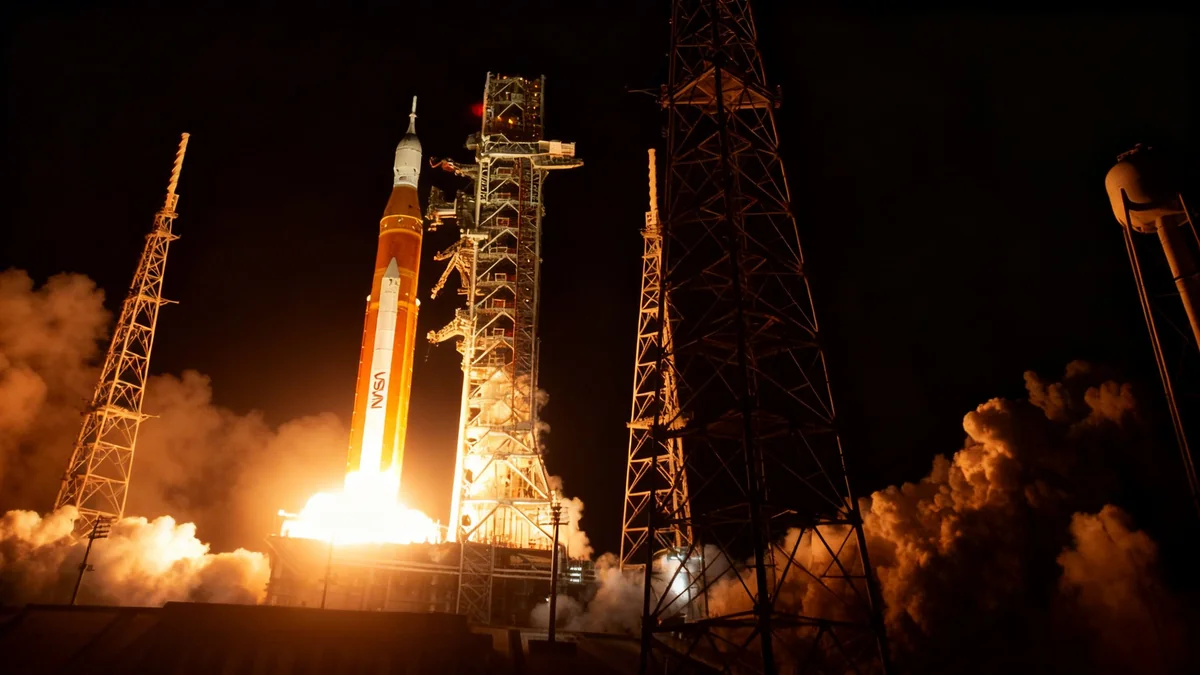
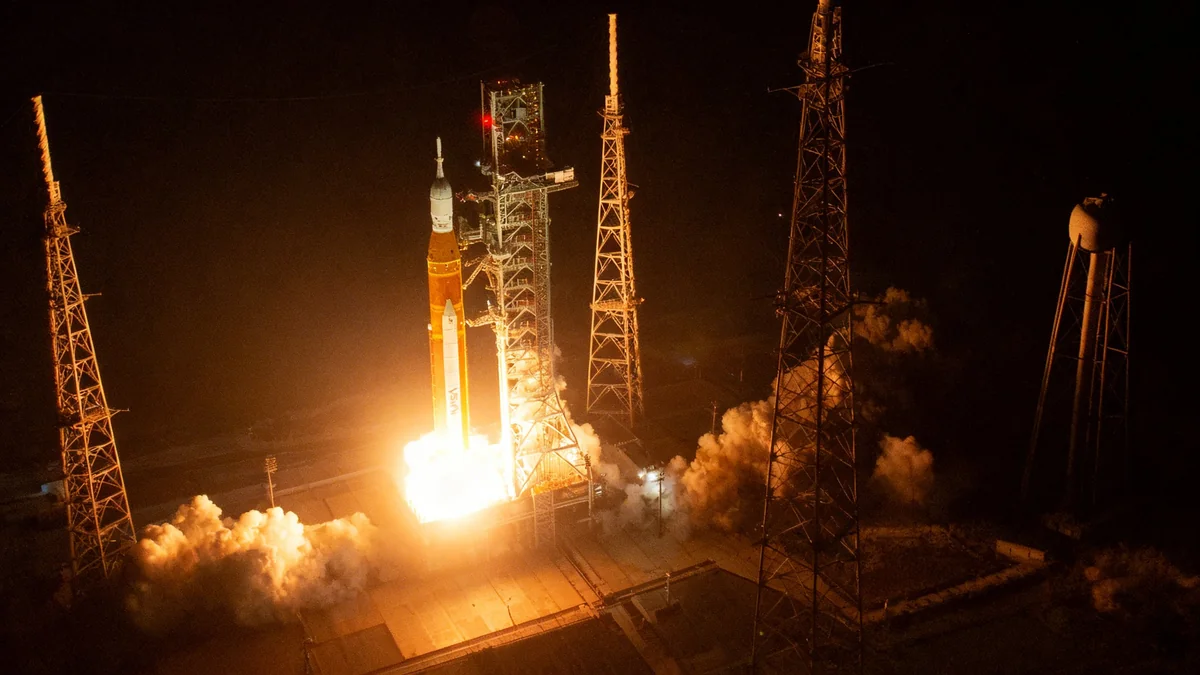

NASA officials are set to provide a crucial update today on the status of the Artemis 2 mission, the first crewed flight to the moon in over half a century. The briefing follows a recent technical issue that delayed the mission's original launch schedule, leaving teams and the public waiting to hear if an April launch is still possible.
The announcement, scheduled for 3 p.m. EDT from Kennedy Space Center in Florida, will follow the completion of a flight readiness review. It will address repairs made to the mission's powerful Space Launch System (SLS) rocket and outline the path forward for its four-person crew.
Key Takeaways
- NASA will hold a news conference today at 3 p.m. EDT (1900 GMT) to update the public on the Artemis 2 mission.
- The mission was delayed from its original schedule after a helium flow problem was detected in the SLS rocket's upper stage.
- The rocket was rolled back to the Vehicle Assembly Building for repairs, which have reportedly been successful.
- Today's briefing will clarify if the mission can still meet the next launch window, which opens on April 1.
- Artemis 2 is a 10-day mission that will send four astronauts on a journey around the moon and back.
A Pivotal Moment for Lunar Exploration
All eyes are on Florida's Kennedy Space Center as NASA prepares to detail the next steps for its landmark Artemis 2 mission. The mission represents a monumental step in human spaceflight, slated to be the first time astronauts will travel beyond low Earth orbit since the final Apollo mission in 1972.
The crew consists of three NASA astronauts—Reid Wiseman, Victor Glover, and Christina Koch—and Canadian Space Agency astronaut Jeremy Hansen. Their 10-day flight plan will take them on a precise trajectory around the far side of the moon before returning to Earth, testing the capabilities of the Orion spacecraft's life support systems and navigation in deep space.
Returning to the Moon
The Artemis program is NASA's multi-stage effort to establish a sustainable human presence on and around the moon. Artemis 1 was an uncrewed test flight of the SLS rocket and Orion capsule in late 2022. Artemis 2 is the first crewed test, and the subsequent Artemis 3 mission aims to land astronauts, including the first woman, on the lunar surface.
This mission serves as a critical dress rehearsal for future lunar landings. The success of Artemis 2 is essential for validating the hardware and procedures that will eventually support a long-term human presence in lunar orbit and on its surface.
The Technical Issue Behind the Delay
The path to the launchpad has not been without challenges. The mission appeared to be on track after a successful fueling test at Launch Pad 39B in late February. However, shortly after this milestone, engineers detected a problem that brought preparations to a halt.
The issue was an interruption in the flow of helium within the upper stage of the Space Launch System rocket. Helium is crucial for purging engine lines and maintaining pressure in the fuel tanks. Any anomaly in this system is treated with extreme caution, as it could impact engine performance during the critical burn to send the Orion capsule toward the moon.
In response to the problem, NASA's mission team made the difficult decision to roll the entire Artemis 2 stack—the SLS rocket and Orion spacecraft—off the launchpad and back to the massive Vehicle Assembly Building (VAB) for detailed inspection and repairs. This move, while causing a delay, was a necessary safety precaution.
Repairs and the Path to Launch
Inside the VAB, engineering teams have been working diligently to diagnose and resolve the helium flow issue. According to preliminary updates from NASA last week, the repair work has been progressing well. This positive news raised hopes that the mission might still be able to launch within its next available window, which opens on April 1.
Today's briefing is expected to provide definitive answers. Key personnel will participate in the news conference, including:
- Lori Glaze, acting associate administrator, Exploration Systems Development Mission Directorate
- John Honeycutt, chair of the Artemis 2 Mission Management Team
- Shawn Quinn, manager of the Exploration Ground Systems Program
- Norm Knight, director of the Flight Operations Directorate
Their assessment, following the flight readiness review, will determine the official target launch date. The review is a comprehensive evaluation of all mission components, from the rocket and spacecraft to the ground systems and flight crew readiness.
"The team rolled the Artemis 2 stack off Pad 39B and back to KSC's cavernous Vehicle Assembly Building for repairs," a NASA statement noted after the issue was first identified, highlighting the methodical approach to ensuring mission safety.
What to Expect from Today's Update
The primary question on everyone's mind is whether the April launch window is still viable. A confirmation would mean the Artemis 2 stack could roll back out to Pad 39B in the coming weeks. A further delay would push the historic mission back, requiring a reset of schedules and timelines.
Beyond the launch date, officials will likely provide more technical details about the nature of the helium issue and the corrective actions taken. They may also discuss any impacts the delay has had on the crew's training schedule and overall mission preparations.
The Artemis 2 mission is more than just a single flight; it is a critical test of the systems that will define the next era of human exploration. The outcome of today's briefing will set the stage for humanity's return to the moon and the ambitious journey to Mars that lies beyond.