
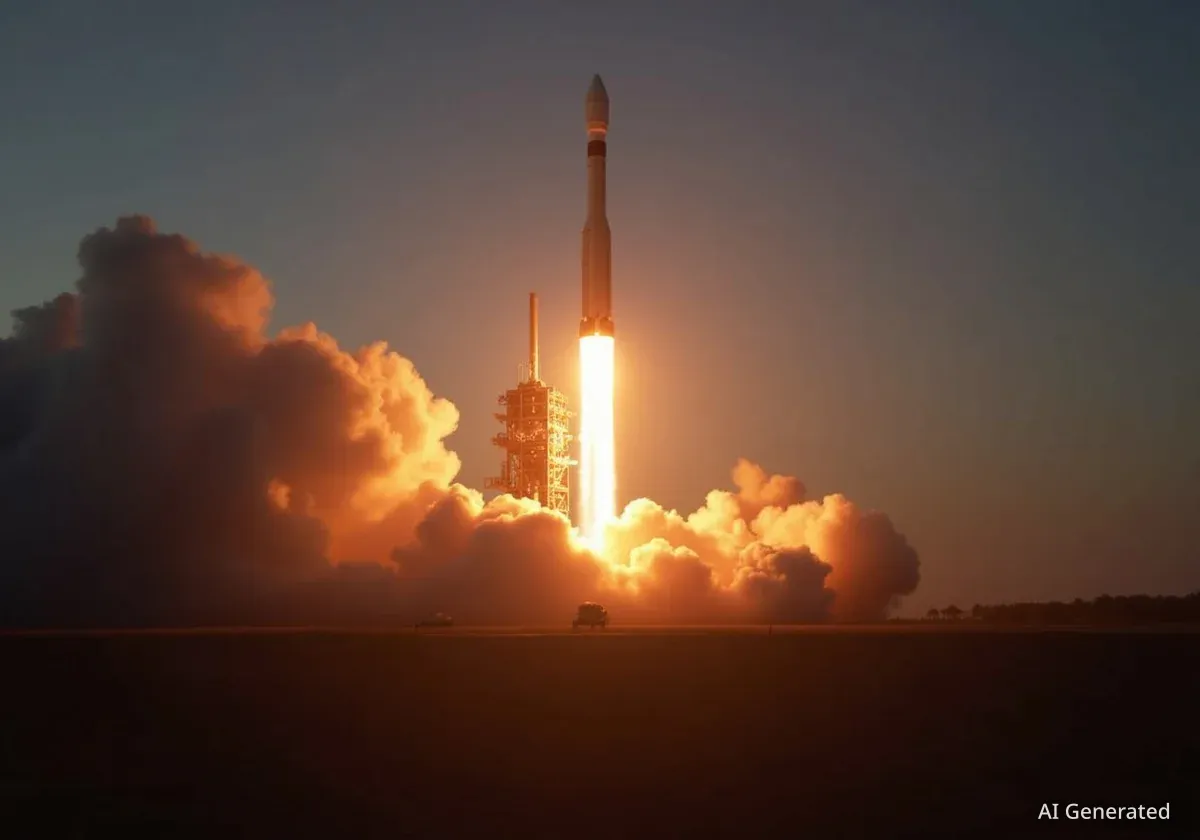


SpaceX is preparing for an early morning launch this Sunday from California, sending a Falcon 9 rocket to orbit with a collection of small satellites. The mission, named Twilight, is scheduled to lift off from Vandenberg Space Force Base, continuing the company's successful rideshare program.
The launch window opens at 5:44 a.m. Pacific Time on January 11. This flight will utilize a flight-proven first-stage booster that is set to return to land shortly after liftoff, a hallmark of SpaceX's reusable rocket technology.
Key Takeaways
- Mission: Twilight, a dedicated small satellite rideshare mission.
- Launch Vehicle: SpaceX Falcon 9 rocket.
- Launch Site: Space Launch Complex 4E (SLC-4E) at Vandenberg Space Force Base, California.
- Date and Time: Sunday, January 11, at 5:44 a.m. PT.
- Booster Recovery: The first stage is planned to land at Landing Zone 4 (LZ-4) at Vandenberg.
Mission Details and Schedule
The primary launch opportunity for the Twilight mission is set for Sunday, January 11. The instantaneous launch window is targeted for 5:44 a.m. PT. This pre-dawn timing is typical for launches aiming for specific orbital planes from the West Coast.
Should the launch be delayed for any reason, a backup opportunity is available the following day. A 57-minute window opens on Monday, January 12, at 5:19 a.m. PT. Weather conditions and technical readiness will be the final determinants for the launch proceeding on schedule.
For those interested in watching the event live, SpaceX will begin a webcast approximately 15 minutes before the scheduled liftoff. The broadcast will be available on the company's official website and its X social media account.
A Veteran Booster Takes Flight Again
The Falcon 9 first-stage booster assigned to this mission is a seasoned veteran, marking its fifth flight. This reusability is a core component of SpaceX's strategy to reduce the cost of access to space. By recovering and reflying its most expensive hardware, the company has significantly increased its launch frequency.
Previously, this specific booster supported the launch of the Sentinel-6B mission, an Earth observation satellite, and three separate Starlink internet satellite missions. Its diverse flight history demonstrates the reliability and flexibility of the Falcon 9 fleet.
Booster Flight History
- Flight 1: Sentinel-6B
- Flight 2: Starlink Mission
- Flight 3: Starlink Mission
- Flight 4: Starlink Mission
- Flight 5: Twilight (upcoming)
Following stage separation, where the first stage detaches from the second stage carrying the payload, the booster will perform a series of engine burns to navigate back to the California coast. It is scheduled to land at Landing Zone 4 (LZ-4) at Vandenberg Space Force Base, allowing for a ground-based recovery.
The Growing Importance of Rideshare Missions
The Twilight mission is part of SpaceX's dedicated smallsat rideshare program, which acts as a sort of orbital carpool for smaller satellites. This service provides a more affordable and frequent path to orbit for universities, startups, and international organizations that may not have the budget for a dedicated launch.
What is a Sun-Synchronous Orbit?
The mission is targeting a dusk-dawn sun-synchronous orbit. This is a special type of polar orbit where a satellite passes over any given point on Earth's surface at the same local solar time. For imaging satellites, this means the surface is always illuminated by the sun at the same angle, which is useful for tracking changes over time.
By grouping multiple payloads onto a single Falcon 9, the cost is distributed among many customers. This approach has democratized access to space, enabling a wide range of scientific research, technology demonstration, and commercial ventures.
To date, SpaceX's rideshare program has been highly successful. The company has launched over 1,500 payloads to orbit for more than 130 different customers. These numbers highlight the significant demand for reliable and cost-effective launch services for the small satellite market.
The payloads on the Twilight mission, while not individually detailed, will contribute to this growing ecosystem of satellites performing tasks from Earth observation and communications to in-orbit technology testing. Each successful rideshare launch further populates low-Earth orbit with new capabilities and expands the commercial space economy.