


A decades-old concept of harvesting solar energy in orbit and beaming it to Earth is becoming a reality, driven by lower launch costs and advances in manufacturing. Known as space-based solar power (SBSP), this technology promises a consistent and abundant source of clean energy, available 24 hours a day, regardless of weather conditions on the ground.
Key Takeaways
- Space-based solar power involves collecting solar energy in orbit and wirelessly transmitting it to Earth.
- It provides a constant, reliable power source, unlike intermittent terrestrial renewables like wind and solar.
- Reduced launch costs from reusable rockets have made the technology economically feasible for the first time.
- Nations including the U.S., UK, China, and Japan are actively developing SBSP projects.
- The primary remaining obstacle is securing long-term infrastructure financing, not technological barriers.
How Space-Based Solar Power Works
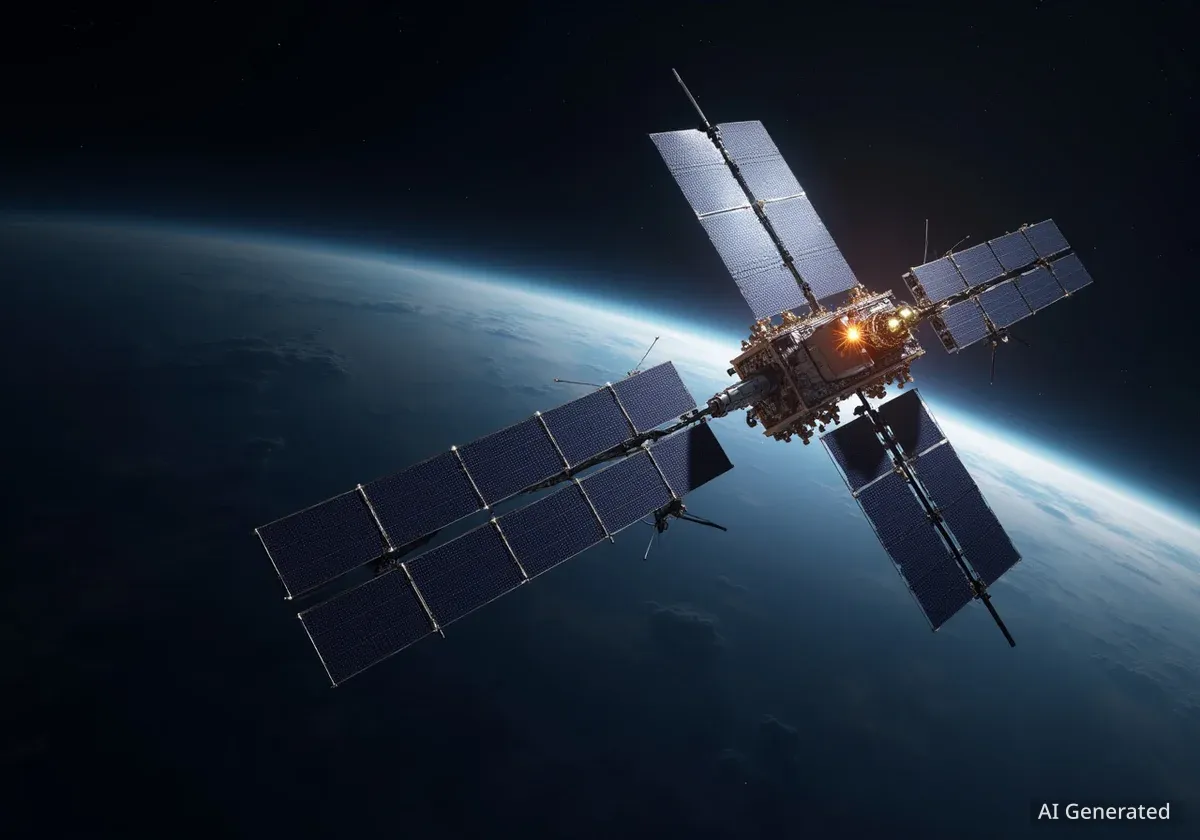
The fundamental idea behind SBSP is to place large solar arrays into geostationary orbit, approximately 36,000 kilometers (about 22,300 miles) above the Earth. At this altitude, the satellites are exposed to continuous, unfiltered sunlight, allowing them to generate power around the clock.
Once collected, the solar energy is converted into low-frequency microwaves. This energy is then transmitted as a focused beam toward a receiving station on the ground. The beam's intensity is designed to be safe, with a peak of around 230 watts per square meter, which is roughly 25% of the intensity of the midday sun.
The Ground-Based Infrastructure
The receiving station on the ground, known as a "rectenna" (rectifying antenna), is a key component of the system. It consists of a large, lightweight mesh of antennas spread across a wide area. This design makes the ground station relatively inexpensive to construct compared to traditional power plants.
The rectenna captures the microwave energy and converts it back into standard electricity, which can then be fed directly into the existing power grid. Because the mesh structure is mostly transparent, the land beneath it can be used for other purposes, such as agriculture or co-locating terrestrial solar panels, enabling efficient dual land use.
A Concept Decades in the Making
The idea of space-based solar power was first proposed by scientist Peter Glaser in 1968. While deemed technically possible in the 1970s, the prohibitive cost of launching heavy materials into orbit made it economically impractical for decades. The recent emergence of reusable rocket technology has fundamentally changed this calculation.
The Advantages Over Terrestrial Renewables
While ground-based solar and wind farms are essential to the energy transition, they face a significant challenge: intermittency. They only produce power when the sun is shining or the wind is blowing. SBSP overcomes this limitation by providing a constant stream of baseload power, a role currently filled primarily by fossil fuels and nuclear energy.
Higher Efficiency and Fewer Materials
Sunlight in space is significantly more intense than on Earth's surface, as it is not filtered by the atmosphere. This means that space-based solar panels can generate substantially more energy per square meter than their terrestrial counterparts. This increased energy density leads to a dramatic reduction in the amount of materials needed.
Critical Mineral Savings
According to the International Energy Agency (IEA), the transition to clean energy will require a massive increase in the mining of critical minerals. An SBSP system requires orders of magnitude fewer of these minerals to deliver the same amount of continuous power as a terrestrial solar farm paired with large-scale battery storage.
Furthermore, the power from SBSP is dispatchable. A single satellite can see approximately one-quarter of the globe, allowing energy to be redirected between different countries almost instantly. This capability allows it to function like a massive, flexible interconnector in space, enhancing global energy security.
A New Global Space Race for Energy
Recognizing the immense potential of SBSP, nations and private companies worldwide have initiated a new race to develop and deploy this technology. Several major players have made significant progress.
- United States: The California Institute of Technology (Caltech) recently conducted a successful in-orbit test, demonstrating wireless power transmission from space for the first time.
- China: The country has announced ambitious plans to construct a kilometer-scale solar power array in orbit by 2028.
- United Kingdom: The UK government is funding the development of the CASSIOPeiA SBSP concept, with the goal of having a commercial system operational within six years. It also established the Space Energy Initiative, a coalition of over 90 organizations from industry and academia.
- Japan: Japan has long been a leader in SBSP research and continues to advance its own programs.
- Europe: The European Space Agency (ESA) has explored the technology's feasibility through its SOLARIS initiative.
Overcoming the Final Hurdles
While the core technology is now considered viable, several challenges must be addressed to achieve large-scale deployment. The most significant historical barrier, launch cost, is rapidly diminishing thanks to reusable rockets from companies like SpaceX.
Active development continues in areas such as efficient wireless power transmission over vast distances and the autonomous, in-orbit assembly of large structures. However, many of these technologies are also being developed for other commercial space applications, creating shared progress.
The Financial "Valley of Death"
Perhaps the most significant obstacle remaining is not technical but financial. Building the long-term infrastructure for SBSP requires substantial capital investment. Traditional venture capital, which favors rapid returns, is not well-suited for such projects.
"The larger pools of institutional money required – from pension funds and sovereign wealth funds – operate on a different logic, favouring investments with predictable and quick profits. There is a profound lack of risk appetite for capital-intensive projects that may take years to become profitable," explains David Homfray, Co-Founder of Space Solar.
To bridge this financial gap, commercial SBSP companies are creating roadmaps with clear, value-creating milestones. This strategy is gaining traction with investors who see SBSP as one of the few technologies capable of supporting a global energy transition on the necessary scale.
Economic and Societal Impact
The successful deployment of SBSP would have transformative effects beyond just providing clean energy. It would create a new, multi-trillion-dollar global industry, targeting an annual electricity market valued at over $2.5 trillion. This would drive economic growth, create high-skilled jobs, and reduce global reliance on volatile fossil fuel markets.
The model also presents a unique opportunity for global development and climate justice. Since the most expensive asset is the satellite in orbit, the ground-based rectennas are relatively cheap to build. This could allow developed nations to provide clean energy directly to developing countries, enabling them to leapfrog fossil-fuel infrastructure and achieve sustainable industrialization.
With focused investment, experts believe that 90% of the remaining barriers to SBSP could be addressed within five years. By harnessing the power of the sun from orbit, the world can take a significant step toward a future of clean, abundant, and equitable energy for all.