
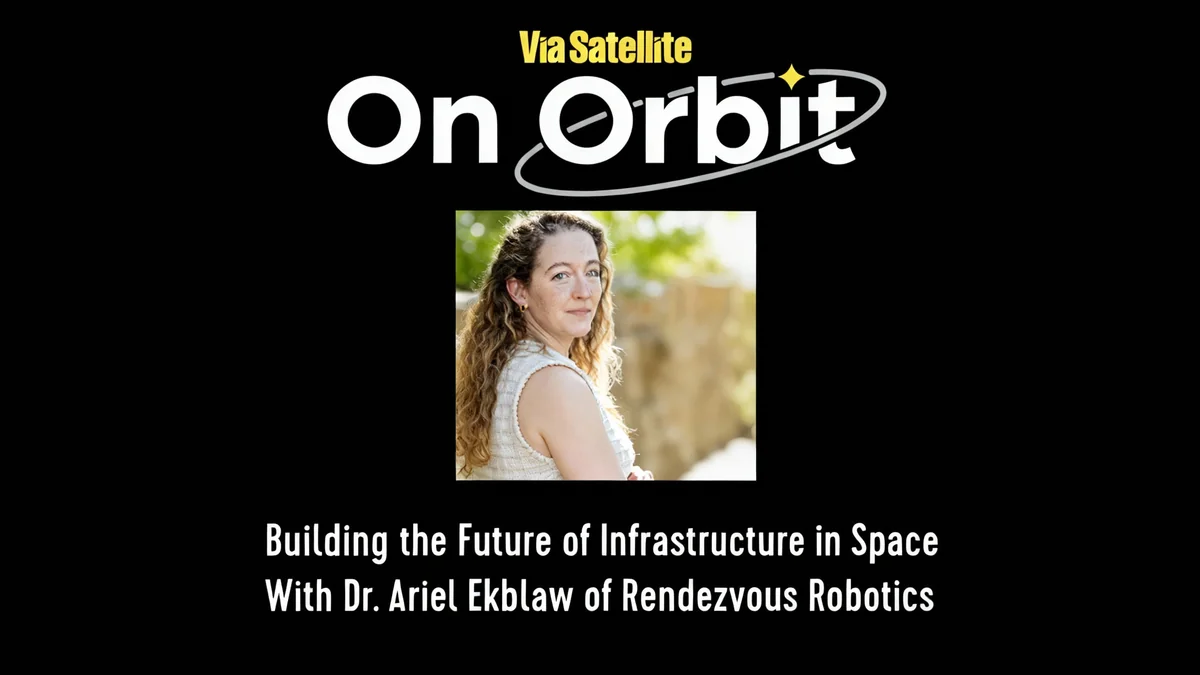


The concept of constructing massive structures in Earth's orbit, once confined to science fiction, is rapidly becoming a tangible goal. A new startup, Rendezvous Robotics, has emerged with a plan to use autonomous, modular robots to build everything from large-scale antennas to in-space manufacturing facilities, signaling a major shift in how we build the future of space infrastructure.
Led by Dr. Ariel Ekblaw, the company is developing a system of self-assembling tiles designed to click together in orbit. This technology could overcome one of the biggest limitations of space exploration: the size constraints of rockets. Instead of launching large, folded structures, components could be sent up in pieces and assembled by these robotic builders.
Key Takeaways
- Rendezvous Robotics, a new space startup, is developing technology for large-scale in-space construction.
- The core technology involves autonomous, modular robotic tiles that can dock and assemble themselves in orbit.
- Potential applications include building massive solar arrays, powerful communication antennas, and orbital manufacturing sites.
- This approach aims to bypass the size limitations of current rocket fairings, enabling structures larger than any built before.
A New Frontier for Construction
For decades, anything sent to space had to fit within the protective nose cone, or fairing, of a rocket. This fundamental limitation has dictated the size and design of satellites, space stations, and telescopes. Rendezvous Robotics, which recently came out of a period of quiet development, aims to fundamentally change this paradigm.
The company's mission is to enable the construction of vast structures directly in space. By launching smaller, standardized components, their system of robotic tiles can autonomously find each other and connect, forming complex and expansive assemblies without direct human intervention on-orbit.
This capability could unlock a new phase of the space economy. Instead of being limited to what can be folded into a rocket, companies could design structures optimized for performance in the microgravity environment.
Why In-Space Assembly is a Game-Changer
Currently, complex structures like the James Webb Space Telescope are launched in a highly compressed, folded state and must undergo a risky, intricate unfolding process in space. In-space assembly using modular robots would eliminate this single point of failure. It allows for repairs, upgrades, and the creation of structures far too large to ever be launched in one piece from Earth.
The Technology of Self-Assembling Tiles
At the heart of Rendezvous Robotics' vision are its autonomous, modular tiles. These units are designed to be the fundamental building blocks for future orbital infrastructure. Each tile is equipped with its own systems for propulsion, navigation, and docking, allowing it to operate independently.
Once deployed in orbit, a swarm of these tiles would use onboard sensors and software to locate their designated connection points and securely dock with one another. This process, repeated hundreds or thousands of times, could form enormous, rigid structures.
Potential Applications
The applications for this technology are extensive and could transform multiple industries. Some of the most promising uses include:
- Phased Array Antennas: Building massive antenna arrays in orbit could dramatically increase the power and reach of global communication networks.
- Solar Power Stations: Large solar panels could be assembled to create orbital power plants, potentially beaming clean energy back to Earth.
- Manufacturing Hubs: In-space factories could leverage the unique properties of microgravity to produce materials like fiber optics or pharmaceuticals with a quality unattainable on the ground.
The concept of modular space construction is not entirely new, but advancements in robotics and artificial intelligence are now making it a practical possibility. The success of this technology could reduce launch costs and mission complexity for large-scale projects.
The Architect of an Orbital Future
The driving force behind Rendezvous Robotics is Dr. Ariel Ekblaw, who is also the founder of the Aurelia Institute, an organization dedicated to making space more accessible. Her work focuses on creating a sustainable human presence in space where people can not just survive, but actively thrive.
"We are working on the challenge of how we will build a future in space," Dr. Ekblaw stated in a recent discussion, highlighting her vision for a vibrant ecosystem beyond Earth.
Dr. Ekblaw's approach is rooted in democratizing access to space. By developing foundational technologies like autonomous construction, her work aims to lower the barrier to entry for new companies and nations to participate in the growing space economy. This includes fostering educational outreach to inspire the next generation of engineers and explorers.
The Growing In-Space Economy
Rendezvous Robotics is not alone in pursuing the next generation of space infrastructure. The sector is seeing a surge of innovation as companies compete to build the foundational systems for a permanent off-world economy. This includes everything from satellite servicing and refueling to orbital power grids and data processing centers.
The development of reliable in-space manufacturing and assembly is considered a critical next step. It represents the transition from simply placing objects in orbit to actively building and managing a dynamic industrial environment. The success of companies like Rendezvous Robotics could pave the way for a future where orbital habitats, deep-space telescopes, and interplanetary staging posts are not just concepts, but realities constructed by autonomous robots in the vacuum of space.