
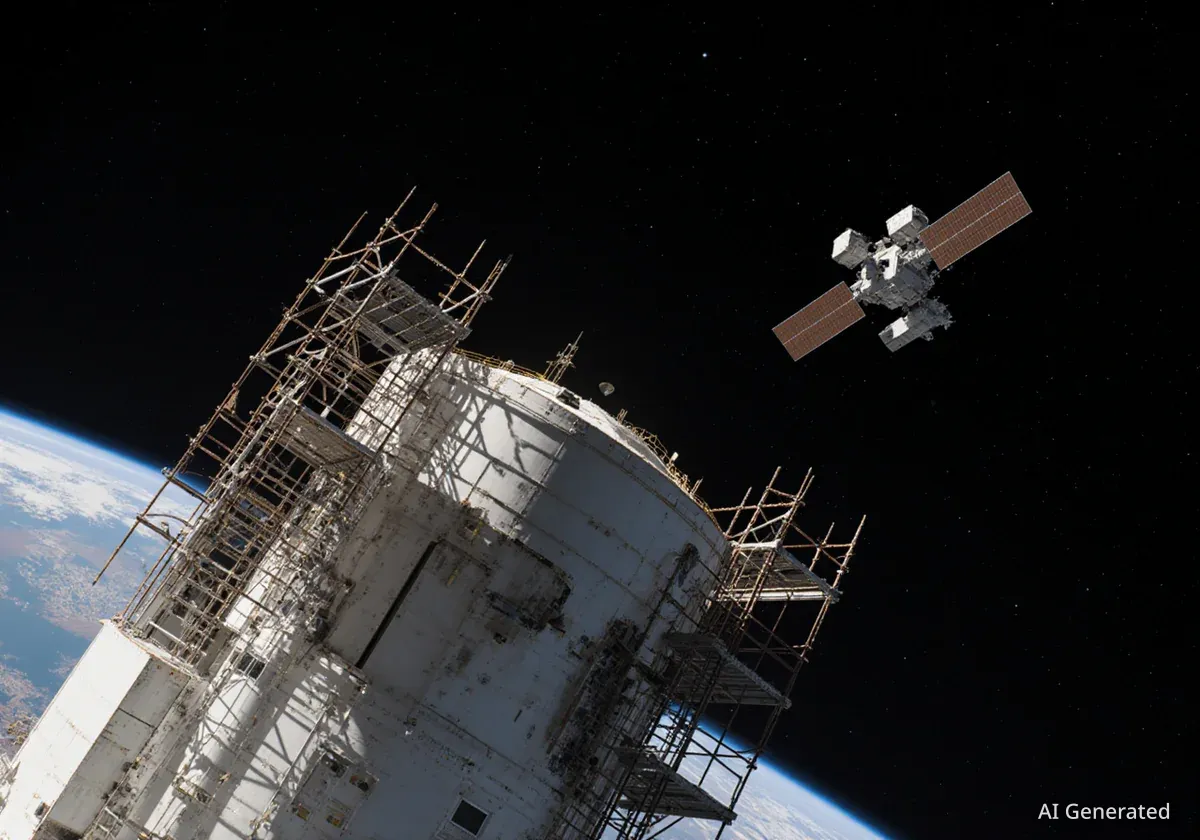

The International Space Station (ISS), a cornerstone of global scientific collaboration for over two decades, is scheduled for deorbit in 2030. As this deadline approaches, concerns are mounting over delays in NASA's program to develop commercial replacements, potentially creating a critical gap in America's presence in low-Earth orbit.
This situation places the United States at risk of ceding leadership in space to competitors like China, whose Tiangong space station is already operational. A failure to ensure a continuous human presence in orbit could have significant consequences for scientific research, technological development, and international diplomacy.
Key Takeaways
- The International Space Station is set to be deorbited in 2030, ending a 30-year era of international cooperation.
- NASA's Commercial Low Earth Orbit Destinations (CLD) program, meant to fund private replacements, has faced delays.
- A gap in U.S. orbital presence could force international partners to collaborate with China's Tiangong station.
- Losing access to low-Earth orbit would halt critical microgravity research in medicine and materials science.
- The situation poses a direct challenge to U.S. technological and diplomatic leadership in space.
The End of an Era
For more than 30 years, the International Space Station has served as a symbol of post-Cold War cooperation. Operated by the United States in partnership with Russia, Canada, Japan, and the European Union, it has been a hub for groundbreaking research and a testament to shared scientific goals. Since its launch in 2000, it has been continuously inhabited, providing a unique laboratory for experiments that are impossible on Earth.
However, the aging outpost is nearing the end of its operational life. NASA's plan involves a controlled deorbit maneuver in 2030, which will see the station safely break up over a remote area of the Pacific Ocean. This planned retirement marks the end of a significant chapter in space exploration and shifts the focus to what comes next.
A New Model for Space Stations
Instead of building another government-owned station, NASA's strategy is to become a customer for services provided by private companies. The Commercial Low Earth Orbit Destinations (CLD) program is designed to stimulate a commercial market, where NASA can lease space for its astronauts and experiments on privately owned and operated stations. This model is intended to reduce costs and foster innovation.
A Looming Gap in Orbit
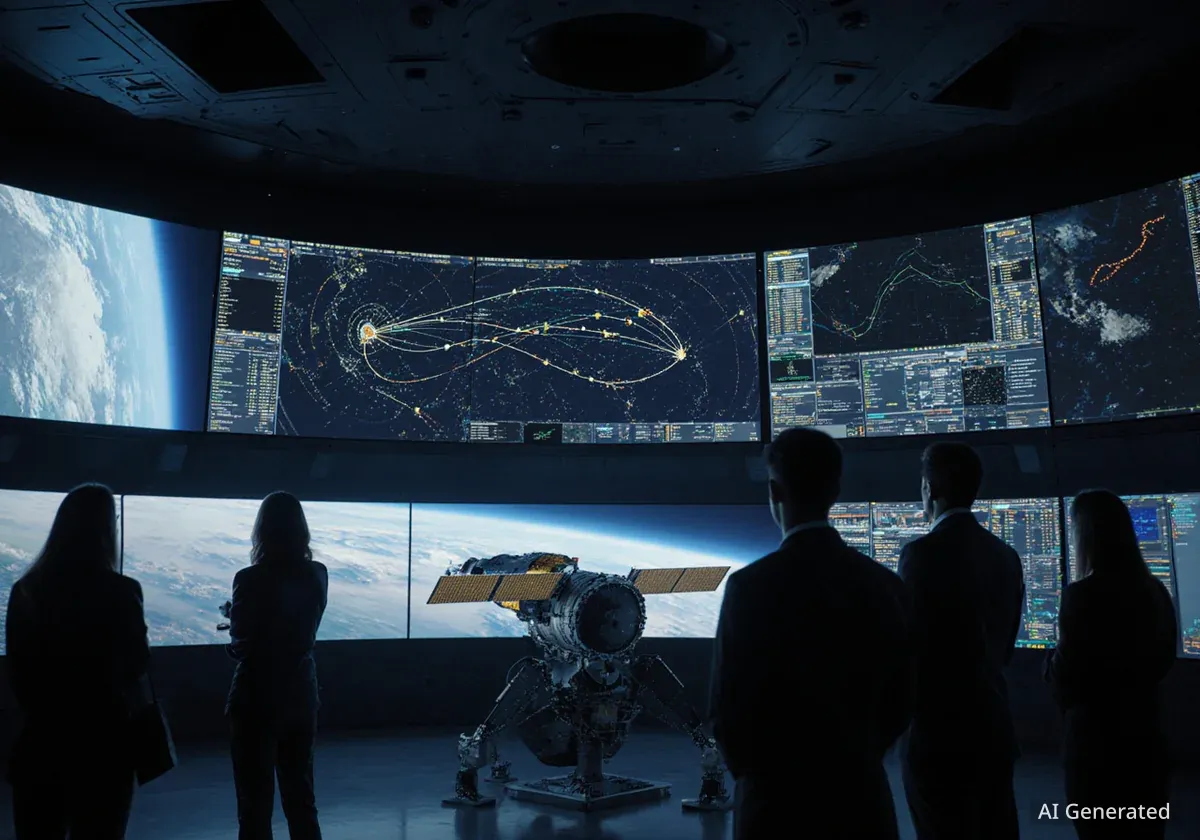
The success of this transition hinges on the timely development of commercial space stations. However, the CLD program has encountered delays, raising fears that a replacement will not be ready by the time the ISS is decommissioned. A gap of even a few years without a U.S.-led platform in orbit could have cascading negative effects.
A continuous presence in low-Earth orbit is not just about national prestige; it is essential for maintaining a skilled workforce, testing new technologies, and conducting long-term scientific studies. Any interruption would mean losing momentum that has been built over decades.
The Diplomatic Stakes
Space has become a key arena for international diplomacy. The U.S.-led Artemis Accords, which outline principles for peaceful space exploration, have been signed by 61 nations. This alliance stands in contrast to a competing bloc led by China and Russia. If the U.S. cannot provide access to a space station, its partners may have no choice but to turn to China's Tiangong station, which has been fully operational since 2021.
Russia has already announced its intention to depart the ISS and develop its own orbital station, signaling a formal split in the long-standing partnership. If the U.S. fails to field a successor, it risks isolating itself and its allies, undermining the diplomatic framework it has worked to build.
The Scientific and Technological Cost
The unique microgravity environment of the ISS has enabled research that has led to significant breakthroughs on Earth. Scientists have made advances in medicine, materials science, and human biology that would not have been possible otherwise.
For example, research conducted on the ISS has contributed to treatments for diseases like cancer, Alzheimer's, and heart disease. One notable experiment improved the delivery mechanism for the cancer drug Keytruda by growing more uniform protein crystals in space. Halting this type of research would mean forgoing potential discoveries that benefit all of humanity.
"Losing America’s technological edge will create compounding long-term risks, leaving the United States increasingly behind and unprepared."
A Stepping Stone to Deeper Space
Beyond basic research, low-Earth orbit is a crucial proving ground for technologies needed for more ambitious missions to the Moon and Mars. On the ISS, astronauts have learned to:
- Recycle up to 98% of their water
- Grow their own food in space
- Develop advanced life support and navigation systems
- Improve on-station healthcare and medical procedures
These capabilities must be continuously refined on a new generation of space stations to ensure the success of future deep-space exploration. A gap in orbital presence would mean a gap in learning and preparation for humanity's next giant leap.
The Race Against Time
With the 2030 deadline less than a decade away, the pressure is on NASA and its commercial partners to accelerate the CLD program. The challenge is not only technical but also bureaucratic, as the program must navigate funding constraints and complex contracting processes.
Experts argue that any further delays could be more costly than the potential savings from budget cuts. The strategic cost of losing access to low-Earth orbit—in terms of scientific leadership, diplomatic influence, and national security—is immeasurable. Finalizing the plan to replace the ISS and executing it without further hesitation is now a top priority for maintaining the United States' position as a leader in space exploration.