

NASA has officially reversed its long-standing policy on personal electronics, announcing that astronauts on upcoming Artemis and International Space Station missions will be permitted to carry modern smartphones. The change marks a significant shift in the agency's approach to technology qualification and astronaut life in space.
The new directive will take effect starting with the Crew-12 mission to the ISS and the historic Artemis II flight, which is slated to carry astronauts around the Moon for the first time in over 50 years. This move will equip crews with the same high-quality cameras and communication tools available to the public on Earth.
Key Takeaways
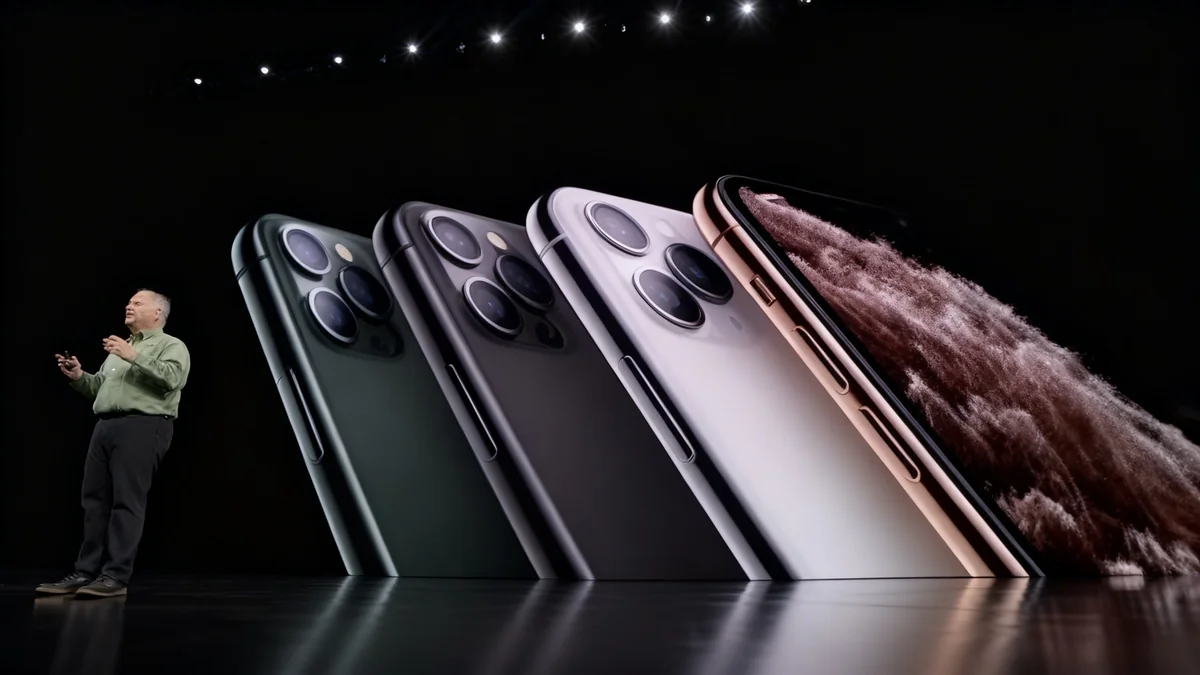
- NASA will now allow astronauts to bring personal smartphones, such as iPhones, on space missions.
- The policy change begins with the Crew-12 and Artemis II missions.
- This decision is part of a broader effort to streamline NASA's hardware qualification process.
- Astronauts will now have modern, high-resolution cameras for capturing images and video in space.
A Modern Tool for a New Era of Exploration
The decision was confirmed by NASA Administrator Jared Isaacman in a public statement. He highlighted the dual benefits of the new policy: enhancing the crew's ability to document their experiences and pushing the agency to modernize its procedures.
"NASA astronauts will soon fly with the latest smartphones, beginning with Crew-12 and Artemis II," Isaacman stated. "We are giving our crews the tools to capture special moments for their families and share inspiring images and video with the world."
Previously, astronauts relied on agency-approved, often outdated, photography equipment. For the landmark Artemis II mission, the planned equipment included a DSLR camera from 2016 and GoPro models that were nearly a decade old. The introduction of current-generation smartphones provides a significant upgrade in portability, video quality, and ease of use.
This will allow astronauts to capture spontaneous moments, whether conducting an experiment or observing a transient phenomenon through a window, without needing to set up bulky equipment.
Challenging Decades of Bureaucracy
Beyond the immediate benefit of better photos and videos, the policy shift represents a deliberate effort to reform NASA's internal processes. Isaacman emphasized that this move is a crucial step in challenging what many in the aerospace industry refer to as "requirement bloat."
The Rigors of Space Qualification
Getting any electronic device certified for spaceflight is a complex and lengthy process. Hardware must undergo a battery of tests to ensure it can withstand the harsh environment of space and not pose a risk to the crew or spacecraft. Key tests include:
- Radiation Hardening: Assessing how microchips perform when exposed to cosmic radiation.
- Thermal and Vacuum Testing: Ensuring batteries and components can function in extreme temperatures and the vacuum of space without failing or catching fire.
- Outgassing Analysis: Checking that materials do not release harmful gasses in a sealed environment.
- Vibration and Shock Tests: Simulating the intense forces experienced during a rocket launch.
These stringent requirements, while essential for safety, have often prevented the latest consumer technology from reaching orbit in a timely manner. The approval of smartphones suggests a new, more agile approach to hardware certification.
"Just as important, we challenged long-standing processes and qualified modern hardware for spaceflight on an expedited timeline," Isaacman explained. "That operational urgency will serve NASA well as we pursue the highest-value science and research in orbit and on the lunar surface. This is a small step in the right direction."
The View from the Moon in 4K
The Artemis II crew will be the first to benefit from this change on a lunar mission. As they orbit the Moon, they will have the ability to record their journey with the advanced camera systems found in modern smartphones. This promises to deliver unprecedented images and videos of the lunar surface and the Earth from a distance.
While this is a new policy for official NASA missions, smartphones have flown in space before. Two iPhone 4s were aboard the final Space Shuttle mission in 2011 for an experiment, and private astronauts on missions like the Axiom flights and Isaacman's own Polaris Dawn have used personal devices in orbit.
For the public, this change means the potential for more frequent and intimate glimpses into the lives of astronauts. The ability to quickly shoot and transmit high-quality video could lead to more dynamic social media updates and live streams from the International Space Station and, eventually, the lunar vicinity.
As NASA pushes toward establishing a permanent presence on the Moon, equipping its astronauts with modern, versatile tools is a critical step. While an iPhone may seem like a small addition to a multi-billion dollar mission, it symbolizes a larger shift towards making space exploration more efficient, accessible, and connected to the world watching from below.