

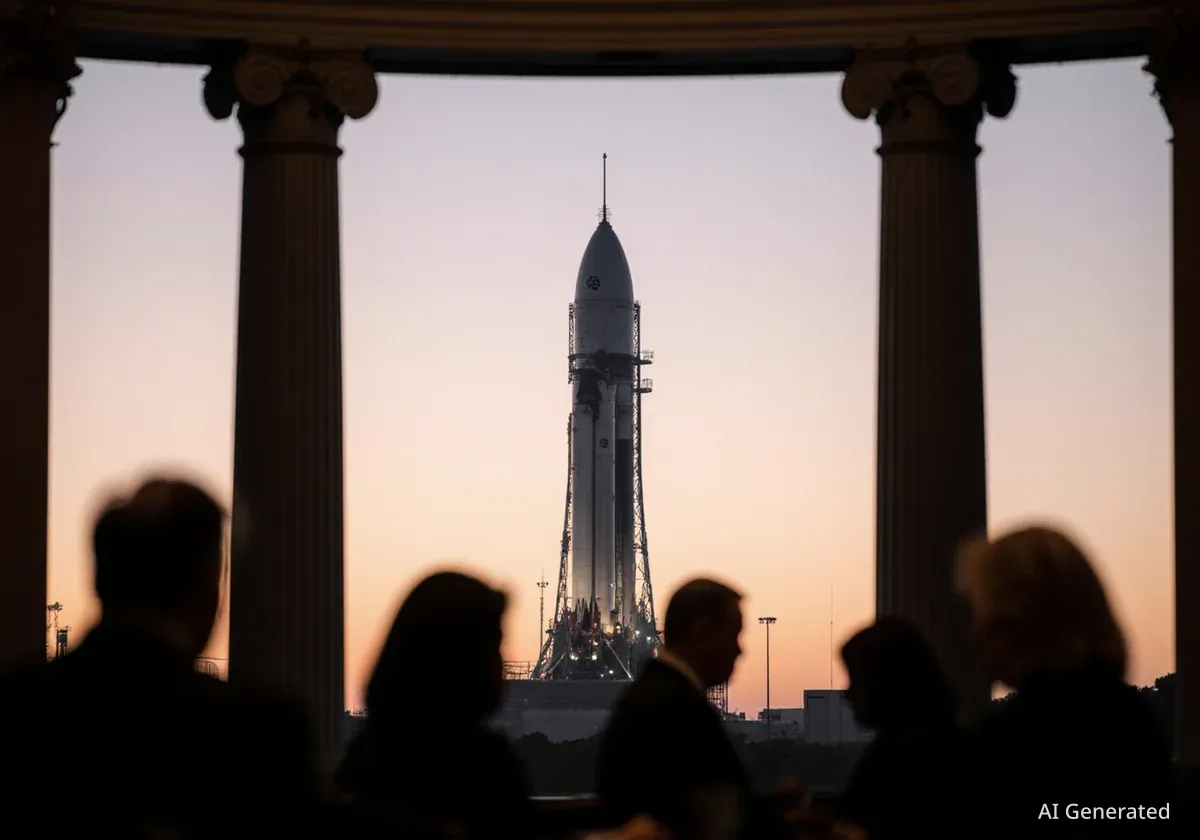


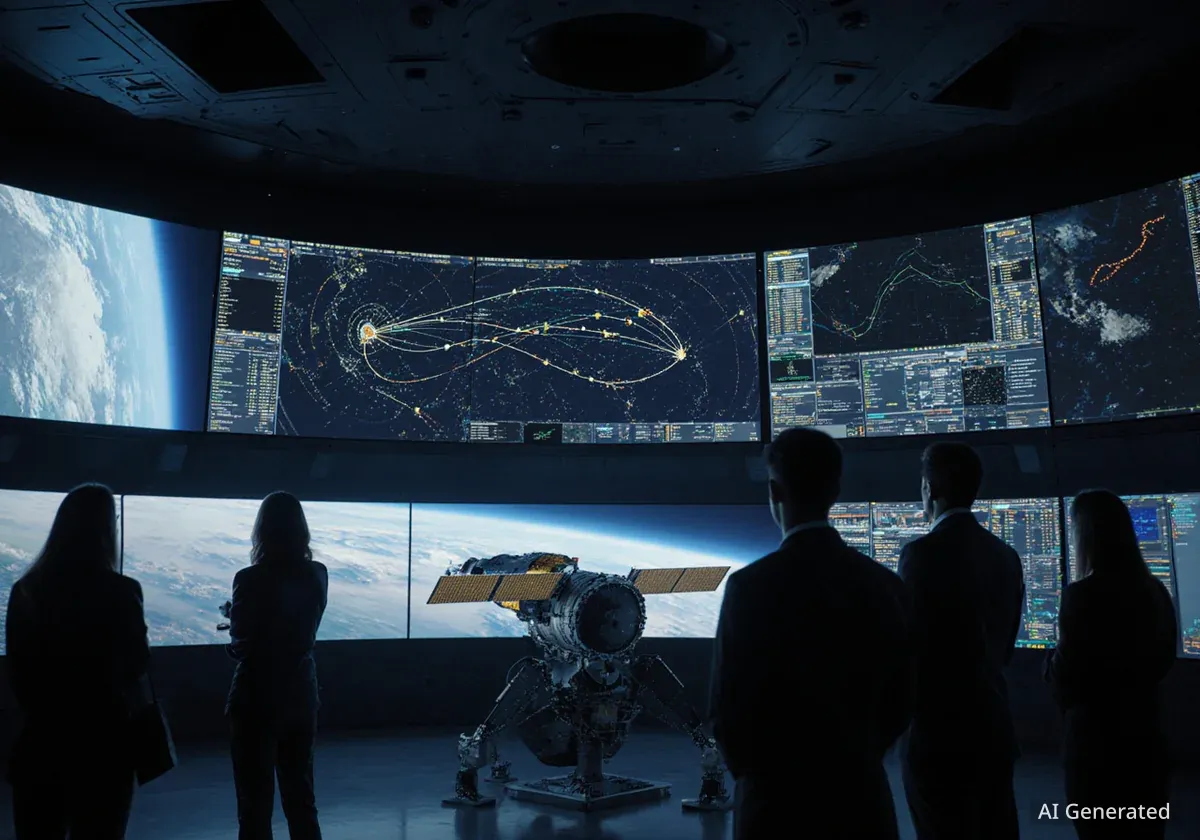
The final frontier is no longer the exclusive domain of national governments. A new era of space exploration, driven by private companies and billionaire entrepreneurs, is rapidly unfolding. This shift is forcing a critical global conversation about a question once considered theoretical: who has the right to own and profit from resources found on the Moon, asteroids, and beyond?
As commercial ventures plan for space tourism, lunar mining, and private space stations, the international community is grappling with decades-old treaties that were never designed for a commercialized cosmos. The decisions made in the coming years could determine whether space becomes a shared resource for all humanity or a new 'wild west' dominated by a select few.
Key Takeaways
- Space exploration has entered a third era of commercialization, following earlier periods of military confrontation and international collaboration.
- The 1967 Outer Space Treaty prohibits nations from claiming celestial bodies but is ambiguous about private resource extraction.
- The Moon is a prime commercial target due to resources like water ice and helium-3, which can be used for rocket fuel and potential fusion energy.
- Experts warn of a potential 'wild west' scenario, where competing claims could lead to conflict without updated international agreements.
- A proposed model for governance is to treat space as a shared domain, similar to Antarctica, managed under international treaty for peaceful and scientific purposes.
From Confrontation to Commercialization
Humanity's journey into space has evolved through distinct phases. The first was one of confrontation, born from military competition during the Cold War. The space race between the United States and the Soviet Union was a demonstration of technological and ideological superiority.
This was followed by an era of collaboration. The creation of the European Space Agency in 1975 and joint missions like the Apollo-Soyuz Test Project signaled a shift toward collective scientific achievement. The International Space Station stands as the ultimate symbol of this cooperative spirit.
Now, we are firmly in a third era: commercialization. Private enterprises are no longer just building components for government agencies; they are launching their own rockets, deploying satellite constellations, and planning missions to take tourists into orbit. This transition moves the focus from pure exploration to potential exploitation.
The Legal Foundation: The Outer Space Treaty
Signed in 1967, the Outer Space Treaty is the cornerstone of space law. It establishes several key principles, including that space is "the province of all mankind" and that celestial bodies are not subject to "national appropriation by claim of sovereignty." Its idealistic vision was to prevent a land grab in the cosmos.
The Legal Void of the Cosmos
While the Outer Space Treaty successfully prevented nations from planting flags and claiming territory, it left a critical question unanswered. The document does not explicitly prohibit private companies from extracting and owning resources they find.
This legal ambiguity has created a gray area that is now being tested. Seeing an opportunity, countries like the United States and Luxembourg have passed national laws granting their domestic companies the rights to resources they mine in space. This raises concerns among international law experts who argue that such unilateral actions could undermine the treaty's core principles.
"The challenge is to encourage innovation and investment without ceding ownership of the cosmos to a few individuals or corporations," one legal analyst noted. "A monopoly in space would be dangerous for humanity."
Without a clear, updated international framework, the risk is a fragmented system where each nation creates its own rules, potentially leading to disputes over valuable claims on the Moon or asteroids.
The Moon: A Commercial Hotspot
The Moon is a focal point for these new commercial ambitions. For decades, it was viewed primarily as a scientific outpost. Today, it is seen as a strategic asset with immense economic potential.
Why the Moon is Valuable
- Water Ice: Found in craters at the lunar poles, water can be broken down into hydrogen and oxygen—the primary components of rocket fuel. This could turn the Moon into a refueling station for missions deeper into the solar system.
- Helium-3: A rare isotope on Earth, helium-3 is relatively abundant in lunar soil. It is considered a potential fuel for future nuclear fusion reactors, offering a clean and powerful energy source.
- Low Gravity: With gravity just one-sixth of Earth's, launching rockets from the Moon requires significantly less energy, making it an ideal base for further space exploration.
These resources have transformed the Moon from a desolate landscape into valuable real estate. The question is no longer just about scientific discovery but about who gets to decide how these resources are used and who profits from them.
Avoiding a 'Wild West' in Orbit
The rush to capitalize on space resources has drawn comparisons to historical land rushes, like the American West. Some analysts fear a chaotic scenario where powerful corporations, backed by their respective governments, compete for control of the most valuable locations.
This raises the specter of historical precedents, such as the East India Company, a private enterprise that grew so powerful it commanded its own army and influenced the politics of nations. A similar dynamic in space, where a handful of tech giants control access to orbit and extraterrestrial resources, could have profound implications for global equity and security.
If commercialization proceeds without robust oversight and equitable principles, we risk exporting Earth's historic patterns of conflict and inequality into the cosmos.
A Path Forward: Collective Stewardship
Many experts believe the solution lies in reviving the cooperative spirit of the early space treaties. The most frequently cited model is the Antarctic Treaty System. No single country owns Antarctica; instead, it is managed as a scientific preserve dedicated to peace and research under an international agreement.
Applying a similar framework to space would designate celestial bodies as a shared domain. Under this model:
- Resource extraction could be managed by an international body.
- Profits could be shared for the benefit of all nations, particularly developing ones.
- Strict environmental protections would be enforced to preserve celestial bodies for future scientific study.
This approach would allow for commercial activity but within a structure of equity and transparency. It acknowledges that while private investment is necessary to fund expensive exploration, the benefits should not be concentrated in the hands of a few.
As astronauts often report experiencing the "overview effect"—a profound sense of awe and global unity when viewing Earth from space—many hope this perspective can guide our actions. The way humanity manages this third era of space exploration will define not only the future of our presence in the solar system but also the very nature of our species.