
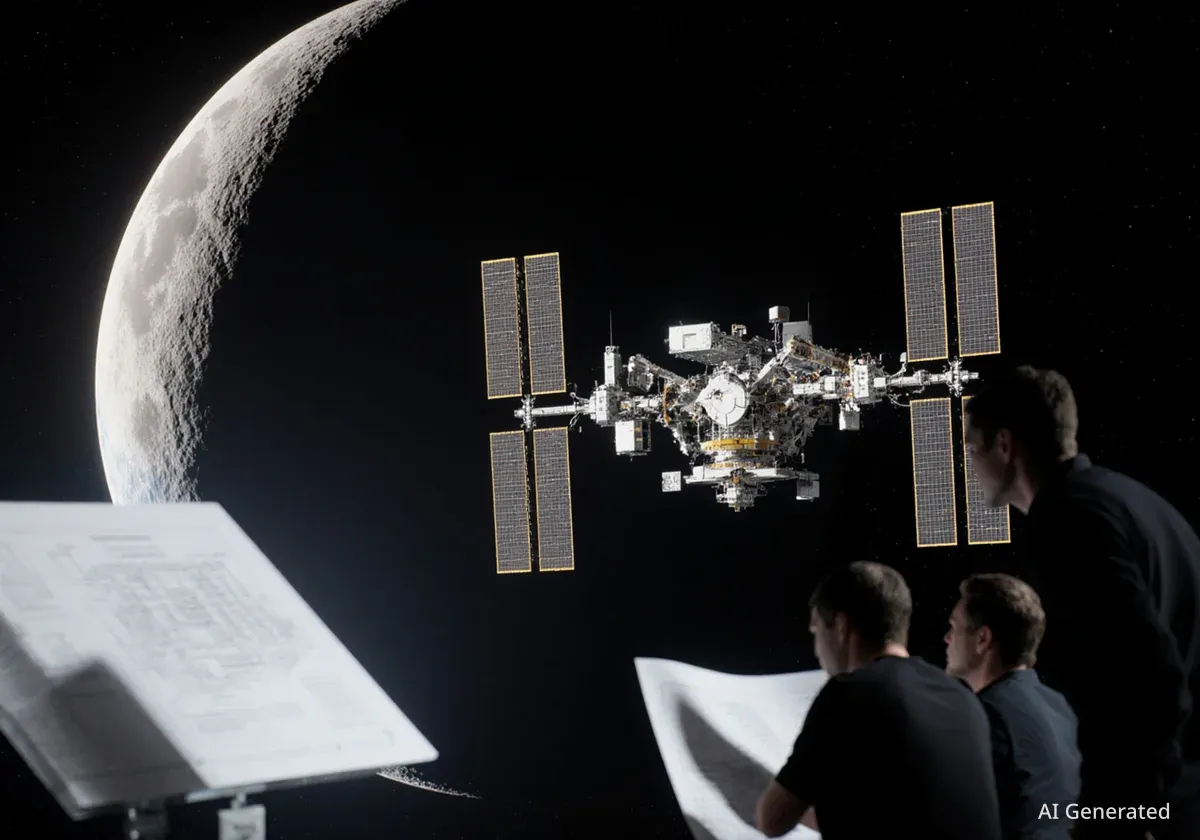




The Lunar Gateway, a planned space station designed to orbit the Moon, stands at a critical juncture. Envisioned as a cornerstone of NASA's Artemis program for sustainable lunar exploration, the project is now embroiled in debates over its necessity, escalating costs, and uncertain funding, raising fundamental questions about the future of international cooperation in deep space.
Key Takeaways
- The Lunar Gateway is a multinational space station planned for lunar orbit, intended to support NASA's Artemis missions.
- The project faces significant debate regarding its cost, delays, and strategic necessity, with some U.S. policymakers questioning its value.
- International partners, including Europe, Canada, Japan, and the UAE, have already built and delivered major components for the station.
- Canceling the Gateway could undermine U.S. leadership in space and damage trust with key international allies, potentially creating a vacuum for rival space programs.
What is the Lunar Gateway?
The Lunar Gateway is a central element of the NASA-led Artemis program, which aims not just to return humans to the Moon but to establish a long-term, sustainable presence. The station is designed to function as a versatile outpost in lunar orbit.
Its primary roles include serving as a staging point for crewed and robotic missions to the lunar surface, acting as a science laboratory in a deep-space environment, and providing a testbed for technologies essential for future missions to Mars. Unlike the International Space Station (ISS) which orbits Earth, the Gateway would provide a permanent base of operations far from our home planet.
A Hub for Deep Space Exploration
The Gateway's proposed orbit would allow it to serve as a communications hub and a transfer point for astronauts traveling between Earth and the Moon. This orbital position is seen as a strategic advantage for long-term scientific research and mission logistics.
A Project Under Scrutiny
Despite its ambitious goals, the Gateway has been beset by persistent challenges. Rising costs and project delays have prompted scrutiny from policymakers, who question whether the outpost is truly essential for achieving Artemis's core objectives.
The debate reached a critical point when the president's proposed 2026 budget for NASA included a recommendation to cancel the project. While pushback from the Senate secured its funding for now, the discussion about its value continues. Critics argue that lunar missions can proceed directly without an orbital station, viewing the Gateway as an unnecessary and expensive complication.
Others contend that its original purpose has diminished as mission architectures have evolved, making its high price tag increasingly difficult to justify to the public and to lawmakers managing tight federal budgets.
An International Crossroads in Orbit
The Lunar Gateway is not solely an American venture; it is a profoundly international endeavor. NASA is joined by four major partners: the European Space Agency (ESA), the Canadian Space Agency (CSA), the Japan Aerospace Exploration Agency (JAXA), and the United Arab Emirates’ Mohammed Bin Rashid Space Centre.
This collaborative model is designed to distribute the financial burden and leverage global expertise, mirroring the successful partnership that has maintained the ISS for over two decades.
Hardware Already Delivered
A significant portion of the hardware for the Gateway has already been produced and delivered for integration. This includes major components from both international and commercial partners.
- Northrop Grumman (U.S.): Developing the Habitat and Logistics Outpost (HALO).
- Maxar (U.S.): Building the Power and Propulsion Element (PPE).
- ESA (Europe): Supplying the International Habitation Module (I-HAB).
- CSA (Canada): Building the advanced robotic arm, Canadarm3.
- JAXA (Japan): Contributing life support systems.
- MBRSC (UAE): Producing an airlock module.
This deep level of international commitment makes any potential cancellation highly complex. Pulling the plug would mean abandoning hardware that allies have already spent years and significant resources developing, a move that could have lasting diplomatic consequences.
The Geopolitical Game Above the Moon
Beyond its scientific and exploration goals, the Gateway holds significant strategic value. It is positioned as a democratic, cooperative counterweight to the joint lunar ambitions of China and Russia, who are developing their own surface base, the International Lunar Research Station.
"Sustainable exploration beyond Earth's orbit will require a long-term, collaborative approach rather than a series of isolated missions."
For over 25 years, the ISS has served as a powerful tool of science diplomacy, hosting more than 290 people from 26 countries and fostering cooperation even during times of geopolitical tension on Earth. Supporters believe the Lunar Gateway could play a similar stabilizing role for the next generation of space exploration.
Abandoning the most multinational component of the Artemis program could erode trust in U.S. commitments and weaken its leadership position. Such a move might create a vacuum that rival coalitions could exploit, or it could encourage partners like ESA to pursue their own independent deep-space projects.
The Path Forward: Repurpose or Recommit?
As the debate continues, the future of the Lunar Gateway remains uncertain. Partners like ESA have reaffirmed their commitment, highlighting the value an orbital outpost offers to emerging space nations seeking to develop their own exploration capabilities.
If the U.S. determines the Gateway no longer aligns with its technical or operational plans, experts suggest the most responsible course of action would be to develop a clear strategy for repurposing the already-built hardware. Simply scrapping the project without an alternative plan risks alienating allies and discouraging future international participation in U.S.-led programs.
The central question is not just whether the Gateway is necessary, but whether its broader benefits—fostering international trust, reinforcing U.S. leadership, and building a framework for future space cooperation—can be achieved through other means. If not, dismissing the project could be a missed opportunity that shapes the balance of power in space for decades to come.