


A recent shift in focus by Elon Musk, prioritizing a lunar settlement over his long-standing goal of colonizing Mars, has sparked a complex debate among space exploration experts and the public. While some scientists see it as a pragmatic and necessary step, a significant portion of the public appears indifferent, with many questioning the allocation of resources to off-world ambitions while Earth faces pressing challenges.
A recent informal poll revealed that over 62% of respondents expressed a lack of interest in the strategic change, suggesting a potential 'Musk fatigue' or a broader sentiment that terrestrial problems should take precedence. This division highlights the ongoing tension between humanity's drive for space exploration and its responsibilities on its home planet.
Key Takeaways
- Elon Musk has shifted his immediate space colonization focus from Mars to establishing a base on the Moon.
- Public reaction has been largely apathetic, with a poll showing over 62% of respondents selecting "Don't care."
- Scientific experts are divided: some view the Moon as a logical and practical stepping stone, while others see Musk's grand plans as unrealistic.
- A strong counter-argument from the public suggests resources should be focused on solving Earth's environmental problems first.
- The discussion occurs within the context of a renewed international space race, involving the US, China, and India.
A Shift in Cosmic Priorities
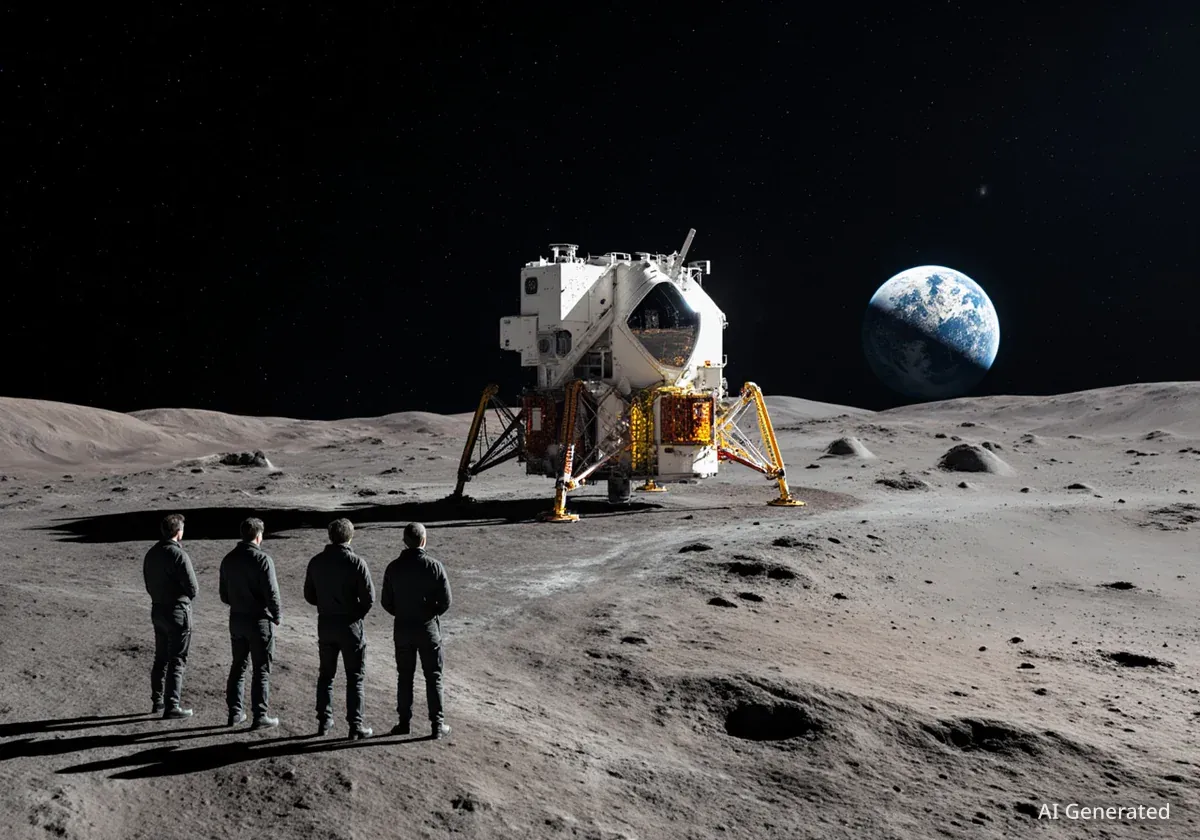
For years, Elon Musk’s name has been synonymous with the ambitious goal of establishing a self-sustaining city on Mars. This vision has captured public imagination and driven much of the narrative around his company, SpaceX. However, recent discussions indicate a strategic pivot, with the establishment of a lunar city now taking higher priority.
This change realigns his company's short-term goals with those of national space agencies like NASA, whose "Moon to Mars" program uses the Moon as a crucial staging ground for deeper space exploration. The logic is that building a permanent presence on our celestial neighbor, just a few days' journey away, offers a more manageable and cost-effective proving ground for the technologies needed for a future Mars mission.
The Modern Space Race
This strategic shift doesn't happen in a vacuum. A new era of space competition is underway, with nations like China and India becoming major players alongside the United States and Russia. The focus for many is the Moon's south pole, believed to be rich in resources like water ice, which could be used for life support and rocket fuel.
Public Reaction: Apathy and Skepticism
Despite the grand scale of these ambitions, the public response has been lukewarm. When asked about Musk's pivot to the Moon, a striking 62.34% of people in one poll indicated that they simply "don't care." This widespread indifference may point to a growing public weariness with the constant cycle of pronouncements from high-profile tech figures.
Beyond apathy, a significant portion of the public expresses outright opposition, but not to the choice between the Moon or Mars. Instead, their criticism is aimed at the very idea of off-world colonization itself.
"A far better use of time, money and brain power would be investing in ways to protect the one planet we know sustains life as we know it," commented one citizen, Linda Galleta. "Why not use all that brain power and financing to clean our own air and water?"
This sentiment is common, with many raising concerns about billionaires planning an escape to space while environmental issues on Earth escalate. The idea is often compared to dystopian science fiction, where the wealthy abandon a polluted planet, leaving the rest of humanity behind.
The Scientific Case for a Lunar Base
Many in the scientific community, however, view the Moon-first approach as a welcome return to pragmatism. Frank Merceret, a retired atmospheric physicist, noted that Mars is still "too distant, too difficult, and too expensive for our current technology." He argues that the Moon is a more realistic and immediately useful objective.
A Necessary Stepping Stone
According to this view, a lunar base would serve several critical functions:
- Research Platform: The Moon provides an unparalleled environment for scientific research, Earth surveillance, and astronomy.
- Technology Development: It is the perfect place to test and refine technologies like life support, habitats, and resource extraction before attempting a much more dangerous Mars mission.
- Resource Utilization: Learning to effectively use in-situ resources—like lunar soil for construction or ice for water and fuel—is considered essential for any serious, long-term exploration of Mars.
Bruce Jakosky, an emeritus professor at the University of Colorado, emphasized that for space scientists, the goal has always been to explore both the Moon and Mars. He dismisses Musk's timelines as historically unrealistic and his talk of cities as premature. "The bottom line is that we are very far away from being able to have cities on either the Moon or Mars," Jakosky stated, adding that the focus should be on initial human missions and exploration bases first.
Moon vs. Mars: A Question of Distance
The average distance from Earth to the Moon is about 384,400 kilometers (238,900 miles), a journey that takes roughly three days. The distance to Mars, however, varies dramatically, from about 54.6 million to 401 million kilometers. A one-way trip to Mars would take approximately seven to nine months with current technology.
The Broader Context and Future Outlook
The debate over Musk's priorities is part of a larger conversation about the future of humanity in space. National pride and geopolitical strategy are significant drivers, as evidenced by NASA's upcoming Artemis II mission, which will send four astronauts on a flight around the Moon.
This mission is a critical step in the U.S. plan to re-establish a human presence on the lunar surface and eventually use that experience to push onward to Mars. The involvement of commercial partners like SpaceX is central to this strategy, blending private sector innovation with public funding and oversight.
Ultimately, the conversation reveals a deep divide. On one side are those who see space exploration as an essential, inspiring endeavor that pushes the boundaries of human achievement and may one day ensure our species' survival. On the other are those who see it as a costly distraction from the urgent, tangible problems facing our own world. As the new space race accelerates, this fundamental disagreement is likely to become even more pronounced.