

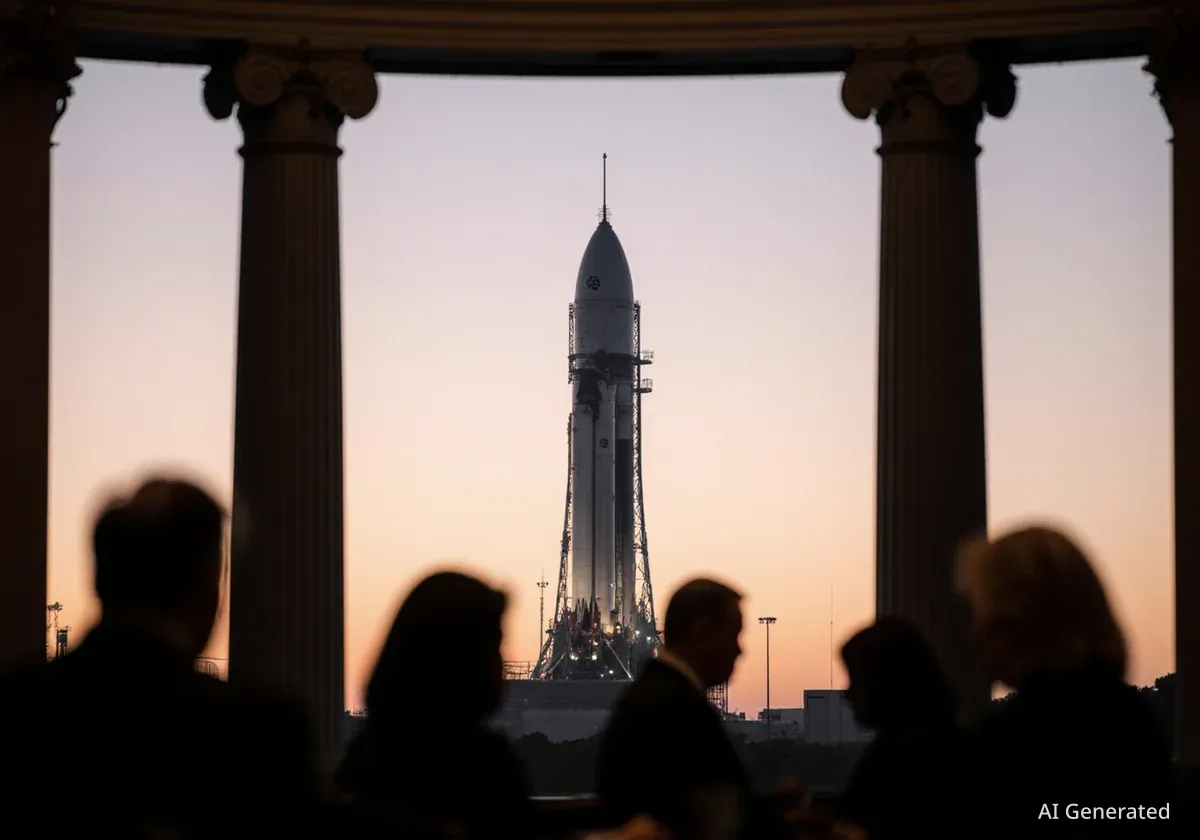



In a year marked by historic uncertainty, NASA’s science programs faced the largest proposed budget cut in the agency's history, threatening dozens of active missions and the future of American space exploration. A proposed 47% reduction to the science budget for fiscal year 2026 galvanized a massive public and congressional response, ultimately leading to the rejection of the cuts and a renewed focus on the nation's role in space.
The crisis, which unfolded throughout 2025, placed more than 40 missions at risk, including 19 active spacecraft currently returning invaluable data. The proposed budget would have reduced NASA's funding to levels not seen since the earliest days of the space race, prompting an extraordinary advocacy campaign that united scientists, industry leaders, and citizens across the globe.
Key Takeaways
- The White House proposed a 47% cut to NASA's science budget for fiscal year 2026, the largest single-year reduction ever suggested.
- The proposed cuts threatened to cancel over 40 missions, including 19 healthy, active missions representing a $12 billion investment.
- A widespread advocacy effort, including a "Day of Action" in Washington D.C., saw thousands of citizens contact lawmakers to protect NASA funding.
- In a rare show of bipartisan unity, both the U.S. House and Senate rejected the proposed cuts, safeguarding the agency's science portfolio for now.
- The year also saw months of leadership uncertainty at NASA, which concluded with the confirmation of a new administrator in late 2025.
A Crisis Unfolds in Washington
The year 2025 began with unsettling rumors of deep cuts targeting NASA. These concerns were confirmed when the President's Budget Request for fiscal year 2026 was released, proposing a plan that many in the space community described as an "extinction-level event" for space science.
The proposal called for a near-halving of NASA's science budget. If enacted, it would have been the most significant single-year reduction in the agency's more than 60-year history. The plan put entire scientific disciplines at risk and threatened to halt momentum on major initiatives like the Artemis program.
By the Numbers: The Proposed Cuts
- 47% reduction to the NASA Science Mission Directorate.
- 19 active and healthy science missions slated for cancellation.
- $12 billion in cumulative investment lost from terminating those missions.
- NASA's workforce would have fallen to its lowest levels since 1960.
The Human and Scientific Cost
Beyond the numbers, the proposed cuts sent a shockwave through the scientific community. The plan would have forced NASA to reduce its civil servant workforce to levels not seen since before the Apollo program, leading to a significant loss of institutional knowledge and expertise.
Missions that have been operating for years, such as those studying Earth's climate, exploring Mars, and peering into the distant universe, were suddenly on the chopping block. This not only jeopardized future discoveries but also threatened to create significant gaps in long-term scientific data sets that are crucial for understanding our planet and the cosmos.
The uncertainty also damaged relationships with international partners who collaborate with NASA on numerous missions. Long-term space projects rely on stable, multi-year funding commitments, and the sudden threat of withdrawal from joint projects created diplomatic and scientific friction.
A Community Rallies to Defend Space Exploration
In response to the unprecedented threat, the space advocacy community mobilized on a scale rarely seen. Organizations like The Planetary Society, led by CEO Bill Nye, launched a nationwide "Save NASA Science" campaign to inform the public and pressure lawmakers.
The effort culminated in an October "Day of Action" on Capitol Hill. Nearly 300 advocates representing 20 different science, education, and space organizations traveled to Washington D.C. to meet directly with congressional offices. They argued that funding for NASA is not just about exploring other worlds but is a critical investment in technology, education, and American leadership.
"This wasn't just another tough budget year... The proposed cuts to NASA Science were the largest ever suggested, basically an extinction-level event for NASA Science," stated Casey Dreier, Chief of Space Policy for The Planetary Society, reflecting on the gravity of the situation.
The Power of Public Advocacy
The professional lobbying was backed by a massive wave of grassroots support. Advocacy groups reported that over 84,000 messages were sent to Congress through their online portals from more than 32,000 individuals. A global petition supporting NASA garnered signatures from people in over 100 countries, demonstrating the worldwide impact of the agency's work.
Social media campaigns also played a key role, with informational graphics and videos explaining the stakes reaching millions of viewers. According to The Planetary Society, their advocacy-related video reels on Instagram alone were viewed more than 9 million times.
This groundswell of public support was instrumental in getting the attention of lawmakers. Congressional staffers reported that the volume of calls and letters from constituents made a significant impact, pushing the issue to the forefront of budget discussions.
Congress Responds with Bipartisan Support
The combination of targeted advocacy and widespread public outcry proved effective. In a political climate often defined by division, the defense of NASA became a point of bipartisan consensus. Both the U.S. House of Representatives and the Senate drafted and advanced their own budget bills that soundly rejected the administration's proposed cuts.
China's Growing Ambitions
While the U.S. debated cutting its space science budget, China continued to expand its own ambitions. In 2024, China released a long-term strategy modeled on NASA's decadal surveys, with plans to approve up to 30 new space science missions by 2050. This contrast was frequently highlighted by advocates as a key reason for maintaining U.S. leadership in space.
Lawmakers from both parties spoke out in defense of the space agency, citing its contributions to national security, economic competitiveness, and scientific progress. The final appropriations bills, while still needing to be reconciled, signaled a clear intent from Congress to maintain stable and robust funding for NASA's science and exploration programs.
The congressional pushback was a powerful reminder that NASA enjoys broad support that transcends political lines. For many, the agency represents a source of national pride and a symbol of what can be achieved through peaceful, collaborative effort.
The Path Forward in an Uncertain Era
While the immediate crisis of 2025 appears to have been averted, the year served as a stark reminder of the fragility of long-term scientific projects. The months of uncertainty have already had an impact, causing delays in mission planning and a dip in morale across the workforce.
The late-year confirmation of Jared Isaacman as the new NASA Administrator brought a welcome end to a long period of leadership vacuum at the agency. His arrival is expected to bring stability as NASA navigates the final budget negotiations for fiscal year 2026 and begins planning for 2027.
Advocates say they will remain vigilant. The political and economic pressures that led to the proposed cuts have not disappeared. The community that came together to save NASA science in 2025 is now preparing for a sustained effort to ensure that the future of space exploration remains a national priority, ensuring that humanity continues to reach for the stars.