
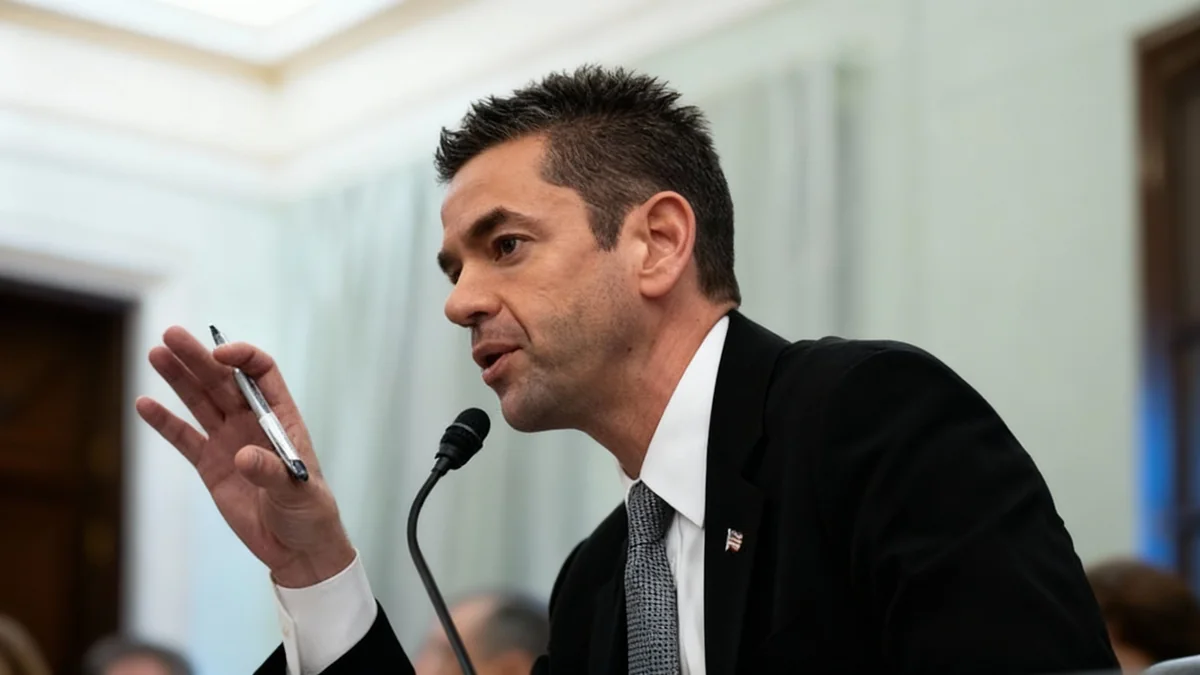


The U.S. Senate has confirmed billionaire entrepreneur and private astronaut Jared Isaacman as the new administrator of NASA, ending a nearly year-long leadership vacuum at the space agency. The confirmation, secured by a 67-30 vote on Wednesday, places a prominent figure from the commercial space sector at the helm of the nation's civilian space program during a critical period of transition.
Isaacman's appointment comes after 11 months of uncertainty for NASA, an agency grappling with internal challenges and the rapid evolution of the global space landscape. His leadership is expected to bring a private-sector mindset to the government agency, a move that draws parallels to a transformative period for NASA in the 1990s.
Key Takeaways
- Jared Isaacman was confirmed as the next NASA administrator by a 67-30 Senate vote.
- The confirmation ends an 11-month period without a permanent leader for the agency.
- Isaacman is a billionaire entrepreneur and has flown to orbit twice on private missions.
- His appointment is seen as an opportunity for reinvention, similar to the leadership of Daniel Goldin in the 1990s.
A Decisive Vote Ends Months of Uncertainty
The Senate's decision on December 17, 2025, provides NASA with stable leadership for the first time in almost a year. The bipartisan support, reflected in the 67-30 vote, suggests a broad consensus on the need for a permanent administrator to guide the agency's ambitious agenda, which includes returning astronauts to the Moon and preparing for future missions to Mars.
The preceding 11 months have been described as a period of tumult for NASA, marked by internal restructuring and budgetary pressures. Without a confirmed administrator, long-term strategic planning and major programmatic decisions have faced significant hurdles. Isaacman's arrival is anticipated to provide clear direction and stability.
By the Numbers
- Confirmation Vote: 67-30
- Leadership Gap: 11 months
- Orbital Missions: 2 (by Isaacman)
A New Kind of Administrator
Jared Isaacman is not a traditional choice to lead NASA. Unlike many of his predecessors, who often came from careers within the agency, military, or government, Isaacman's background is rooted in the private sector. He is a successful entrepreneur who founded several major companies and amassed a significant fortune.
More notably, he is an experienced astronaut in his own right, having commanded two private spaceflights. These missions have given him firsthand experience with the operational realities of space travel and the capabilities of the commercial space industry. This unique combination of business acumen and direct spaceflight experience is what many supporters believe makes him the right choice for NASA's current challenges.
His supporters argue that his perspective is crucial as NASA deepens its partnerships with commercial companies like SpaceX, Boeing, and others to achieve its exploration goals. This approach, relying on private industry for transportation and services, is a cornerstone of the agency's modern strategy.
Echoes of a Transformative Past
Historical Context: The Goldin Era
In the early 1990s, after the end of the Cold War, NASA faced an existential crisis. Its primary geopolitical motivation had vanished. President George H.W. Bush appointed Daniel Goldin, a private-sector executive, to lead the agency. Goldin's nearly decade-long tenure was defined by his mantra of "faster, better, cheaper," which aimed to reform the agency's culture and processes.
Analysts are drawing strong comparisons between Isaacman's appointment and that of Daniel Goldin. Like Goldin, Isaacman is an outsider tasked with steering a massive government bureaucracy through a period of profound change. When Goldin took over, the geopolitical landscape had shifted dramatically with the dissolution of the Soviet Union.
Today, the shift is not geopolitical but commercial. The rise of a vibrant private space industry has fundamentally altered how humanity accesses and utilizes space. NASA is no longer the only major player; it is now a partner, customer, and collaborator with a growing number of innovative companies.
Goldin's tenure had both successes and failures, but it undeniably forced NASA to rethink its approach. Many expect Isaacman will be similarly disruptive, challenging established norms and pushing for greater efficiency and innovation by leveraging the dynamism of the commercial sector.
The Path Forward for NASA
Under Isaacman's leadership, NASA is expected to double down on its public-private partnership model. This could mean accelerating the development of commercial space stations, relying more heavily on private companies for lunar landers and surface operations, and fostering a competitive environment to drive down costs.
One of the immediate challenges will be to navigate the complex budgetary environment while keeping major programs like the Artemis missions to the Moon on track. He will also be responsible for overseeing the agency's vast portfolio of science missions, from the James Webb Space Telescope to probes exploring the farthest reaches of our solar system.
The central question is whether a leader from the fast-paced world of startups and commercial space can effectively manage a sprawling federal agency with decades of history and a deeply ingrained culture. Isaacman's success will likely depend on his ability to merge the best of both worlds: the agility of the private sector with the scientific rigor and ambitious vision that have defined NASA for generations.
As he takes his post, the space community will be watching closely to see how this new chapter for America's space agency unfolds. The decisions made in the coming years will shape not only the future of NASA but also humanity's path forward into the cosmos.