


Scranton, PA – Paul Richards, a Dunmore native and former NASA mission specialist, marked the 25th anniversary of his STS-102 space shuttle mission to the International Space Station (ISS) on Sunday. The celebration, held at the Everhart Museum in Scranton, offered the public a unique opportunity to engage with space exploration history and meet a local hero.
The event drew space enthusiasts and community members alike, eager to learn about the complexities of astronaut training and life in orbit. Richards, who played a crucial role in assembling the ISS during his mission, shared his experiences and insights from his time with NASA.
Key Takeaways
- Dunmore native Paul Richards celebrated the 25th anniversary of his STS-102 mission.
- The event took place at the Everhart Museum in Scranton.
- Richards served as a mission specialist on a space shuttle flight to the International Space Station.
- Attendees viewed space exploration artifacts, including the Hubble Space Telescope display.
- Richards emphasized the importance of sharing his experiences with the community.
A Look Back at STS-102: Building the International Space Station
The STS-102 mission, launched in March 2001, was a pivotal flight in the early construction of the International Space Station. Richards and his crew delivered essential equipment and supplies, and also swapped out Expedition 1 and Expedition 2 crews, marking a significant step in establishing a continuous human presence in space.
During his mission, Richards performed two spacewalks, totaling over 12 hours outside the ISS. These spacewalks were critical for installing components and ensuring the station's ongoing development. The successful completion of these tasks helped pave the way for future long-duration missions.
Mission Fact
The STS-102 mission, officially known as Space Shuttle Discovery flight F-29, lasted for 12 days, 19 hours, 49 minutes, and 31 seconds. It traveled over 5 million miles during its orbit around Earth.
Connecting with the Community
Richards expressed his gratitude for the opportunity to share his journey with his hometown. "This is great, giving that I was so blessed to have done this. I always feel it's an obligation to share it, but it's extra special to come to the hometown and share it with friends and family," Richards stated during the event.
His presence offered a tangible link between local residents and the grand scale of space exploration. Many attendees, particularly younger visitors, found inspiration in hearing directly from an astronaut who had contributed to humanity's endeavors beyond Earth.
The International Space Station
The International Space Station is a modular space station in low Earth orbit. It is a multinational collaborative project involving five participating space agencies: NASA (United States), Roscosmos (Russia), JAXA (Japan), ESA (Europe), and CSA (Canada). The ISS serves as a microgravity and space environment research laboratory where crew members conduct experiments in biology, human physiology, physics, astronomy, meteorology, and other fields.
Exhibits and the Hubble Legacy
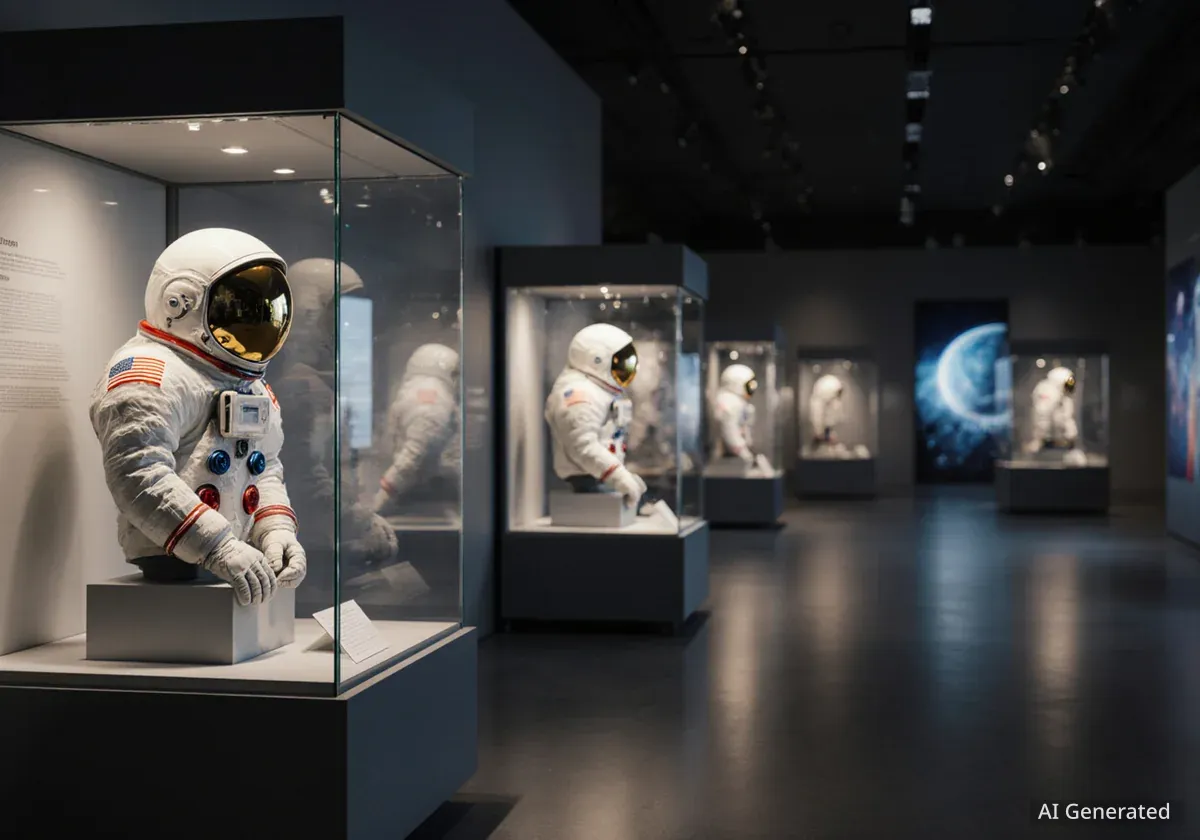
The Everhart Museum event featured various space exploration items. These displays provided a visual context for Richards's mission and the broader history of spaceflight. Visitors could examine models, photographs, and equipment related to NASA's programs.
A notable exhibit included a display related to the Hubble Space Telescope. This iconic telescope, launched in 1990, has revolutionized astronomy by providing stunning images and critical data about the universe. The Hubble display will remain at the museum for public viewing through July, allowing more people to connect with its scientific legacy.
"Sharing the marvels of space exploration with the next generation is crucial. Events like this spark curiosity and inspire future scientists and engineers."
The inclusion of the Hubble exhibit highlights the interconnectedness of various space missions and scientific instruments in advancing our understanding of the cosmos. Richards's mission to the ISS and the data collected by Hubble both contribute to the vast body of knowledge about space.
Inspiring the Next Generation
Events such as this anniversary celebration play a vital role in fostering interest in science, technology, engineering, and mathematics (STEM) among young people. Meeting an astronaut and seeing real space artifacts can ignite a passion for exploration and discovery.
The opportunity to ask questions and interact with someone who has traveled to space provides a unique educational experience. It transforms abstract concepts of space travel into relatable human achievements. Richards's dedication to sharing his story helps demystify the rigorous world of astronautics.
The Everhart Museum continues to serve as a hub for cultural and scientific education in Scranton. Hosting events that feature prominent figures like Paul Richards reinforces its commitment to bringing diverse and inspiring content to the community. The ongoing Hubble exhibit further enhances this mission, offering extended opportunities for learning.