



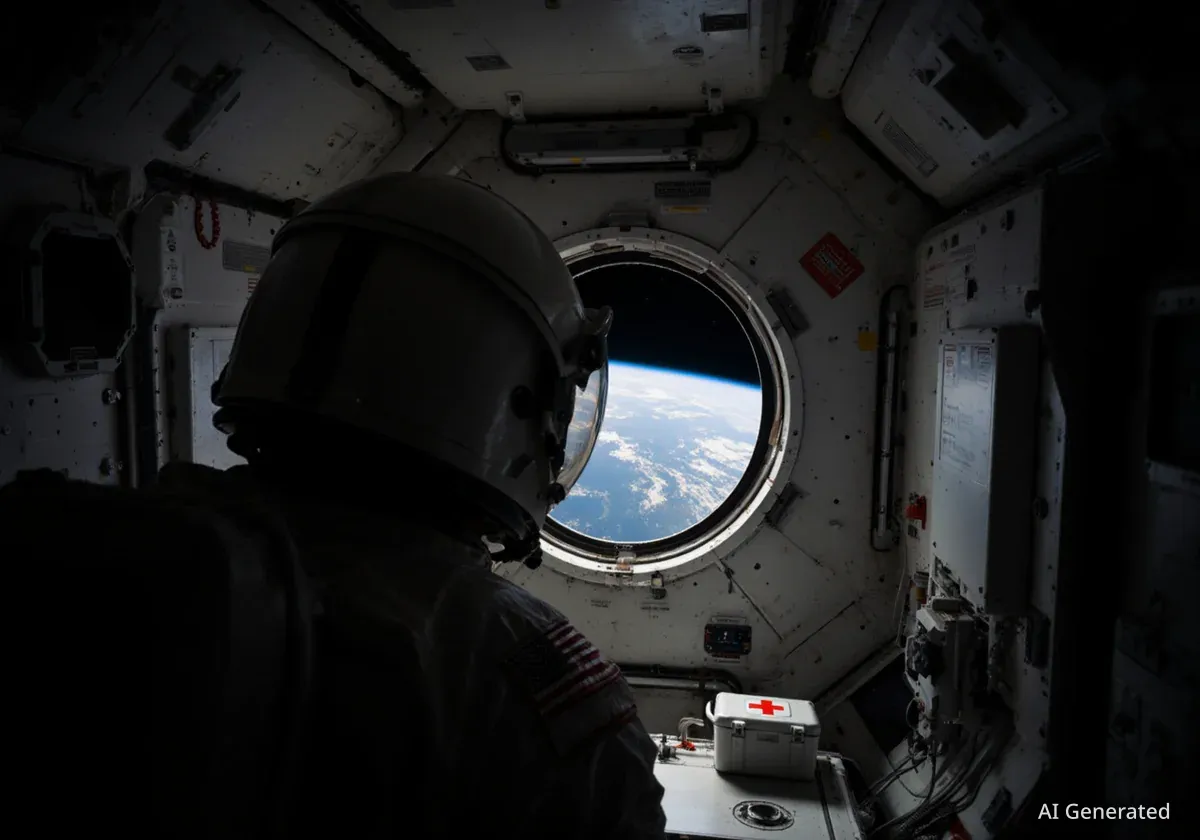

NASA is preparing for an unprecedented medical evacuation from the International Space Station (ISS), bringing four astronauts home early aboard a SpaceX Dragon capsule. The decision follows the emergence of a medical issue with one of the Crew-11 mission members, prompting a carefully orchestrated return set for this week.
The mission, designated Crew-11, will depart the orbiting laboratory on January 14, leaving a reduced crew to manage station operations. This marks the first time in the station's more than two-decade history that a crew has been brought home ahead of schedule for medical reasons.
Key Takeaways
- Four Crew-11 astronauts will return to Earth early due to an undisclosed medical issue.
- The SpaceX Dragon capsule is scheduled to undock from the ISS on January 14 and splashdown on January 15.
- This is the first planned medical evacuation in the history of the International Space Station.
- A skeleton crew of three will remain on the ISS, and NASA is working to accelerate the launch of the replacement Crew-12 mission.
- An accelerated change of command ceremony will take place on the station before the crew's departure.
An Unprecedented Return
NASA officials confirmed that the four members of the Crew-11 mission will make an early return to Earth. The crew includes NASA astronauts Zena Cardman and Mike Fincke, Japanese astronaut Kimiya Yui, and Russian cosmonaut Oleg Platonov. The decision was made on January 8 after a medical concern arose with one of the astronauts the previous day.
For privacy reasons, the agency has not disclosed which astronaut is affected or the specific nature of the medical issue. However, officials have stated the astronaut is in stable condition. Dr. James Polk, NASA's chief medical officer, clarified that the issue is not an injury but is related to the challenges of living in microgravity for extended periods.
This situation prompted the cancellation of two planned spacewalks. The early return is described as a "controlled medical evacuation" to ensure the astronaut can receive more comprehensive care on the ground.
A History of Medical Concerns in Space
While this is the first full medical evacuation from the ISS, medical issues in orbit are not new. Past incidents have included minor ailments that led to the cancellation or delay of specific tasks, such as spacewalks. In one notable case, an astronaut developed a blood clot during a long-duration mission, which was successfully treated in orbit with guidance from doctors on Earth, allowing the mission to be completed.
The Timeline for Departure
NASA and SpaceX have established a detailed schedule for the crew's journey home. The process will be broadcast live, allowing the public to follow the key stages of the return.
The sequence of events begins with preparations on the station. The crew has already started packing personal items and conducting fit checks of their SpaceX pressure suits. These checks are crucial, as the human body changes in microgravity—the spine lengthens and fluids shift, which can affect suit sizing.
- Change of Command: On Monday, January 12, current ISS Commander Mike Fincke will hand over control of the station to Russian cosmonaut Sergey Kud-Sverchkov in a ceremony moved up from its original schedule.
- Hatch Closure: On Wednesday, January 14, coverage will begin around 3:00 p.m. EST as the hatches between the Dragon capsule and the ISS are closed.
- Undocking: The SpaceX Dragon is set to undock from the station at approximately 5:00 p.m. EST on January 14.
- Splashdown: After deorbiting, the capsule is expected to splash down in the Pacific Ocean off the coast of California at 3:40 a.m. EST on Thursday, January 15.
Mission managers will continue to monitor weather conditions at the recovery site, which could affect the final timing of the undocking and splashdown.
Life Aboard the Station
The departure of Crew-11 will temporarily reduce the ISS crew from seven to three. The remaining personnel—NASA astronaut Chris Williams and Russian cosmonauts Sergey Kud-Sverchkov and Sergei Mikayev—will form a skeleton crew responsible for maintaining the station's systems and continuing critical research.
The International Space Station has been continuously inhabited by humans since November 2000, serving as a premier laboratory for scientific research that cannot be conducted on Earth.
While the station is designed to operate with a smaller crew, the reduction in personnel will likely last for at least a month. NASA and SpaceX are working to accelerate the launch of the next mission, Crew-12, which was originally scheduled for February.
"The Station will be more vulnerable until the replacement crew of 4 can launch, but we have deep experience running the place with just 3 astronauts for a while," commented former Canadian astronaut Chris Hadfield on the situation.
Despite the change in plans, NASA Administrator Jared Isaacman assured that the early return of Crew-11 will not impact the upcoming Artemis 2 mission, which is scheduled to send four astronauts on a flight around the Moon in February.
Crew Prepares for Farewell
As preparations for the departure intensify, the astronauts have been completing their final tasks and reflecting on their time in orbit. Japanese astronaut Kimiya Yui, an avid photographer, shared a final image taken from the window of the Kibo laboratory module, a Japanese-built section of the station.
"Since I'll soon have to bid farewell to this view as well, I want to burn it firmly into my eyes, and even more so, into my heart," Yui wrote in a social media post accompanying the photo.
The focus for all agencies involved remains on the health and safety of the crew. Former NASA astronaut Ed Lu noted the likely sentiment of the affected crew member, stating, "The afflicted space station astronaut ... is almost certainly feeling they have let down the crew. We were trained to get the mission done. But I do trust NASA to do the right thing here." The decision to prioritize the astronaut's well-being underscores NASA's long-standing commitment to crew safety above all else.