
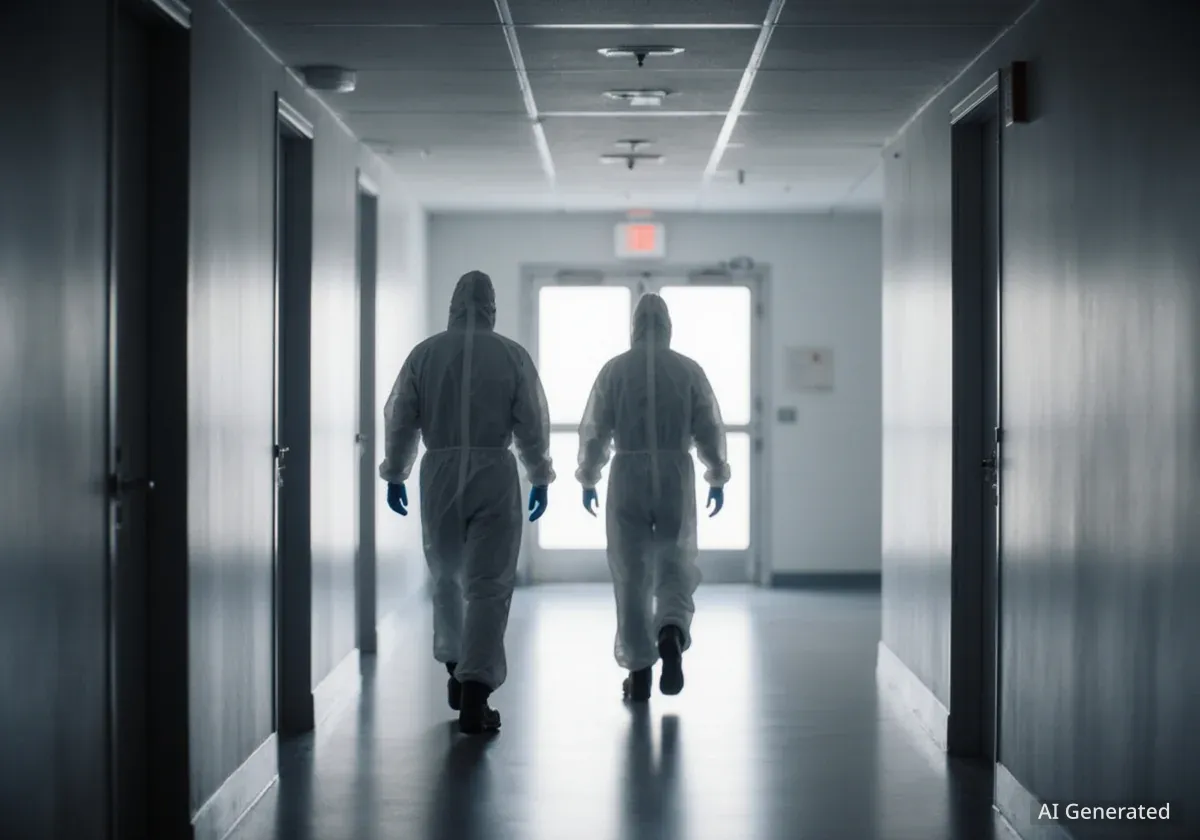


The four astronauts slated to become the first humans to orbit the moon in over 50 years have officially entered a pre-flight quarantine. This critical health and safety period began last week in Houston as the Artemis II crew makes its final preparations for a mission that could launch as early as February 6.
The isolation is part of NASA's long-standing Health Stabilization Program, a measure designed to ensure the crew is in peak physical condition and to prevent any last-minute illnesses that could delay the historic flight or cause complications in orbit.
Key Takeaways
- The Artemis II crew has begun a mandatory pre-flight quarantine in Houston.
- This procedure, part of NASA's Health Stabilization Program, has been standard since the Apollo 14 mission in 1971.
- The quarantine aims to prevent illness that could delay the launch or affect the crew during their lunar orbit.
- Unlike early Apollo missions, there will be no post-flight quarantine, as the fear of lunar microbes has been dispelled.
- The mission will also conduct long-term health experiments to prepare for future journeys to Mars.
The Modern Bubble: A Proven Protocol
For the Artemis II astronauts, quarantine is a carefully managed period of isolation. While in Houston, they are shielded from public contact to minimize exposure to common viruses. This protocol is not new; it was established during the Apollo era after early missions saw astronauts suffer from ailments like upper respiratory infections.
The implementation of the Health Stabilization Program for Apollo 14 led to a significant drop in in-flight illnesses, proving its effectiveness. Today, the program remains a cornerstone of crewed spaceflight safety. The astronauts can still have contact with a limited number of approved family members and mission personnel who also follow strict health guidelines.
Approximately six days before the scheduled launch, the crew will relocate to the Kennedy Space Center in Florida. There, they will continue their quarantine in dedicated astronaut crew quarters while undergoing final mission simulations and training exercises.
A History of Health Stabilization
The practice of quarantining astronauts before a mission became official NASA policy in 1971. The goal was simple: protect a multi-billion dollar mission and its highly trained crew from being compromised by a common cold or flu. This ensures that any potential symptoms do not emerge while the astronauts are in the isolated and unforgiving environment of space.
From Moon Germs to Medical Emergencies
While pre-flight quarantine has been a constant, post-flight procedures have changed dramatically. During the early Apollo missions, a major concern was the possibility of bringing back unknown extraterrestrial microbes from the lunar surface. This led to a mandatory three-week quarantine for astronauts upon their return to Earth.
The Fear of Lunar Contamination
Returning Apollo 11 astronauts Neil Armstrong, Buzz Aldrin, and Michael Collins were famously isolated in a converted Airstream trailer after their splashdown. The spacecraft, equipment, and even the precious lunar samples were also kept in isolation. Scientists at the time were genuinely uncertain about what life, if any, existed on the moon and feared sparking a global pandemic.
However, this extensive and expensive process was later viewed by some as more of a public precaution than a scientific necessity. Jordan Bimm, a science historian at the University of Chicago, described the elaborate setup in 2023 as an example of “planetary protection security theater.”
“While the agency spent millions of dollars on a high-tech quarantine facility... it ended up being an example of planetary protection security theater.”
By the time Apollo 15 launched in 1971, NASA had gathered enough data to conclude that the moon was sterile and that returning astronauts posed no biological threat to Earth. The post-flight quarantine was subsequently discontinued.
Did You Know? The post-flight quarantine for Apollo 11, 12, and 14 astronauts lasted for 21 days to ensure no lunar pathogens were brought back to Earth. This practice was ended before the Apollo 15 mission.
Preparing for the Unexpected in Deep Space
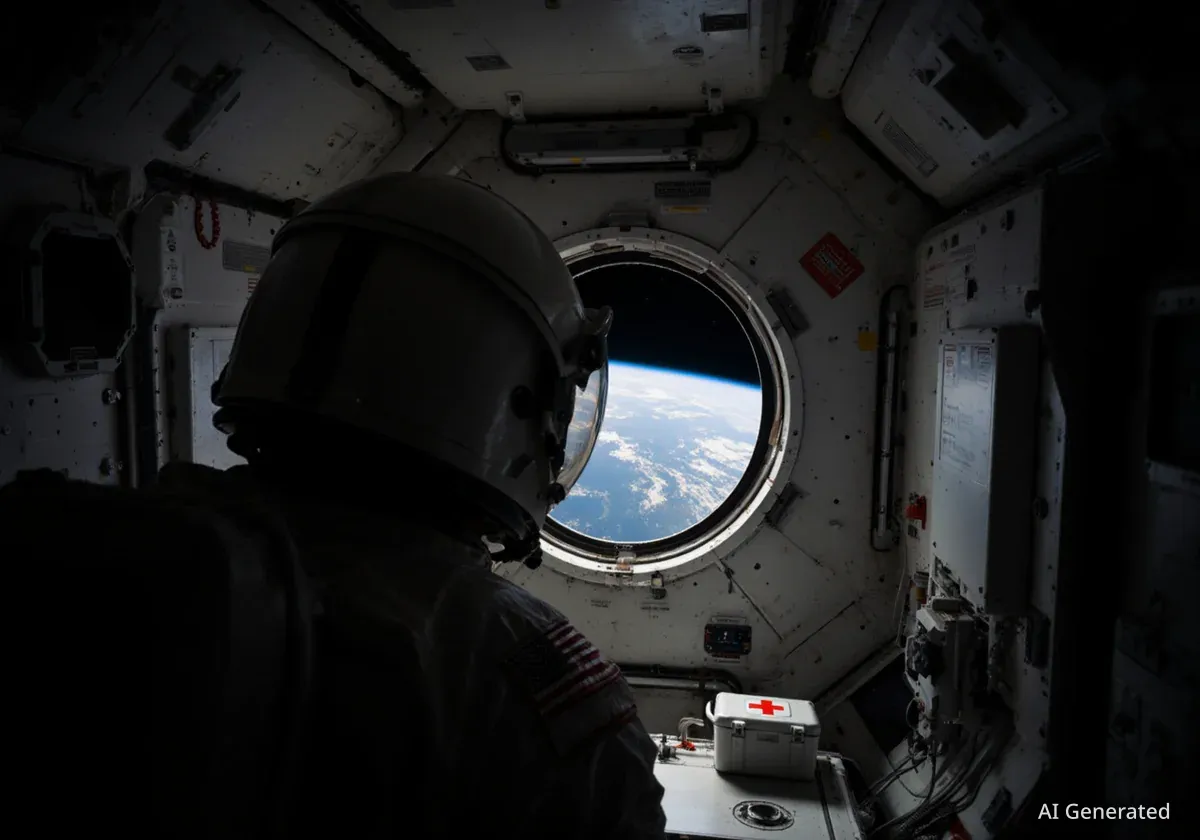
Today, NASA's focus has shifted from external threats like moon microbes to managing medical issues that can arise among the crew during a mission. The recent medical evacuation of an astronaut from the International Space Station (ISS) highlights the reality of these challenges.
To prepare for such events, all astronauts receive extensive medical training. Their skills include:
- Cardiopulmonary resuscitation (CPR)
- First aid administration
- Treatment for decompression sickness, also known as “the bends,” which can occur after a spacewalk
NASA even has protocols in place for the unlikely event of a death in space. This comprehensive preparation is crucial as missions venture farther from Earth, where a quick return is not an option.
Artemis and the Future of Human Health in Space
The Artemis II mission is not just about revisiting the moon; it's a critical step in understanding the long-term effects of spaceflight on the human body. As part of their mission, the crew will participate in a series of health-related experiments.
They will provide blood and saliva samples before, during, and after their flight. Scientists will analyze these samples to learn more about how the body adapts to microgravity and exposure to deep space radiation. This data is essential for developing countermeasures to protect the health of astronauts on future long-duration missions, including the planned voyages to Mars.
The success of these scientific objectives, and indeed the entire mission, relies on the crew being healthy. The quarantine period, which began last week, is the first step in ensuring they are ready for their historic journey around the moon, paving the way for the Artemis III mission that aims to land humans back on the lunar surface by 2028.