

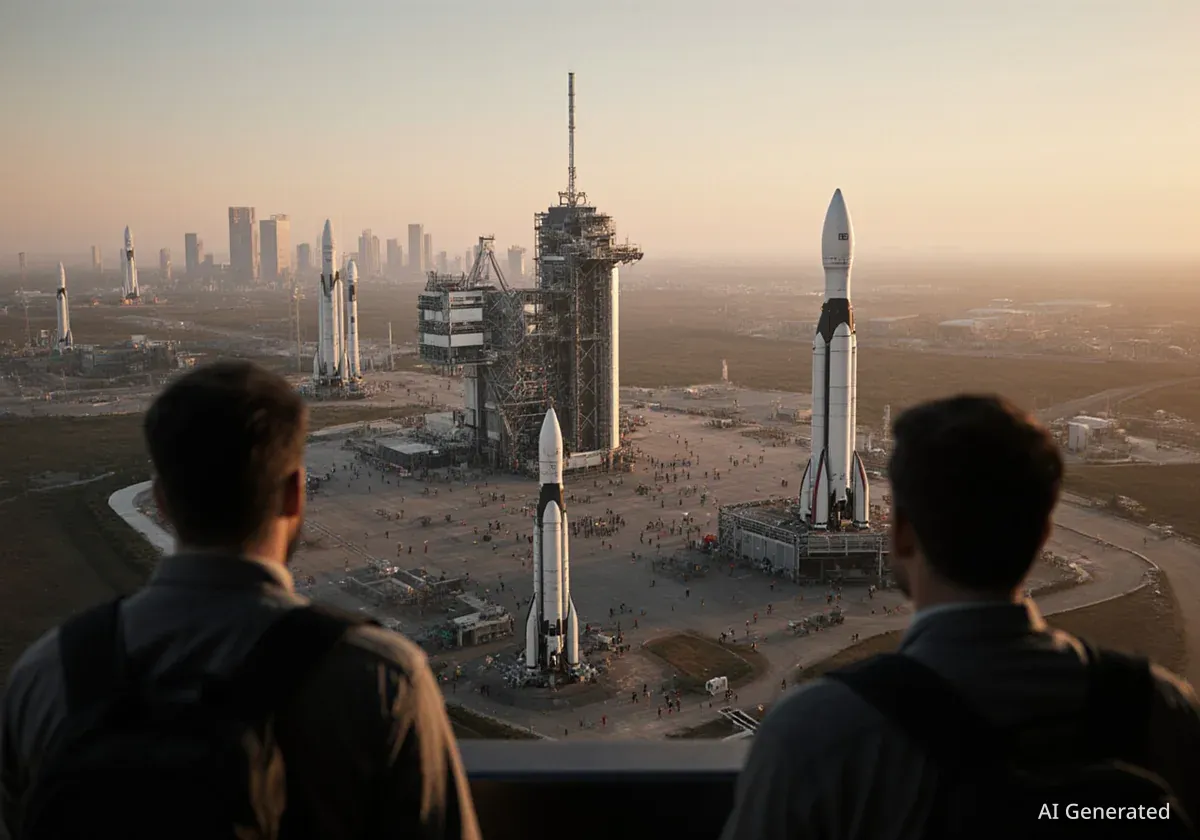
Commercial space station developer Vast has secured $500 million in a new funding round, a significant financial boost for its plans to build a private outpost in low-Earth orbit. The infusion of capital is aimed at accelerating the development of its Haven-1 station, which is scheduled for launch as early as 2027.
The funding consists of a $300 million Series A equity round and an additional $200 million in debt. This marks the company's first major external investment, as it was previously funded solely by its founder, cryptocurrency billionaire Jed McCaleb.
Key Takeaways
- Vast raised a total of $500 million through a combination of equity and debt financing.
- The funds will support the development of Haven-1, a single-module commercial space station.
- This is the first outside investment for the company, previously funded by founder Jed McCaleb.
- Vast's business model initially focuses on government agencies like NASA, not emerging commercial markets.
A New Era of Funding
Vast, a company with a long-term vision of enabling human life in space, has operated on more than $1 billion of internal funding from founder Jed McCaleb until now. The new $500 million round signals growing investor confidence in the commercial space sector.
The Series A round was led by Balerion Space Ventures, with notable participation from the Qatar Investment Authority (QIA), IQT, and Japanese firms Mitsui & Co. and MUFG. McCaleb also participated in the round, reaffirming his commitment to the company's goals.
"Vast was founded with a long-term vision of billions of people living and thriving in space," McCaleb said in a statement. "Achieving a goal of this magnitude requires deliberate steppingstones, and our strategy of building, testing and iterating with real hardware is delivering results."
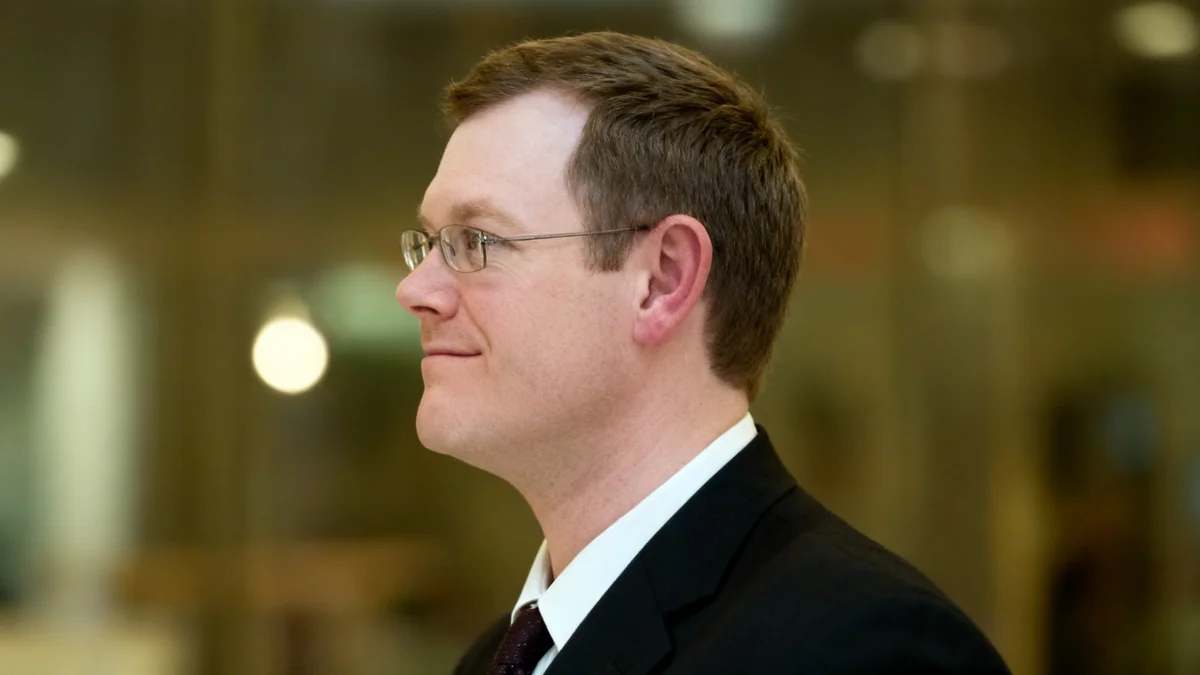
As part of the investment, A.C. Charania, a former NASA chief technologist and adviser to Balerion, will join Vast's board of directors. His addition brings significant agency experience to the company as it prepares to work closely with government partners.
By the Numbers
- Total New Funding: $500 million
- Company Valuation: Not disclosed
- Previous Investment: Over $1 billion (from founder)
- Employee Count: Over 1,000
The Steppingstone Strategy
Vast's approach to building a space station is methodical. The company is currently focused on Haven-1, a single-module station designed to serve as a proof of concept and an initial platform for human activity. This project is a precursor to a larger, multi-module station called Haven-2, which Vast hopes to offer NASA under its Commercial Low Earth Orbit Destinations (CLD) program.
Max Haot, CEO of Vast, emphasized this incremental strategy at a recent conference. "We believe we need steppingstones to make sure it’s safe and also to make sure that we prove to ourselves and our partners that we can do it," he explained.
Testing in Orbit
To validate its technology, Vast launched a small satellite called Haven Demo last year. The spacecraft was used to test key subsystems intended for Haven-1. Haot confirmed that the mission was successful and the satellite was safely deorbited in recent weeks after completing its on-orbit tests.
This hardware-first approach is a key differentiator for the company. "With its impressive hardware and expertise, Vast is the only operational commercial space station company to have designed, built and flown its own spacecraft, Haven Demo," stated A.C. Charania.
The Race for a Post-ISS Future
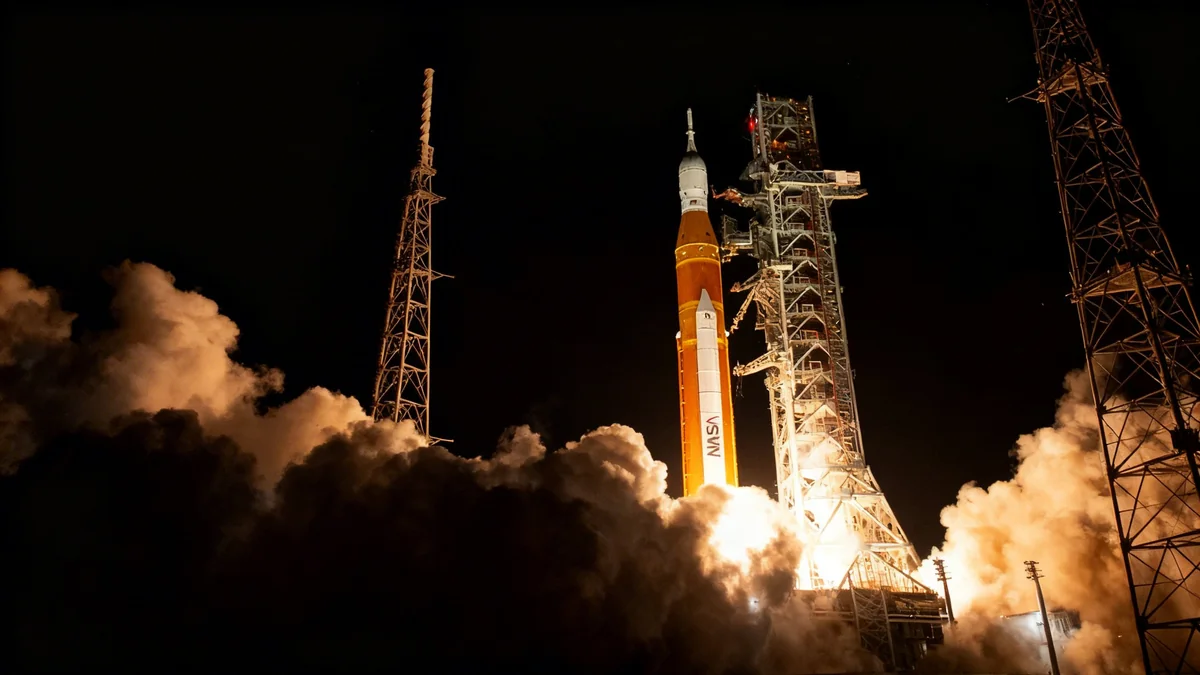
NASA plans to retire the International Space Station (ISS) around 2030 and transition to using commercially owned and operated stations in low-Earth orbit. Vast is one of several companies, including Axiom Space and Sierra Space, competing to provide these services. The agency's CLD program is designed to stimulate the development of these private outposts.
A Pragmatic Business Model
While many in the space industry envision a future driven by in-space manufacturing and pharmaceutical research, Vast is taking a more grounded approach for the near term. Haot stated that the company's business model relies almost exclusively on government contracts for the next five years.
"In our internal projections, in our fundraising and our business model, we have close to zero dollars for the LEO economy in the next five years," Haot said. "We need to be profitable on the current market."
This market includes:
- NASA and other Western partners of the ISS.
- A growing number of emerging national space agencies.
- A small number of self-funded private astronauts.
This strategy reflects the current reality of the space economy, where government agencies remain the primary customers for large-scale orbital infrastructure. The company has already secured a private astronaut mission to the ISS scheduled for no earlier than mid-2027, demonstrating its ability to serve this market.
The significant new funding, combined with a clear, step-by-step development plan and a pragmatic business focus, positions Vast as a serious contender in the race to build the next generation of human habitats in space.