
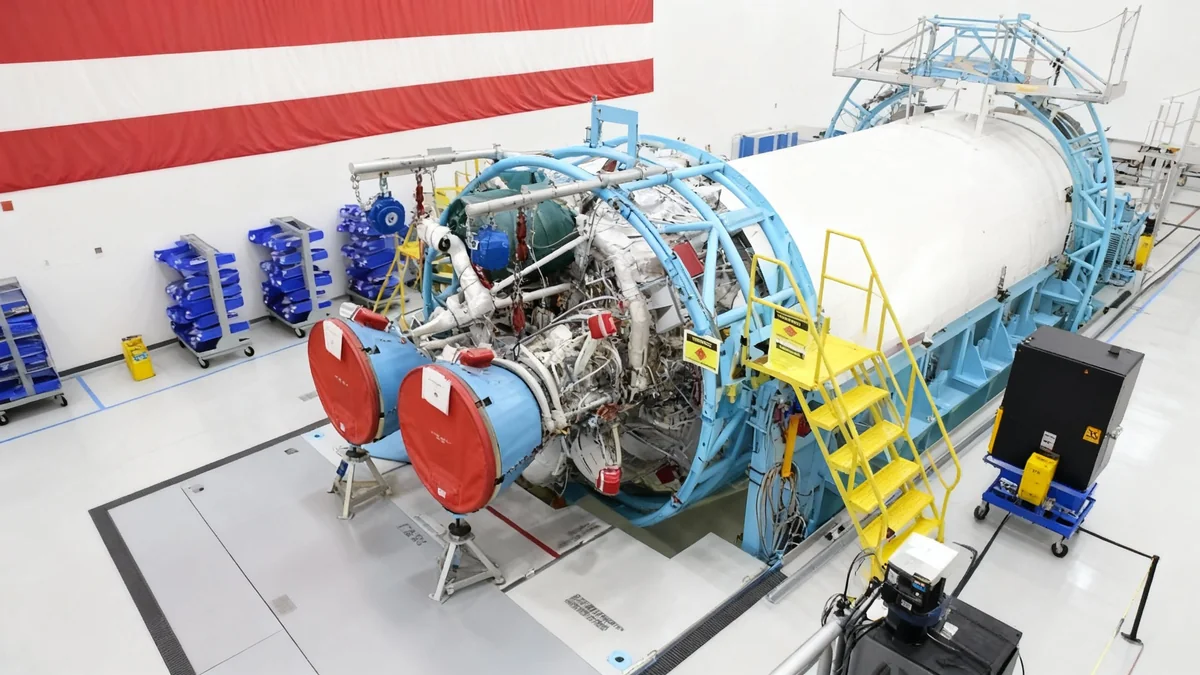



Defense technology company L3Harris Technologies has announced a definitive agreement to sell a majority stake in its Space Propulsion and Power Systems business to private investment firm AE Industrial Partners. The deal, valued at $845 million, transfers control of the historic RL10 rocket engine program and is expected to close in the second half of 2026, pending regulatory approval.
The transaction will create a new, independent entity focused on space propulsion, reviving the iconic "Rocketdyne" name. AE Industrial Partners will hold a 60 percent controlling interest in the new company, while L3Harris will retain a 40 percent non-controlling stake.
Key Takeaways
- L3Harris Technologies is selling a 60% stake in its space propulsion business for $845 million.
- The buyer, AE Industrial Partners, will form a new company named "Rocketdyne."
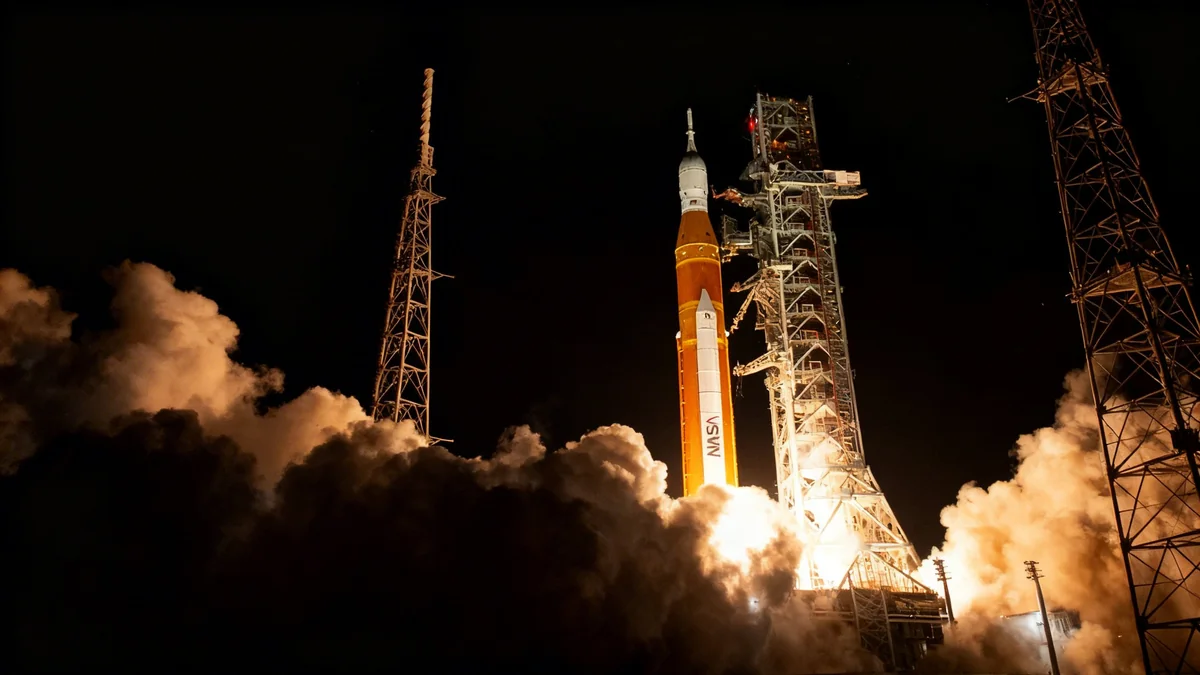
- The sale centers on the RL10 upper-stage engine, used on Vulcan and SLS rockets.
- L3Harris will retain its RS-25 engine business, which powers the core stage of NASA's SLS.
- The new Rocketdyne plans to modernize RL10 production and expand its market.
A Strategic Shift in Aerospace
The sale marks a significant strategic move for L3Harris, a Melbourne, Florida-based defense contractor. The company is streamlining its portfolio to better align with what it defines as core mission priorities for the Department of War. By divesting a majority share of its commercial and civil space propulsion unit, L3Harris can sharpen its focus on its primary defense and national security contracts.
"This transaction further aligns the L3Harris portfolio with DoW core mission priorities," said Christopher Kubasik, Chairman and CEO of L3Harris, in a prepared statement. He emphasized the company's commitment to supporting a "faster, more agile defense industrial base" while delivering value to shareholders.
Importantly, L3Harris has specified that the deal does not include its RS-25 engine business. These powerful engines, which are refurbished Space Shuttle Main Engines, are critical components of NASA's Space Launch System (SLS), powering the rocket's massive core stage. The "Aerojet Rocketdyne" trademark will also be retained by L3Harris.
The Return of Rocketdyne
For AE Industrial Partners, a firm with deep ties to the aerospace and defense sectors, the acquisition represents a major investment in a legacy space asset. The Boca Raton-based firm plans to re-establish the "Rocketdyne" brand for the new, standalone business. This name carries significant historical weight, tracing its origins to 1955 and its role in developing engines for the Apollo-era Saturn V moon rocket.
Kirk Konert, a Managing Partner at AE Industrial, outlined an ambitious vision for the new Rocketdyne. The primary focus will be on the RL10 engine, a highly reliable and efficient upper-stage engine that has been a workhorse of the American space program for over six decades.
"Rocketdyne’s growth roadmap includes international expansion, including Artemis-related programs, across its power, avionics, and in-space propulsion portfolios," Konert stated. "The company is one of few with the heritage and credibility required to execute against the ambitious timelines of the Artemis Program."
The firm sees significant growth potential, not only with existing customers but also by attracting new launch providers entering the market.
The Legacy of the RL10 Engine
First flown in 1963, the RL10 is one of the most successful and long-lived rocket engines ever developed. It was the first engine to use liquid hydrogen as a fuel in flight. Over the years, it has been instrumental in launching scientific probes to every planet in our solar system, as well as deploying critical national security and commercial satellites. Its reliability and performance have made it the upper-stage engine of choice for launch vehicles like the Atlas V, Delta IV, and now the new Vulcan Centaur and the SLS.
Modernizing a Legendary Engine
A key part of AE Industrial's strategy for the new Rocketdyne involves modernizing the manufacturing process for the RL10. The firm plans to leverage its experience with portfolio companies to ramp up production and improve efficiency. This includes a significant emphasis on expanding the use of additive manufacturing, or 3D printing, a technology Aerojet Rocketdyne has been implementing for over 15 years.
"Beyond additive manufacturing, our focus is on practical throughput and scalability levers," Konert explained. He detailed plans that include increasing testing capacity to reduce production bottlenecks and potentially streamlining product lines to achieve better economies of scale.
RL10 Engine At a Glance
- First Flight: November 27, 1963
- Propellants: Liquid Hydrogen (LH2) and Liquid Oxygen (LOX)
- Current Use: ULA Vulcan Centaur (upper stage), NASA Space Launch System (Interim Cryogenic Propulsion Stage)
- Legacy Use: Atlas V, Delta IV, Saturn I
- Number of Engines Flown: Over 500
This push for modernization is crucial as demand for launch services continues to grow. With NASA's Artemis program aiming for a sustained human presence on the Moon and a burgeoning commercial space market, a reliable supply of high-performance upper-stage engines is essential.
Implications for the Launch Market
The creation of an independent Rocketdyne focused on the RL10 could have broad implications for the space industry. While existing launch providers like United Launch Alliance (ULA) have tightly integrated the engine into their rocket designs, making a switch unlikely, new players may see an opportunity.
Konert acknowledged this dynamic, stating, "Upper-stage engines are tightly integrated into vehicle architectures, so we do not expect wholesale engine swaps by current operators."
However, he added, "As future launch manufacturers emerge, we plan to partner Rocketdyne’s management with AE’s business development team to pursue next-generation upper-stage opportunities." This suggests a strategy to position the RL10 and its future variants as a proven, off-the-shelf option for the next wave of rocket companies.
This move isolates a key commercial and civil space asset from a larger defense-focused corporation, potentially making it more agile and responsive to the fast-paced commercial space market. With dedicated investment from AE Industrial, the revitalized Rocketdyne aims to secure the RL10's place in spaceflight for decades to come, powering missions to the Moon, Mars, and beyond.