



A new scientific study has determined that large-scale mining of most common asteroids is not currently feasible, pouring cold water on the long-held dream of a space-based gold rush. Researchers analyzing meteorite samples found that while specific types of asteroids hold promise, significant technological hurdles and economic realities must be addressed before the industry can take off.
The findings, which will be published in the Monthly Notices of the Royal Astronomical Society, suggest a more strategic approach is needed, focusing first on accessible resources like water rather than precious metals.
Key Takeaways
- A study of carbonaceous meteorites concludes that mining most common asteroids is currently far from viable.
- Researchers identified specific asteroid types, such as those rich in water or certain minerals like olivine and spinel, as the most promising initial targets.
- Water extraction for use as rocket fuel and life support is seen as a more realistic near-term goal than mining for precious metals.
- Significant technological advancements in low-gravity extraction and processing are required before asteroid mining can become a reality.
A Realistic Assessment of Space Resources
The concept of mining asteroids for valuable resources has captivated entrepreneurs and space agencies for decades, promising a future of post-scarcity. However, a detailed analysis led by researchers at Spain's Institute of Space Sciences (ICE-CSIC) provides a more measured outlook.
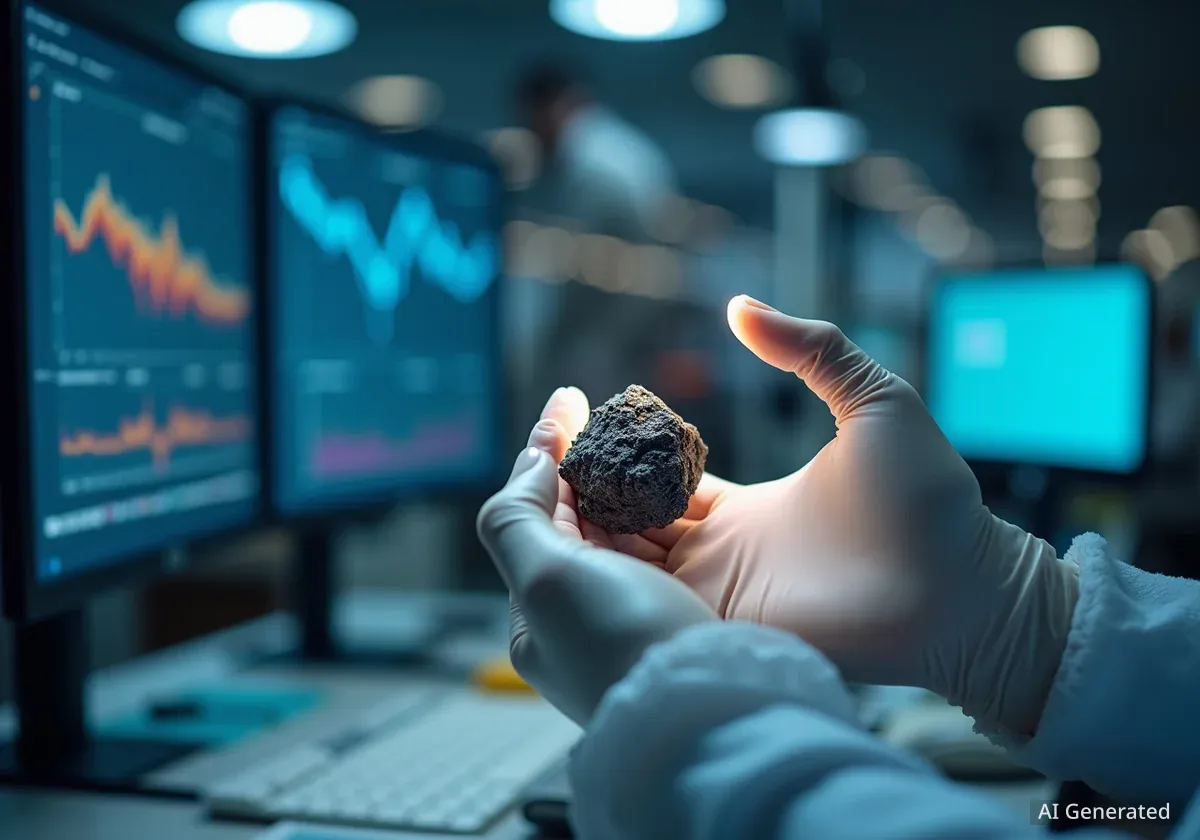
The team, led by Dr. Josep M. Trigo-Rodríguez, examined the chemical composition of carbonaceous chondrites. These are fragments of C-type asteroids that have fallen to Earth. C-type asteroids are the most abundant in our solar system, making up about 75% of the known population.
By studying these meteorites, scientists can understand the makeup of their parent bodies without the immense cost of a sample-return mission for every target. The results indicate that the concentration of precious metals in these common asteroids is too low to justify the massive expense of extraction with today's technology.
Why Study Meteorites?
Carbonaceous chondrites are remnants from the formation of the solar system, approximately 4.5 billion years ago. They are essentially pristine samples of the material that formed planets. Because they are fragile, they often break up in the atmosphere, and only about 5% of recovered meteorites are of this type. Studying them provides invaluable data on the chemical and mineralogical composition of their parent asteroids.
Identifying the Most Promising Targets
While the study tempers expectations for a universal space mining boom, it also provides a roadmap for future exploration. The analysis successfully identified specific characteristics of asteroids that would make them viable targets.
The researchers pinpointed two main types of asteroids worth prioritizing:
- Water-Rich Asteroids: Bodies containing a high concentration of water-bearing minerals. This water could be extracted and split into hydrogen and oxygen, the primary components of rocket fuel.
- Mineral-Rich Asteroids: A specific class of asteroid containing bands of olivine and spinel, which could be a source of useful industrial materials.
Dr. Trigo-Rodríguez emphasized the strategic importance of water. "For certain water-rich carbonaceous asteroids, extracting water for reuse seems more viable, either as fuel or as a primary resource for exploring other worlds," he stated.
"Alongside the progress represented by sample return missions, companies capable of taking decisive steps in the technological development necessary to extract and collect these materials under low-gravity conditions are truly needed."
The Technological and Environmental Hurdles
The path to extracting these resources is filled with challenges. The study underscores the need for new technologies designed to operate in microgravity. Developing large-scale collection systems and methods for processing raw materials in space are critical next steps.
From Science Fiction to Reality
Pau Grèbol-Tomàs, a PhD student on the research team, noted the evolution of space exploration. "It sounds like science fiction, but it also seemed like science fiction when the first sample return missions were being planned thirty years ago," he said. This highlights the long-term vision required for such ambitious projects.
The team also raised concerns about the potential environmental impact. "The processing of these materials and the waste generated would also have a significant impact that should be quantified and properly mitigated," Dr. Trigo-Rodríguez explained. This responsible approach is crucial before any large-scale operations begin.
A Future Built on Water and Strategy
The ultimate vision for asteroid mining remains powerful. Establishing an off-world supply chain for fuel and water would dramatically lower the cost of deep-space exploration, enabling more ambitious missions to Mars and beyond. It would also allow humanity to move heavy industry off-planet, reducing the environmental strain on Earth.
Furthermore, the research suggests a dual benefit for planetary defense. "In the long term, we could even mine and shrink potentially hazardous asteroids so that they cease to be dangerous," said Dr. Trigo-Rodríguez. This turns a potential threat into a valuable resource.
While the dream of mining asteroids for precious metals may be further away than previously thought, this study provides a clear, science-based path forward. The immediate future of space resource utilization lies not in gold, but in water—the essential ingredient for sustaining human presence beyond Earth.