




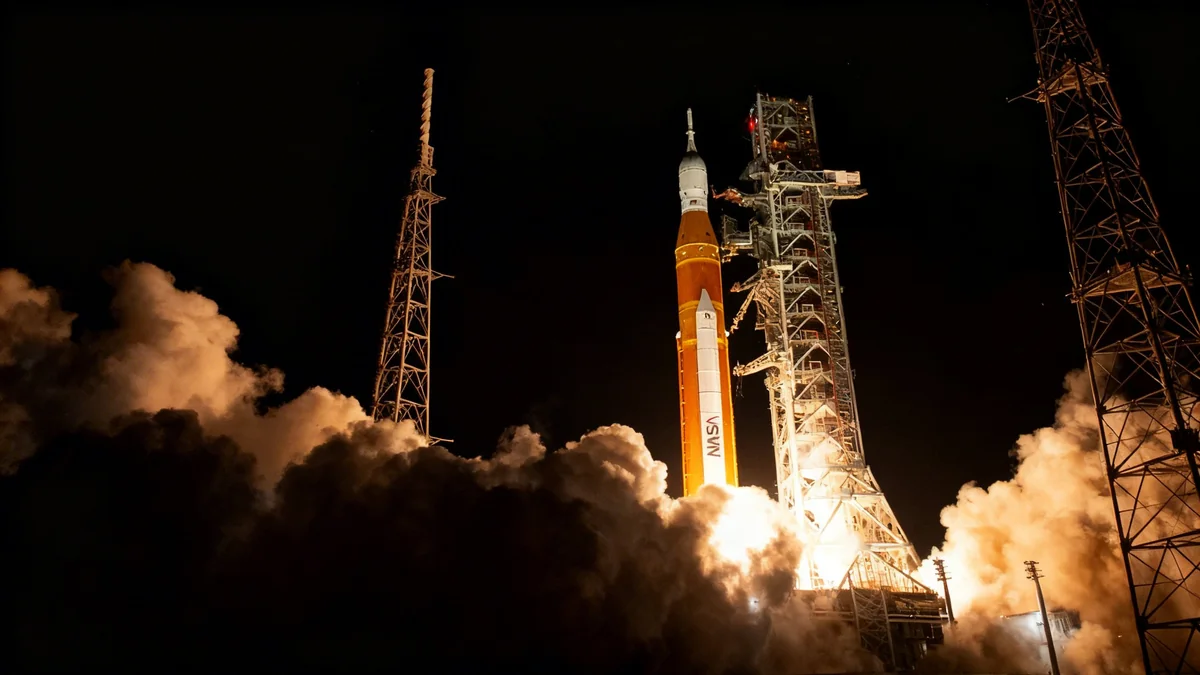
Shares for AST SpaceMobile, a company developing a space-based cellular broadband network, experienced a significant surge as investors showed strong confidence ahead of the company's planned launch of its next-generation satellites. The company's stock has seen remarkable growth this year, positioning it as a notable player in the competitive low-Earth orbit satellite market.
The upcoming launch is part of an ambitious strategy to provide direct-to-device cellular service, a move that could challenge established names like SpaceX's Starlink and tap into a market estimated to be worth hundreds of billions of dollars.
Key Takeaways
- AST SpaceMobile's stock rose more than 14% in a single day and has quadrupled in value this year.
- The company is preparing to launch its BlueBird 6 satellite, which is designed to be three times larger and have 10 times the data capacity of its predecessors.
- An aggressive launch schedule is planned for 2026, with a new satellite set to launch approximately every 45 days.
- AST SpaceMobile has already secured agreements with over 50 mobile network operators, including Verizon, to support its service.
Investor Confidence Drives Market Performance
Investor enthusiasm for AST SpaceMobile has translated into major gains for its stock. On Monday, the company's shares climbed by more than 14%, contributing to a three-day rally that saw gains of over 40%.
This recent performance is part of a larger trend. Despite a market selloff in November, the stock's value has increased by an astounding 310.8% this year. This surge reflects growing investor interest in the space technology sector and confidence in AST SpaceMobile's strategic direction.
By the Numbers
The market for low-Earth orbit (LEO) satellite services, which AST SpaceMobile aims to capture, could be worth approximately $200 billion, according to an analysis by Bank of America.
The momentum is largely tied to the company's upcoming launch activities and its clear roadmap for deploying a global cellular network from space.
A New Generation of Satellite Technology
At the heart of the company's plans is the new BlueBird 6 satellite. This next-generation hardware represents a significant technological leap forward. The company has stated that the satellite will be more than three times the size of its previous models.
More importantly, it is engineered to support 10 times the data capacity. Once in orbit, it is expected to be the largest commercial phased array antenna in low-Earth orbit, a critical component for delivering reliable broadband signals directly to standard smartphones on the ground.
This enhanced capability is crucial for the company's goal of providing seamless connectivity in areas where traditional cell service is unreliable or nonexistent.
What is a Phased Array Antenna?
A phased array antenna is a collection of small antennas that work together to steer a radio beam electronically without physically moving. For a satellite network, this technology allows a single satellite to communicate with many users across a wide area simultaneously, making it highly efficient for providing internet service from space.
Aggressive Launch Schedule and Service Rollout
The upcoming launch is just the beginning of a rapid deployment phase. AST SpaceMobile has outlined an aggressive timeline to build out its satellite constellation and begin offering services.
The company plans to complete five orbital launches in the first quarter of the coming year. This pace will accelerate significantly in 2026.
“The mission marks the start of our next phase of execution, with a launch planned every 45 days on average during 2026, as we continue building space-based cellular broadband connectivity for all,” the company announced in a statement.
This rapid deployment is aimed at establishing a functional network quickly. The company's roadmap includes:
- Offering "intermittent" direct-to-cellular service across the United States by early 2026.
- Expanding the service's reach and capabilities later in the year as more satellites join the constellation.
Strategic Partnerships and Market Position
A key element of AST SpaceMobile's strategy is its collaboration with existing telecommunications companies. Rather than competing directly with mobile carriers, the company is positioning itself as a partner that can extend their networks.
To date, AST SpaceMobile has secured agreements with more than 50 mobile-network operators globally. This includes major players like Verizon Communications, which gives the company access to a massive potential customer base from day one.
These partnerships are vital for integrating the satellite service with existing cellular infrastructure, allowing users to roam seamlessly between terrestrial and space-based networks. This collaborative model distinguishes it from some competitors and could accelerate consumer adoption once the service is live.
As the company moves closer to its first major launch of the BlueBird series, the financial markets and the telecommunications industry will be watching closely to see if this new approach to global connectivity can deliver on its ambitious promises.