
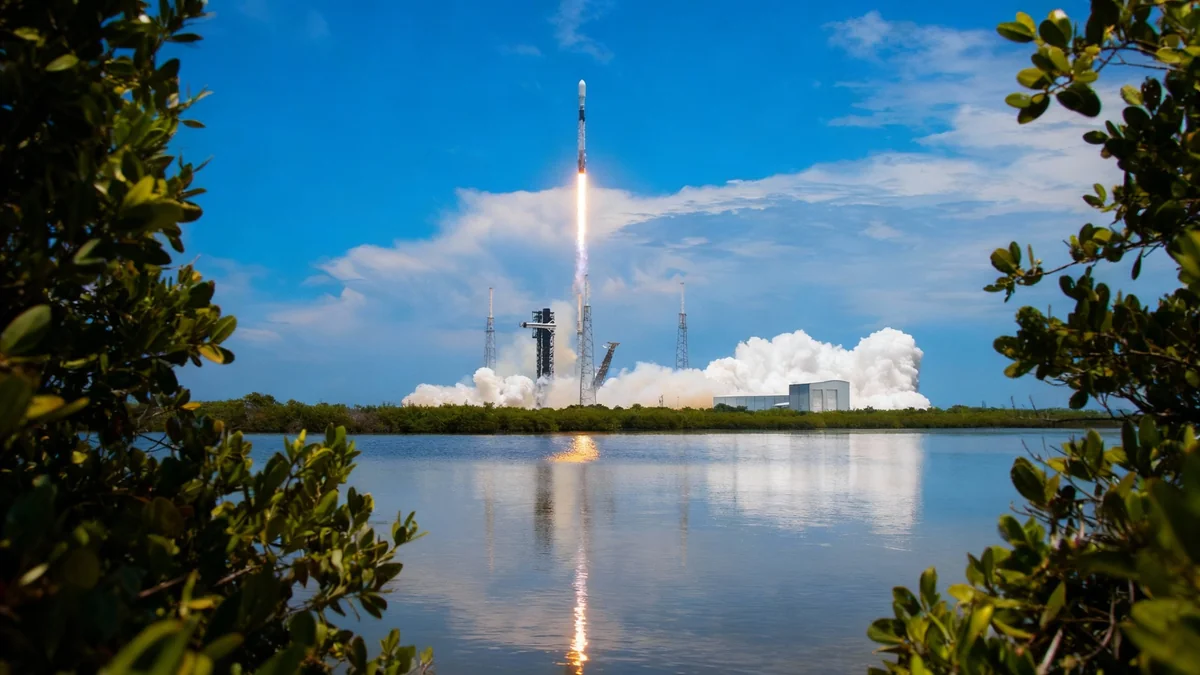


SpaceX is scheduled to launch an advanced navigation satellite for the U.S. Space Force from Florida's Cape Canaveral Space Force Station tonight. The mission will carry the ninth satellite in the GPS III series, which has been named in honor of Ellison Onizuka, one of the seven astronauts who died in the space shuttle Challenger accident in 1986.
The launch, utilizing a Falcon 9 rocket, is targeted for a 15-minute window that opens at 11:46 p.m. EST. This mission continues the modernization of the global positioning system, a critical component of both military operations and civilian life worldwide.
Key Takeaways
- SpaceX is set to launch the GPS III-SV09 satellite for the U.S. Space Force from Cape Canaveral, Florida.
- The launch window opens at 11:46 p.m. EST on January 26.
- The satellite is named "Ellison Onizuka" to honor the astronaut lost in the 1986 Challenger disaster.
- This is the ninth of ten planned GPS III satellites, which feature enhanced anti-jamming capabilities.
- The Falcon 9 booster for this mission is on its fifth flight, with a planned landing on an ocean droneship.
Upgrading a Global Utility
The satellite launching tonight, officially designated GPS III-SV09, is part of a crucial effort to upgrade the global positioning system. This constellation of satellites provides essential positioning, navigation, and timing (PNT) data for users around the globe, from military forces to everyday smartphone users.
Built by aerospace and defense company Lockheed Martin, the GPS III series represents a significant technological leap over previous generations. A key feature is the integration of "M-Code" technology, a more secure and powerful military signal.
Advanced Capabilities
According to U.S. Space Force officials, the M-Code technology makes the GPS III satellites significantly more resistant to jamming and spoofing attempts, which is a critical requirement for ensuring reliable navigation for military operations in contested environments.
This launch marks the second-to-last satellite in the GPS III block, with the final one, SV10, expected to launch later this year. The first satellite in this series was launched back in December 2018. The program is a multi-billion dollar investment to ensure the U.S. maintains a robust and secure PNT network for decades to come.
A Tribute to a Fallen Hero
In a touching tribute, the Space Force has named this satellite "Ellison Onizuka." Colonel Onizuka was a U.S. Air Force officer and NASA astronaut who tragically lost his life when the space shuttle Challenger broke apart 73 seconds after liftoff on January 28, 1986.
The Legacy of Ellison Onizuka
Ellison Onizuka was selected as an astronaut in 1978 and became the first Asian American to fly in space during his mission on the space shuttle Discovery in 1985. The Challenger mission was to be his second spaceflight. Naming this satellite in his honor continues a tradition of recognizing American space pioneers.
This practice is not new for the GPS program. Other satellites in the constellation have also been named after prominent figures in American space history. For example, GPS III-SV05 was named for Apollo 11 moonwalker Neil Armstrong, and GPS III-SV07 honors Sally Ride, the first American woman in space. These dedications serve as a permanent memorial in orbit, connecting the nation's space heritage with its future technological assets.
Mission Profile and Launch Dynamics
The mission will be carried out by a SpaceX Falcon 9 rocket, a workhorse of the modern launch industry. The first-stage booster assigned to this flight is a flight-proven vehicle, embarking on its fifth mission. This reusability is a cornerstone of SpaceX's strategy to reduce the cost of access to space.
Following liftoff, the first stage will perform a series of burns to return to Earth. Approximately 8.5 minutes after launch, it is scheduled to land vertically on the SpaceX droneship named "A Shortfall of Gravitas," which will be positioned in the Atlantic Ocean.
While the first stage returns, the rocket's second stage will continue its journey. It will carry the "Ellison Onizuka" satellite to its intended destination in medium-Earth orbit. The satellite is expected to be deployed from the upper stage about 90 minutes after liftoff. Once in orbit, it will undergo a period of testing and calibration before joining the operational GPS constellation.
A Shift in Launch Providers
Interestingly, this mission was not originally slated to fly on a Falcon 9. The GPS III-SV09 satellite was initially booked to launch aboard United Launch Alliance's new Vulcan Centaur rocket. However, the Space Force made a strategic decision to reassign the mission.
"For this launch, we traded a GPS III mission from a Vulcan to a Falcon 9, then exchanged a later GPS IIIF mission from a Falcon Heavy to a Vulcan," stated U.S. Space Force Col. Ryan Hiserote in a statement. "Our commitment to keeping things flexible... means that we can pivot when necessary to changing circumstances."
This change highlights the dynamic nature of the national security launch market and the importance of having multiple certified providers to ensure mission schedules are met. The next generation of satellites, known as GPS IIIF (the "F" stands for "follow-on"), is already in development, with the first launch anticipated in the spring of 2027. One of these future missions will now fly on the Vulcan rocket as part of the manifest exchange.