


Military leaders and international officials are raising alarms over reports that Russia is developing a nuclear anti-satellite weapon. The device, designed for detonation in low-Earth orbit, could have catastrophic consequences for global infrastructure, communication, and security, potentially rendering near-Earth space unusable for an extended period.
The development has been described by some U.S. officials as a potential "Cuban Missile crisis in space," prompting a re-evaluation of national security strategies and international space treaties. The weapon's deployment would represent a significant escalation in the militarization of space.
Key Takeaways
- Russia is reportedly developing a nuclear-armed anti-satellite weapon for use in low-Earth orbit.
- A detonation could destroy thousands of satellites, disrupting global banking, navigation, and communications.
- Military officials warn the effects would be "catastrophic" and could make low-Earth orbit unusable for up to a year.
- The plan would violate the 1967 Outer Space Treaty, which prohibits placing weapons of mass destruction in orbit.
- The threat is accelerating efforts by nations to develop independent space capabilities and defensive measures.
A New Generation of Orbital Threats
The concept of satellite warfare is not new, but the introduction of a nuclear component represents a grave escalation. According to U.S. intelligence assessments from early 2024, the Kremlin is believed to be developing a space-based system armed with a nuclear warhead. This is not a weapon designed to strike targets on Earth, but rather one intended to neutralize the orbital assets of other nations in a single, decisive blow.
Brigadier General Christopher Horner, commander of the Royal Canadian Air Force, described Moscow's ambitions as "quite alarming." The weapon would combine a physical blast with a powerful electromagnetic pulse (EMP). The physical explosion would create a cloud of debris traveling at extreme velocities, triggering a chain reaction that could shred thousands of nearby satellites.
Simultaneously, the nuclear detonation would release an intense burst of energy designed to "fry" the sensitive electronics of satellites over a vast area, rendering them useless even if they escape the physical debris field.
"My only advice as a military officer is to put pressure on [Moscow] so that they don’t follow through with the plan, because that would be an incredibly terrible thing."
The Devastating Impact of a Space Detonation
The modern world's reliance on satellite networks is almost total. A successful attack of this nature would trigger immediate and widespread chaos. Financial systems, which depend on satellites for synchronizing transactions, would be crippled. Global navigation systems, essential for aviation, shipping, and even simple food delivery services, would go dark.
Widespread Disruption
Pentagon simulations indicate that a single nuclear detonation in low-Earth orbit could render that critical region of space unusable for satellites for as long as a year due to persistent radiation and debris.
The consequences extend beyond economic and logistical disruption. Military communications, surveillance, and early-warning systems are heavily reliant on space-based assets. Neutralizing these systems could blind a nation, leaving it vulnerable to conventional or even nuclear attack. U.S. Republican Congressman Mike Turner has starkly labeled the scenario a "Cuban Missile crisis in space," highlighting the potential for miscalculation and catastrophic conflict.
Experts at the Pentagon have run simulations to model such an attack. The results suggest a devastating outcome, with thousands of Western satellites destroyed and the global economy facing unprecedented upheaval.
Violating Decades of International Agreements
The deployment of such a weapon would be a direct violation of long-standing international law. The Outer Space Treaty of 1967, signed by over 100 countries including Russia and the United States, forms the bedrock of space governance.
The Outer Space Treaty of 1967
This foundational treaty explicitly forbids signatory nations from placing nuclear weapons or any other weapons of mass destruction in orbit around Earth. It dedicates space to peaceful purposes and is intended to prevent it from becoming a new theater of war.
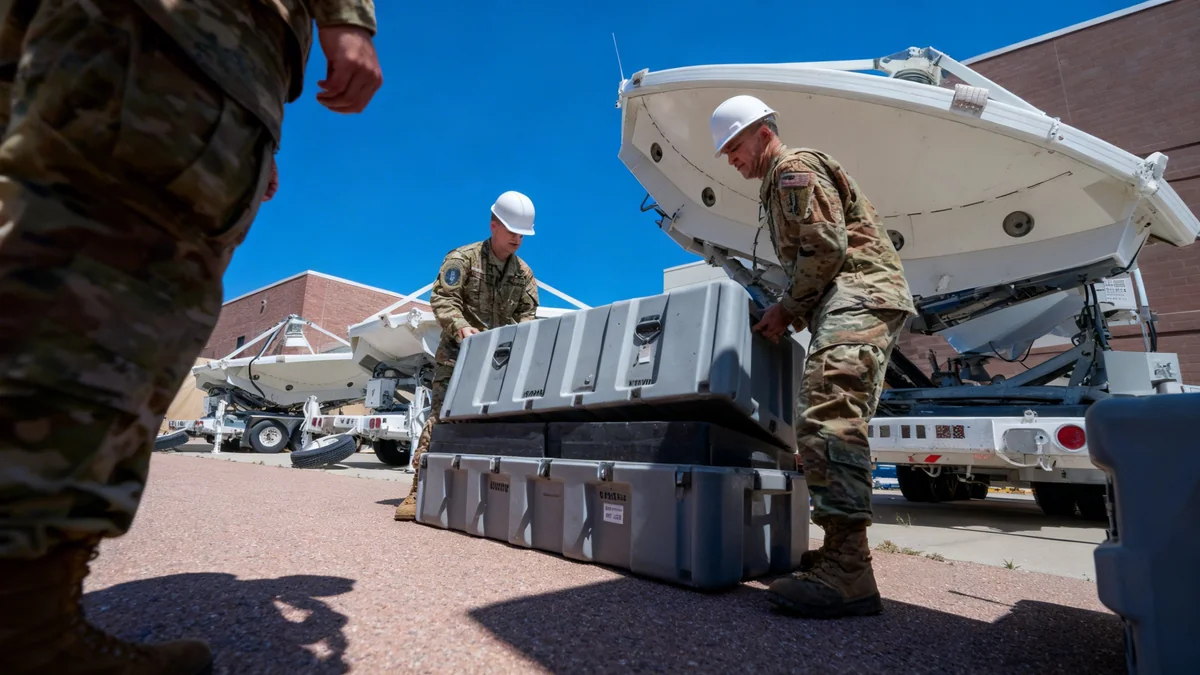
Russia proceeding with this plan would shatter this 57-year-old agreement, potentially triggering a new and dangerous arms race in space. The weaponization of space by Russia and China has been cited as a primary motivation for the establishment of the U.S. Space Force in 2019. This newest branch of the U.S. military is tasked with protecting American interests in space and defending its critical satellite infrastructure from attack.
While the Space Force is significantly smaller than the Army, Navy, or Air Force, it is rapidly expanding its capabilities in response to these emerging threats.
A Global Scramble for Space Independence
The threat posed by anti-satellite weapons is forcing nations worldwide to reconsider their dependence on foreign space infrastructure. Countries that have historically relied on American or European satellites are now accelerating their own domestic space programs.
This scramble is driven by both commercial opportunities and national security imperatives. Having a sovereign launch and satellite capability is increasingly seen as essential for ensuring economic stability and military readiness. The goal is to create resilient, diversified networks that are less vulnerable to a single point of failure or a targeted attack.
However, defensive capabilities are lagging. Brigadier General Horner noted that Canada, for example, does not have the ability to disable a Russian nuclear weapon in orbit. This reality underscores the current emphasis on diplomatic and political pressure to prevent Moscow from deploying the system in the first place, as the consequences of failure are too severe to contemplate.