

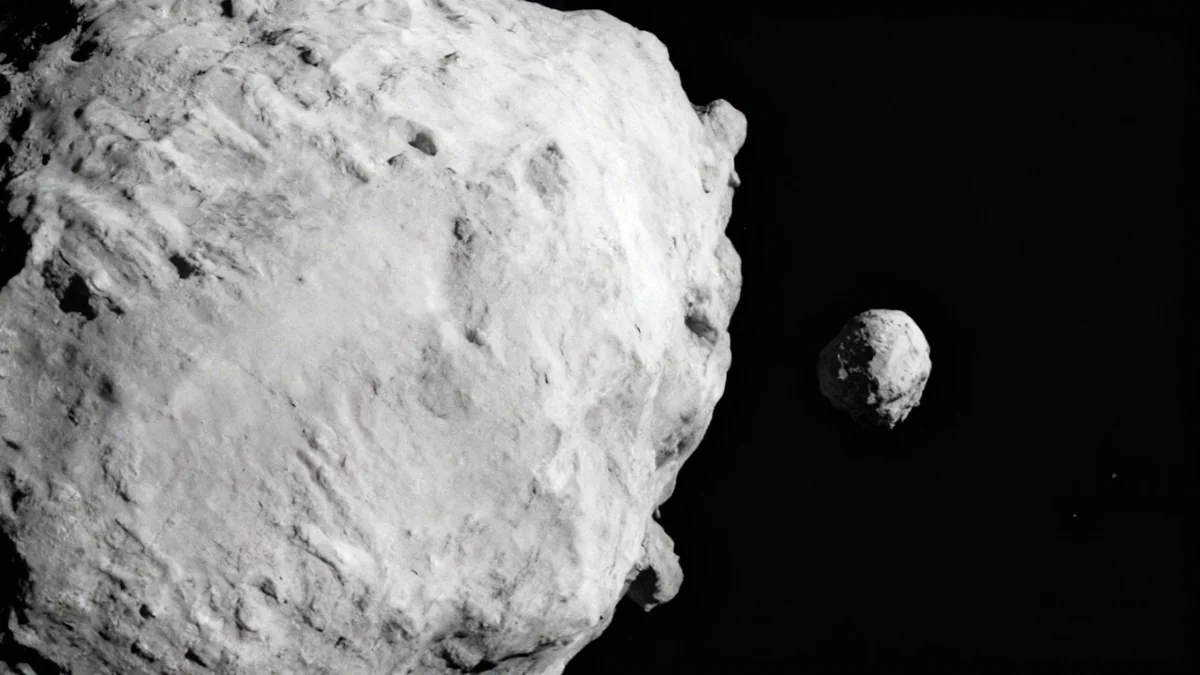

In geostationary orbit, 36,000 kilometers above Earth, the Intelsat 33E communications satellite suddenly went silent. Within hours, a private network of ground-based telescopes confirmed the worst: the satellite had shattered, creating a cloud of over a thousand pieces of high-velocity debris. This single event increased the population of objects in that critical orbit by nearly a third, highlighting a growing danger in the skies above.
The company that tracked this breakup, ExoAnalytic Solutions, represents a new era in space security. What began as a venture by three physicists has evolved into a global surveillance system, using hundreds of automated telescopes to monitor the increasingly congested and contested domain of space.
Key Takeaways
- A private network of 400 automated telescopes now provides critical Space Domain Awareness (SDA) by tracking thousands of objects in orbit.
- The 2023 breakup of the Intelsat 33E satellite created over 1,000 pieces of debris, increasing the object count in geostationary orbit by about one-third.
- The rise of commercial mega-constellations like Starlink and Kuiper is dramatically increasing orbital congestion and collision risks.
- Artificial intelligence and automation are essential for processing the vast amounts of data needed to monitor space, with 99% of observations handled without human intervention.
- Geopolitical tensions are driving the need for advanced space surveillance to protect national security and economic assets reliant on satellites.
A New Kind of Watchtower
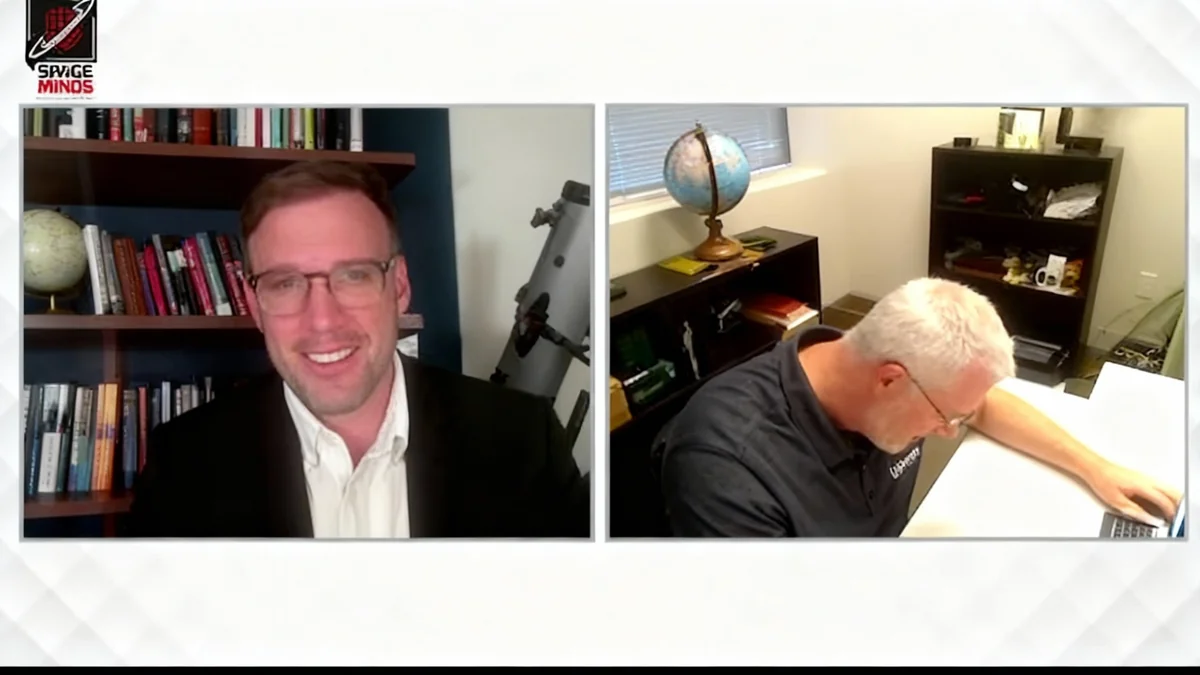
ExoAnalytic Solutions was founded in 2008 not by business executives, but by three career physicists with deep expertise in missile defense algorithms. Co-founder and CEO Doug Hendrix, who holds a PhD in physics, explained that the company's origins lie in solving complex defense problems.
The team initially focused on remote sensing for tracking missiles. However, they soon recognized that the same technology could be applied to a different, but equally challenging, problem: space surveillance. At the time, senior military leaders were calling for real-time, automated systems to manage a potential future conflict in space.
"We realized that was exactly what we’d been doing in missile defense," Hendrix said, reflecting on the company's pivot. "So we decided to take all that technology and apply it to space surveillance."
From Missile Defense to Space Traffic Control
The core technologies developed for missile defense—such as tracking fast-moving objects and predicting their trajectories—are directly applicable to Space Domain Awareness (SDA). The primary difference is the environment. Instead of tracking missiles in the atmosphere for minutes, SDA involves monitoring thousands of satellites and debris fragments in the vacuum of space for years or even decades.
The View from the Ground
Today, ExoAnalytic operates a global network of 400 fully automated telescopes. This system constantly scans the skies, updating catalogs of orbiting objects, identifying potential collisions, and alerting customers to anomalies.
The network generates about 20 observations every second. This firehose of data is too vast for humans to analyze in real time. Instead, the company relies heavily on automation and artificial intelligence to process the information, flag potential threats, and maintain an accurate picture of the orbital environment.
"About one percent of what we process is seen by a human; 99 percent isn’t. We’re conservative because our reputation depends on reliability."
- Doug Hendrix, CEO of ExoAnalytic Solutions
This capability was demonstrated starkly with the Intelsat 33E incident. After receiving a report that the satellite was unresponsive, Hendrix personally pointed a telescope at its last known location. "I found six objects where it used to be," he recalled. "We realized something catastrophic had happened." His team quickly identified 57 objects before brunch, a number that would swell to over 1,000 as tracking continued.
An Orbital Explosion's Aftermath
- Initial Debris Tracked: 57 pieces within hours.
- Total Debris Count: Over 1,000 pieces, ranging from softball- to beach-ball-sized.
- Debris Velocity: Up to 1 kilometer per second relative to other objects.
- Global Impact: Within two days, the debris field had spread to encircle the entire planet.
A Crowded and Contested Frontier
The Intelsat breakup is a preview of a much larger problem. The explosive growth of commercial space, particularly the deployment of mega-constellations in low Earth orbit (LEO), is making space more crowded than ever before. Companies like SpaceX, OneWeb, and Amazon are launching thousands of satellites, increasing the statistical probability of collisions.
"The problem will worsen in low Earth orbit as mega-constellations like Starlink, OneWeb, and Amazon’s Kuiper expand," Hendrix noted. "It’s going to get very crowded."
This congestion creates both accidental and intentional threats. A collision, whether accidental or the result of a hostile act, could trigger a chain reaction of impacts known as the Kessler syndrome, rendering certain orbits unusable for generations.
The Business of Watching the Skies
While the threat is clear, the responsibility for tracking it is not. Government agencies like NASA have limited resources for monitoring debris. For private companies, a sustainable business model is crucial.
"We don’t make money tracking debris, so we track what we can," Hendrix stated. "No one — government or private — is funding the rest. There has to be a business case for expanding coverage."
This has led to a shift in government procurement. Outdated "cost-plus" contracts, which often led to delays and overruns, are being replaced by performance-based models. This encourages private companies to invest their own funds to innovate, with the government rewarding those who deliver effective solutions at a fixed price.
The Future of Space Awareness
As the number of satellites and debris grows, the current sensor network will not be enough. The future of SDA will require a multi-layered approach, combining ground-based optical telescopes with space-based sensors, radar, and other advanced detection methods.
Processing the data from these new sensors will require an even greater reliance on AI and machine learning. Hendrix estimates that to truly monitor all orbits effectively, the data processing capabilities would need to scale by a factor of 100 or even 1,000.
This automation extends to defense systems. With the advent of hypersonic missiles that can cross continents in minutes, human reaction time is becoming obsolete. "You really can’t keep humans in that loop," Hendrix explained. "Systems like Patriot and Iron Dome have to be automated as much as possible. The human role is setting parameters, not reacting in real time."
For Hendrix, whose fascination with space was sparked by the Apollo program and science fiction, this work is about more than just technology. It's about protecting the vital infrastructure that underpins the global economy and enabling humanity's future in the final frontier.