


A critical vulnerability in the software protecting communications between NASA and its spacecraft went undetected for three years, potentially exposing billions of dollars worth of space assets to cyberattacks. The flaw was ultimately discovered and patched in just four days by an artificial intelligence system, highlighting a new era in space security.
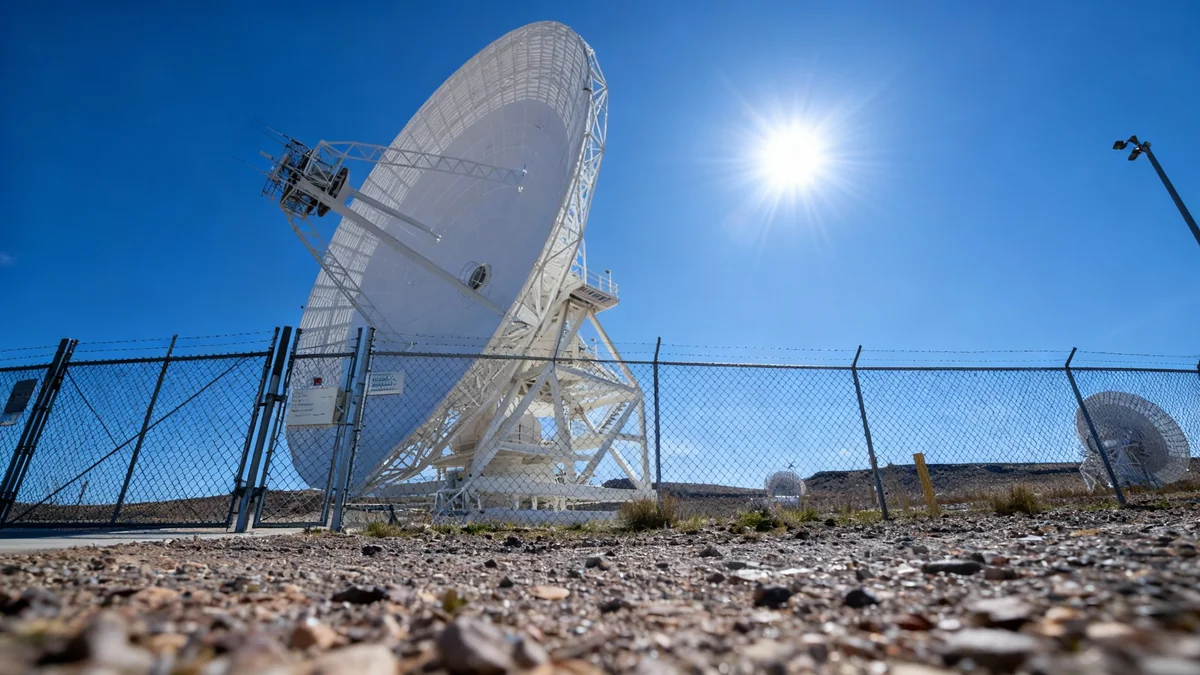
The security gap resided in CryptoLib, a software library responsible for encrypting data sent between ground control and missions across the solar system, including the Mars rovers. According to cybersecurity researchers, the flaw could have allowed an attacker to seize control of a spacecraft or intercept sensitive scientific data.
Key Takeaways
- A major security vulnerability existed for three years in NASA's CryptoLib software, which secures spacecraft communications.
- The flaw could have allowed hackers to hijack spacecraft, including Mars rovers, or steal data.
- Human code reviews repeatedly missed the vulnerability over the three-year period.
- An AI system developed by cybersecurity firm AISLE discovered and helped fix the issue in only four days.
- The incident underscores the growing importance of AI in securing critical space infrastructure.
An Unseen Threat to Billions in Space Assets
For years, the digital shield protecting some of humanity's most advanced scientific instruments was compromised. The vulnerability was located within the authentication system of the CryptoLib software, a foundational component of NASA's communication security infrastructure.
Cybersecurity firm AISLE, the California-based startup whose AI discovered the flaw, explained the severity of the situation. They noted that the vulnerability posed a direct threat to the integrity and control of numerous space missions.
"A vulnerability in this software poses a threat to billions of dollars in space infrastructure and the scientific missions they enable," researchers from AISLE stated in a company post detailing their findings.
The potential consequences were significant. An attacker exploiting this flaw could have issued unauthorized commands to a spacecraft, altering its trajectory, disabling its instruments, or completely taking it over. The interception of valuable scientific data was another major risk.
What is CryptoLib?
CryptoLib is a specialized software library used to implement cryptographic protocols for securing communications. In the context of space missions, it acts as a digital lock and key, ensuring that the commands sent from Earth are authentic and that the data sent back from spacecraft is protected from eavesdropping.
How an Attack Could Have Unfolded
The path to exploiting this vulnerability was not straightforward but remained a plausible threat. It would have begun with an attacker gaining access to the credentials of authorized ground control personnel.
Methods for this could include social engineering tactics like phishing emails or the use of infected USB drives left for employees to find. Once an operator's credentials were stolen, the attacker could leverage the software flaw.
"The vulnerability transforms what should be routine authentication configuration into a weapon," the researchers explained. This meant an attacker could "inject arbitrary commands that execute with full system privileges."
However, the researchers clarified that the attack was not entirely remote. An attacker would have needed to gain local access to the ground control system at some point. This requirement, they noted, "reduces the attack surface compared to a remotely exploitable flaw," but the danger to high-value space assets remained substantial.
Human vs. Machine: A Tale of Two Timelines
- 3 Years: The duration the critical vulnerability remained undetected by multiple human code reviews.
- 4 Days: The time it took for AISLE's autonomous AI analyzer to discover the flaw and facilitate a fix.
AI to the Rescue: A Four-Day Solution
The discovery of the long-hidden flaw came not from another human audit but from an AI-powered tool. AISLE's "autonomous analyzer" was designed to systematically scan entire codebases for suspicious patterns and vulnerabilities that human eyes might miss.
The AI system processed the CryptoLib software and, in a remarkably short period, flagged the authentication vulnerability that had eluded detection for years. The entire process, from discovery to assisting developers in creating a patch, was completed in just four days.
This rapid resolution stands in stark contrast to the three years the flaw lay dormant, surviving multiple manual security checks. The event serves as a powerful case study for the integration of artificial intelligence into cybersecurity protocols, especially for complex and critical systems.
The Future of Cybersecurity in Space
The incident has sparked a broader conversation about the methods used to secure space missions. As spacecraft become more autonomous and reliant on complex software, the potential for hidden vulnerabilities grows exponentially.
Experts suggest that while human oversight is irreplaceable, it is no longer sufficient on its own. The sheer volume and complexity of modern code require a new layer of automated defense.
"Automated analysis tools are becoming essential," the AISLE researchers concluded. "Human review remains valuable, but autonomous analyzers can systematically examine entire codebases, flag suspicious patterns, and operate continuously as code evolves."
The successful deployment of AI in this context demonstrates a path forward. By pairing human expertise with the tireless and systematic analysis of AI, organizations like NASA can build more resilient defenses, protecting invaluable scientific missions from the ever-present threat of cyberattacks.