


Iran is confronting a water crisis of historic proportions, with reservoir levels plummeting to critical lows after years of drought and mismanagement. The situation has become so severe that the nation's president has warned of potential evacuations for Tehran, a metropolis of 15 million people, if significant rainfall does not arrive soon.
Across the country, the effects of what experts call a state of "water bankruptcy" are becoming starkly visible. From the parched riverbeds supplying major cities to the shrinking of once-mighty lakes, a combination of climate change, outdated infrastructure, and agricultural policies has pushed Iran's water systems to the brink of collapse.
Key Takeaways
- Major reservoirs supplying Tehran are at or below 11% capacity, with some as low as 8%.
- Approximately 90% of Iran's water is allocated to agriculture, a sector that has expanded significantly despite arid conditions.
- Experts attribute the crisis to a combination of a multi-year drought, systemic mismanagement, and the escalating impacts of climate change.
- The Iranian government has acknowledged the severity of the situation, with the president floating the possibility of water rationing and evacuations.
The Scale of the Shortage
The numbers paint a grim picture of a nation running out of water. In the capital, Tehran, the primary reservoirs that sustain millions are nearly empty. Mohsen Ardakani, the director of Tehran's water authority, recently confirmed that these vital water sources are only about 11% full.
Specific dams show even more alarming figures. The Latyan Dam, located just outside the city, is hovering at a mere 9% of its capacity. The Amir Kabir Dam, another crucial supplier, is at approximately 8% capacity. This is not a sudden development but the culmination of a crisis that has been building for years.
Reservoirs at Critical Levels
- Tehran's Main Reservoirs: ~11% full
- Latyan Dam: ~9% full
- Amir Kabir Dam: ~8% full
- Mashhad's Reservoirs: ~3% full
The problem extends far beyond the capital. In Mashhad, Iran's second-largest city with a population of three million, reservoirs are reportedly at just 3% capacity. Across the nation, around 10% of all dams are considered effectively dry, and some 20 provinces have not received any significant rainfall since the rainy season was supposed to begin in late September.
A Crisis Decades in the Making
While the current drought, now in its sixth consecutive year, is a major factor, experts point to deeper, systemic issues that have led to this point. For decades, government policies have prioritized agricultural self-sufficiency, partly in response to international sanctions. This has led to a massive expansion of irrigated farming in arid regions.
"For decades, policies have encouraged the expansion of irrigated agriculture in arid regions," explained Amir AghaKouchak, a professor of civil and environmental engineering at the University of California, Irvine.
This focus on agriculture, which consumes an estimated 90% of the country's water, has included the cultivation of thirsty crops like rice. The number of dams and wells has proliferated to support this expansion, often at the expense of natural water systems. The dramatic shrinking of Lake Urmia, once one of the world's largest saltwater lakes, is a direct consequence of its water sources being diverted for farming.
The Concept of 'Water Bankruptcy'
Kaveh Madani, director of the United Nations University Institute for Water, Environment and Health, describes Iran's situation as "water bankruptcy." This means the country is extracting water from its rivers, lakes, and underground aquifers (its "checking and savings accounts") much faster than they can be replenished by rainfall. This over-extraction leads to irreversible damage to ecosystems and long-term water insecurity.
Compounding the problem is aging infrastructure. An estimated 30% of treated drinking water is lost through old, leaky pipes before it ever reaches a tap. Water recycling efforts remain minimal, adding further strain to a system already under immense pressure from a growing urban population.
The Human and Environmental Impact
For ordinary citizens, the crisis is becoming an anxious daily reality. While formal rationing has not been officially declared in Tehran, residents report fluctuating water pressure and periods where taps run completely dry. This uncertainty has fueled public anxiety and mistrust.
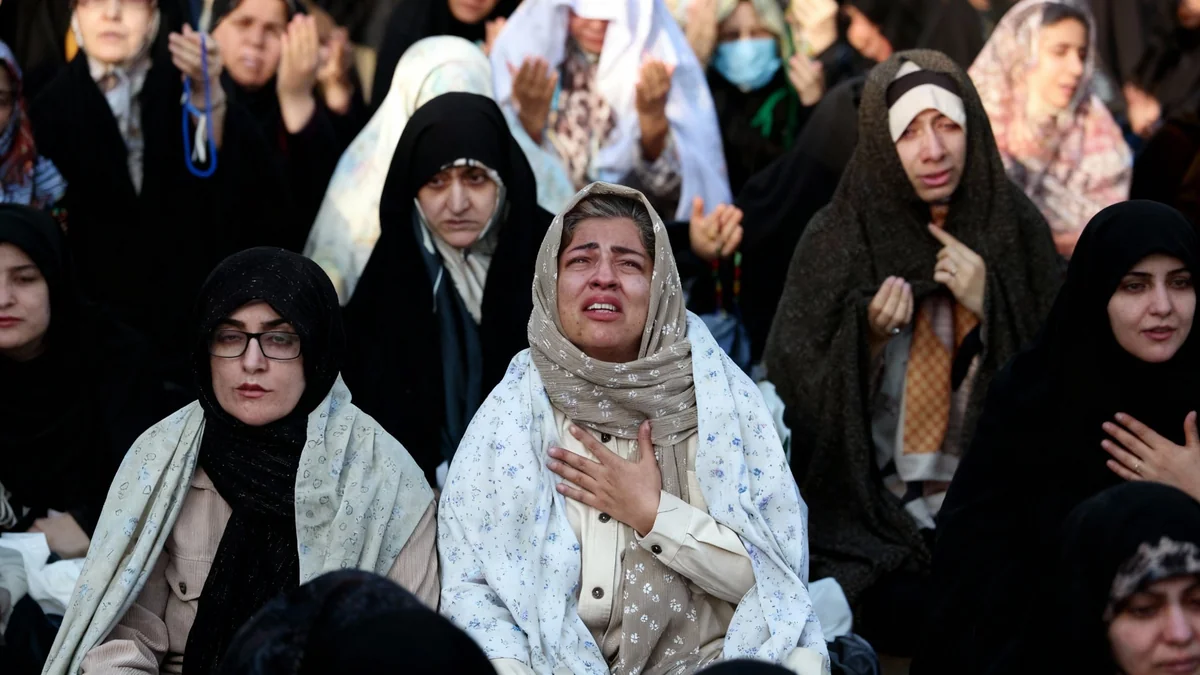
The government's response has been described by some as fragmented. In recent weeks, worshippers have gathered in mosques in Tehran to pray for rain, a traditional practice now tinged with modern desperation. Officials have also attempted cloud seeding, a method of inducing rain with little scientific consensus on its effectiveness.
Kaveh Madani, who formerly served as deputy head of Iran's Department of Environment, noted that poor communication has led to the spread of conspiracy theories, including claims that foreign powers are stealing Iran's clouds.
The president's suggestion of evacuating Tehran highlights the gravity of the potential outcomes, though many experts consider a mass relocation of 15 million people unfeasible. More likely are temporary measures, such as the emergency public holidays declared last summer to encourage residents to leave the city and conserve water.
An Uncertain Future
Experts agree that even if the rains do come, they will not be enough to solve the long-term problem. The damage to underground aquifers and ecosystems may be irreversible.
According to Amir AghaKouchak, "Nature is now imposing hard limits." He warns that aquifers that have been drained will not easily rebound, and collapsed ecosystems cannot be quickly restored.
Meaningful solutions would require a fundamental shift in Iran's economic and agricultural policies. Diversifying away from water-intensive farming is seen as essential, but such a move would be politically difficult and could lead to significant unemployment.
As the government waits and hopes for rain, the crisis deepens, intertwining environmental collapse with the country's social and political future. The longer that difficult reforms are delayed, experts warn, the fewer options will remain.