

From London to Lagos and Tokyo to Bílina, young people are spearheading a wave of environmental action as part of the fifth annual Call to Earth Day. The global initiative is seeing communities engage in projects to protect and restore local green spaces, turning a collective call into tangible change on the ground.
Across continents, students and volunteers are organizing everything from large-scale litter cleanups and urban garden restorations to innovative recycling programs and art projects. These efforts highlight a growing commitment among the younger generation to address environmental challenges directly within their own neighborhoods.
Key Takeaways
- Students and communities worldwide are participating in the fifth annual Call to Earth Day, focusing on protecting local green spaces.
- Projects include urban eco-gardening in London and Lagos, massive litter cleanups in Belgium and Nigeria, and creative recycling initiatives in Japan and the Czech Republic.
- These youth-led actions demonstrate a global trend of localized, hands-on environmental stewardship.
- Experts like oceanographer Sylvia Earle emphasize that curiosity and action are crucial for the planet's future, calling this the “greatest era of exploration.”
Cultivating Green Oases in Concrete Jungles
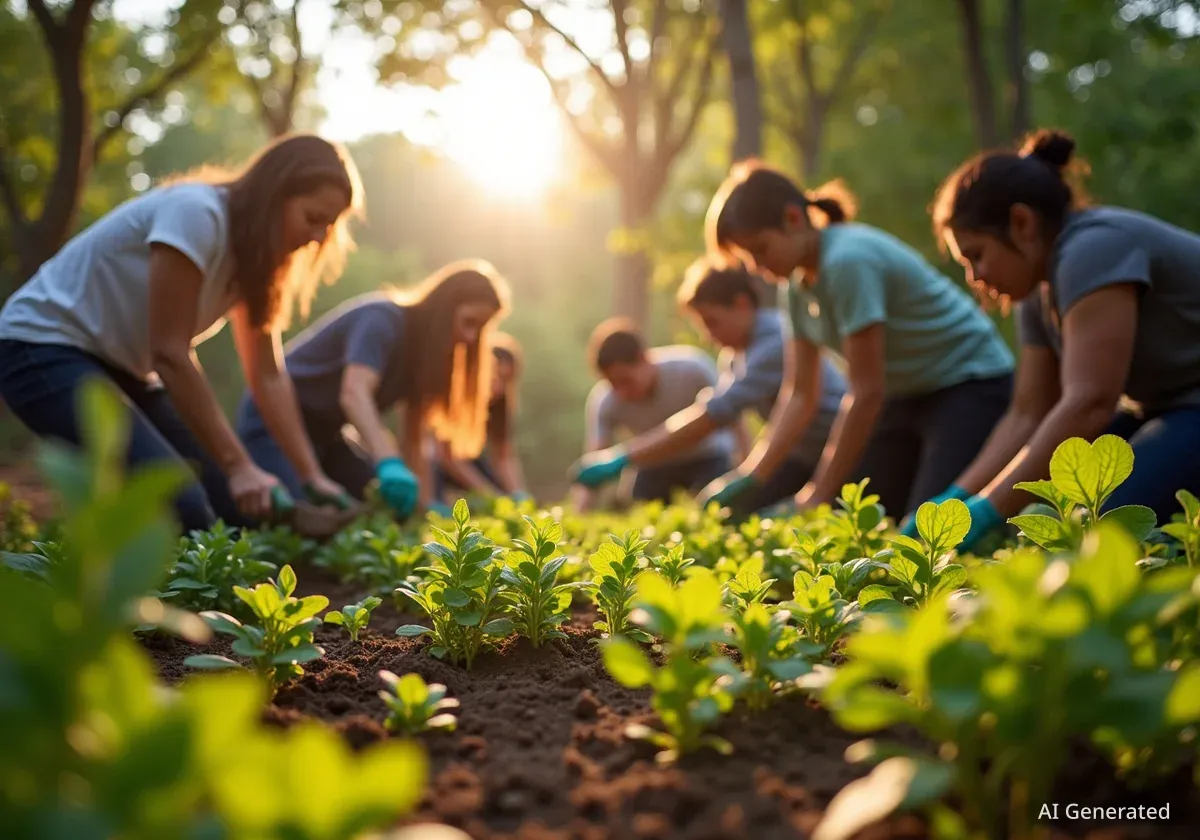
In major cities, where green space is often scarce, students are taking the lead in creating and reviving natural habitats. At the North Bridge House Senior School in London, an outdoor area is being transformed into a sustainable eco-garden. Students are planting flowers, herbs, and seasonal berries with the goal of promoting biodiversity in a highly urbanized setting.
The project aims not only to support local wildlife but also to create a space for mindfulness and connection with nature for the student community. This initiative is part of a broader sustainability effort at the school, which includes reducing its overall energy consumption.
A similar revival is taking place in Nigeria. The Tee-Tops School in Lagos has seen its eco-garden, first established in 2018, become overgrown. With help from the FABE International Foundation, the garden has been completely overhauled. It is now a thriving learning space where students can cultivate fresh vegetables, fruits, and herbs in a zero-waste environment that utilizes upcycled materials and organic growing methods.
In Hong Kong, students at the German Swiss International School are proving that green spaces can be created anywhere. They are planting microgreens like basil, building bee hotels, and creating mosaics from recycled materials collected during beach cleanups. Older students are guiding younger pupils, fostering a school-wide culture of environmental responsibility.
A Global Stand Against Waste
Community cleanups have become a cornerstone of Call to Earth Day, with volunteers removing thousands of kilograms of waste from natural environments. In the small Belgian town of Geetbets, a community initiative brought together over 70 volunteers from families, schools, and local associations to combat litter and illegal dumping.
“Geetbets wants to show that even a small rural municipality can make a visible difference in creating a cleaner, healthier, and more sustainable living environment,” said Eric Van Dam, coordinator of Geetbets Proper.
The effort in Nigeria was even more substantial. Volunteers led by climate activist Adefioye Michael Oluwaferanmi tackled trash in waterways leading to the Ogun River. They successfully recovered 520 kilograms of litter that would have otherwise flowed into the Atlantic Ocean.
Cleanup by the Numbers
- Geetbets, Belgium: Over 70 volunteers participated, collecting dozens of bags of garbage.
- Ogun State, Nigeria: Volunteers removed 520 kilograms of litter from waterways.
- Luxembourg City: A team collected nearly 50 kg of non-recyclable waste, 9 kg of recyclables, and 300 cigarette butts.
- Los Angeles Harbor: Kayakers gathered 1,330 pieces of litter, including a discarded Spiderman costume.
These cleanups are not just about removing trash; they often involve creative elements. In the Czech town of Bílina, approximately 250 children turned the waste they collected into unique art, creating characters and sculptures. In Los Angeles, the group Paddle Out Plastic arranged the litter they found into colorful temporary murals, using art to highlight the scale of the pollution problem.
Innovation in Recycling and Sustainability
Beyond cleanups, students are developing innovative solutions to tackle waste at its source. At The American School in Tokyo, the sustainable fashion club is raising awareness about the environmental impact of the fast-fashion industry.
“Our mission is to spread awareness about the environmental impact and consequences about the fast fashion industry,” Miyuki, the club's president, explained. The club recently collected five boxes of unwanted denim, which were sent to recycling factories. The fibers were broken down and repurposed into new t-shirts and bags, giving the old clothing a second life.
This focus on education is also evident in Kenya, where food security is a major concern. With the nation losing up to 40% of its food production annually, students in Nairobi are learning about creating a more efficient food supply chain, from ensuring pollination to reducing waste from plate to landfill.
The Bigger Picture: A Call for Exploration and Hope
Renowned oceanographer Sylvia Earle, founder of Mission Blue, framed these global actions within a larger context of discovery. With over seven decades of exploration experience, she believes the “greatest era of exploration is just beginning.” She urges everyone, especially scientists, to remain curious and keep asking questions to better understand and protect the planet.
“Ocean is still the greatest part of this planet. (The) least known, least explored, with some of the greatest discoveries yet to be made,” she stated. This sentiment of hope through action was echoed by EU Climate Pact Ambassador Dr. Nuray Unlu Bohn, who reminded volunteers in Luxembourg that “hope is action.”
Protecting Vital Ecosystems from Land to Sea
The day’s activities also extended to critical global ecosystems, such as coral reefs and rivers. Marine biologist Emma Camp is working to identify the world's toughest corals to help rehabilitate damaged reefs, which are under severe threat from climate change.
“Despite their immense importance, there is a real risk we could lose reefs within our lifetime, primarily because of climate change,” Camp warned. She noted that over one billion people rely on reefs for food, coastal protection, and even medicines. “No matter where you are in the world you are connected to coral reefs.”
In Beijing, students are witnessing the effects of climate change firsthand at the Liangma River. Once heavily polluted, the river was cleaned up in 2016 and became a popular recreational spot. However, students from the British School of Beijing report that the river no longer freezes over in winter as it once did.
“I think that is because of climate change and the warming of our planet,” one student said, adding that she and her friends have been planting trees to help combat the issue. Their efforts, combined with countless others around the globe, show a powerful, unified movement. From a single tree planted in Beijing to a kilogram of trash removed in Belgium, each action contributes to a collective effort to safeguard our shared planet.