

In Bujumbura, Burundi’s largest city, the pressure for space has become so intense that new homes are being constructed over old graves. This startling reality highlights a critical challenge facing the small East African nation: it is rapidly running out of land.
As one of the most densely populated countries in Africa, Burundi's growing population is placing unprecedented strain on its finite resources. The competition for land, affecting everything from housing and agriculture to burying the dead, signals a looming crisis for the nation and the wider African Great Lakes region.
Key Takeaways
- Burundi is experiencing a severe land shortage due to one of the highest population densities in Africa.
- Urban expansion in the capital, Bujumbura, has led to construction on unconventional spaces, including cemeteries.
- The pressure extends to rural areas, where agricultural plots are shrinking, threatening food security and livelihoods.
- The African Great Lakes region is becoming one of the most crowded places on the planet, with Burundi at the epicenter of this demographic shift.
The Crowded Capital
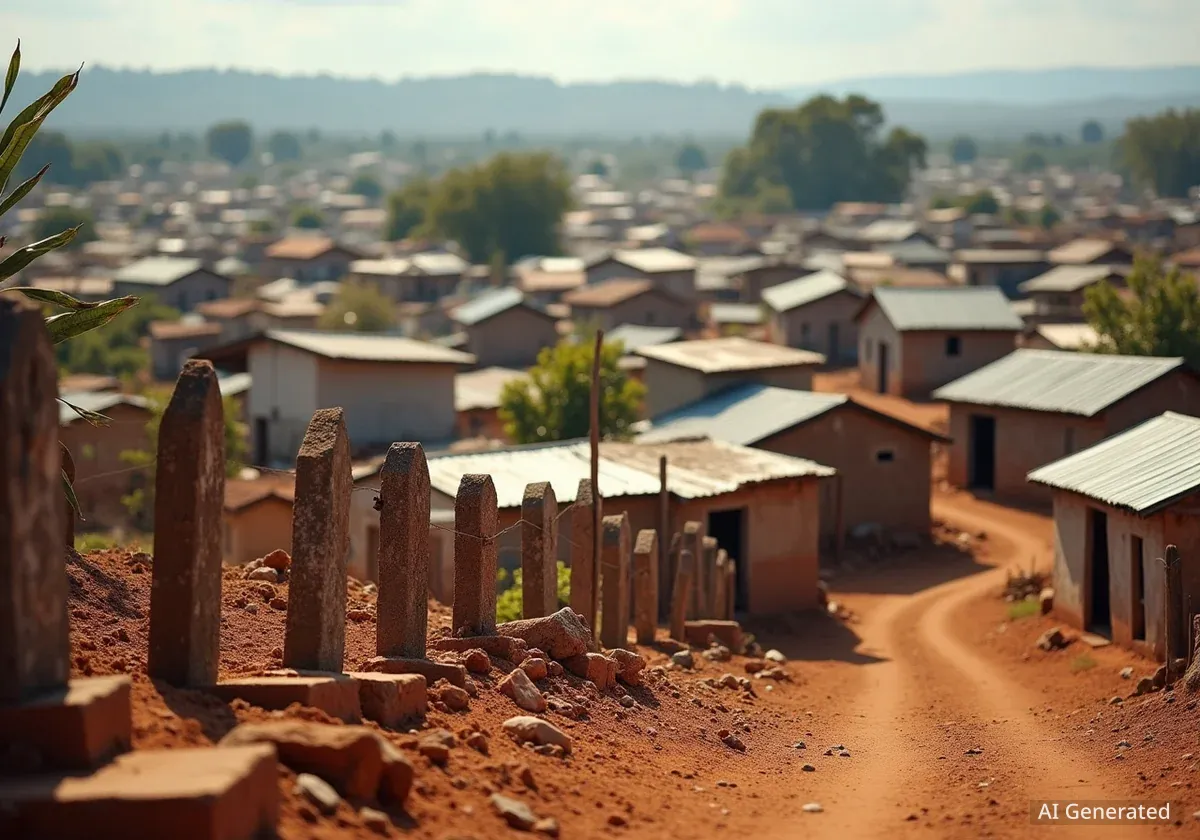
On the outskirts of Bujumbura, the line between the living and the dead is blurring. Cemeteries that once marked the city's edge are now prime real estate for families desperate for a place to live. Homes are appearing among the tombstones, a stark illustration of the city's relentless expansion.
Berchmans Nyandwi, a local gravedigger and funeral organizer, observes the transformation with a sense of inevitability. Standing amid the makeshift construction, he notes that it is only a matter of time before the entire area is covered by houses. In some cases, families build directly over existing graves, a clear sign of the dire lack of available space.
This urban sprawl is fueled by a steady migration from rural areas, as people move to the city in search of opportunities. However, the city’s infrastructure is struggling to keep pace, forcing new arrivals to settle wherever they can find a foothold.
A Nation of Hills, A Shortage of Land
The land pressure is not confined to the capital. Burundi, often called the "Heart of Africa," is a nation of rolling hills, but every available slope is already intensely cultivated. In provinces like Kayanza, a key agricultural region, the problem is equally acute.
Farming is the backbone of the Burundian economy, with over 90% of the population dependent on subsistence agriculture. Historically, families passed down plots of land through generations. Today, that system is breaking down. With each new generation, inherited plots are subdivided into smaller and smaller parcels, many of which are no longer large enough to sustain a family.
Demographic Pressure by the Numbers
Burundi has a population density of approximately 470 people per square kilometer, making it one of the most crowded countries on the African continent. This figure is projected to increase significantly in the coming decades, intensifying the competition for land and resources.
This fragmentation of farmland has serious consequences. It limits the types of crops that can be grown, reduces overall yields, and pushes families deeper into poverty. The lack of new land to cultivate also means there is little room for agricultural innovation or expansion.
The Regional Epicenter of a Population Boom
Burundi's situation is a powerful case study of a much larger trend unfolding across the African Great Lakes region. Countries like Rwanda, Uganda, and the eastern Democratic Republic of Congo are also experiencing rapid population growth and increasing land density. This entire region is on a trajectory to become one of the most crowded places in the world.
The Great Lakes Conundrum
The African Great Lakes region is characterized by fertile volcanic soil and ample rainfall, which has historically supported large agricultural populations. However, decades of high birth rates combined with limited economic diversification have turned this blessing into a challenge, creating intense competition for land and resources that has, at times, contributed to regional instability.
Unlike many other parts of the world that have managed population growth through industrialization and urbanization, the economies of the Great Lakes nations remain heavily reliant on agriculture. This dependence creates a direct and often volatile link between population numbers and access to land.
Searching for Solutions
Addressing Burundi's land crisis requires a multi-faceted approach. Experts suggest several potential avenues, though none offer an easy fix.
- Urban Planning: More structured and forward-thinking urban development in cities like Bujumbura could help manage growth more effectively, preventing chaotic expansion and ensuring land is used efficiently.
- Agricultural Modernization: Investing in modern farming techniques, such as improved irrigation, higher-yield crops, and vertical farming, could help farmers produce more food on smaller plots of land.
- Economic Diversification: Creating jobs outside of agriculture is critical. Developing sectors like manufacturing, services, and technology would reduce the population's direct dependence on land for survival.
- Family Planning: Access to education and family planning services is considered a crucial long-term strategy for stabilizing population growth and easing pressure on national resources.
The challenge for Burundi is immense. The sight of houses rising in a cemetery is more than just a local curiosity; it is a clear warning of the profound demographic and environmental pressures that are shaping the nation's future. Finding sustainable solutions is not just a matter of policy, but of survival for millions.