
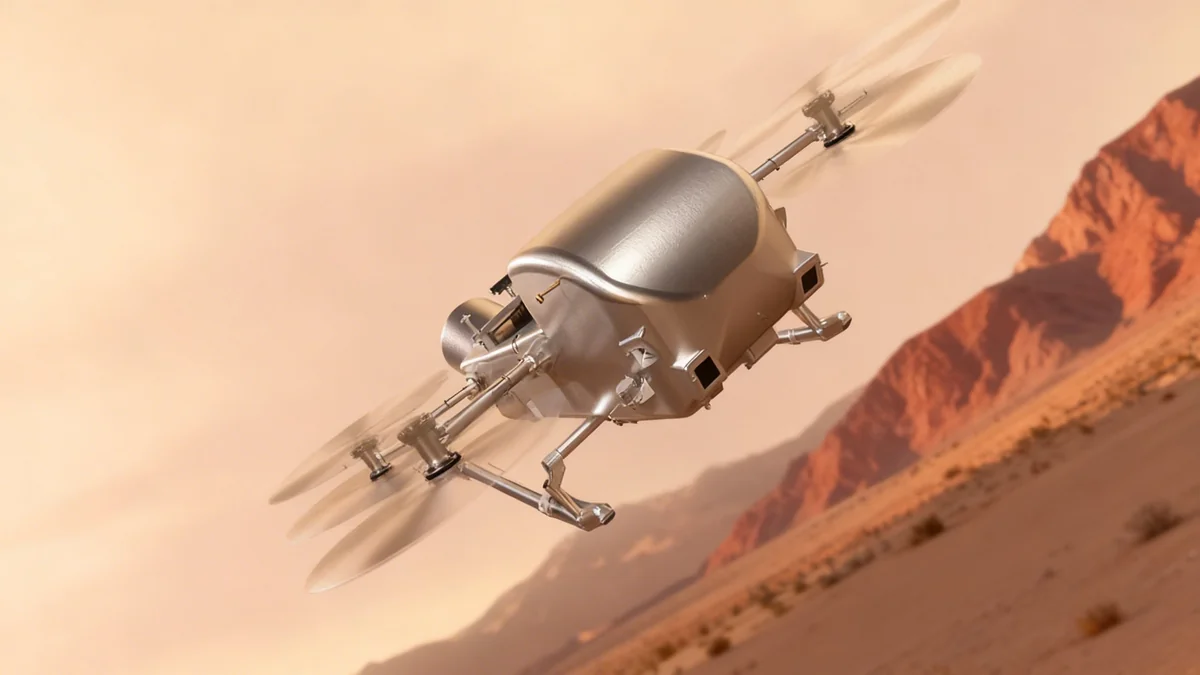


NASA's Psyche spacecraft has successfully completed its final laser communication test, transmitting data across 218 million miles (350 million kilometers) of deep space. This milestone concludes a series of experiments designed to prove the viability of high-speed optical communications for future interplanetary missions.
The technology, known as Deep Space Optical Communications (DSOC), has demonstrated data transfer rates far exceeding conventional radio systems. Over the course of 65 experiments, the mission has proven that lasers can significantly increase the amount of information sent from spacecraft exploring the solar system.
Key Takeaways
- NASA's Psyche mission finished its Deep Space Optical Communications (DSOC) technology demonstration.
- The final data transmission traveled 218 million miles (350 million kilometers) to Earth.
- The system successfully transferred a total of 13.6 terabytes of data during its operational tests.
- At one point, the DSOC system achieved a maximum download speed of 267 megabits per second (Mbps).
- The Psyche spacecraft will now use standard radio communications as it continues its journey to the asteroid 16 Psyche, with arrival expected in 2029.
A New Chapter in Space Communication
NASA's Psyche spacecraft, launched in October 2023, is on a long journey to a metal-rich asteroid of the same name. While its primary scientific mission will begin upon arrival in 2029, its secondary objective was to test the groundbreaking DSOC system. This experiment aimed to show that laser communications could offer bandwidth 10 to 100 times greater than the radio frequency systems currently used by space missions.
The final transmission on its own was a significant achievement, covering a distance more than 2.5 times the distance between the Earth and the Sun. This concluded a test campaign that began shortly after launch.
The First Link and Subsequent Successes
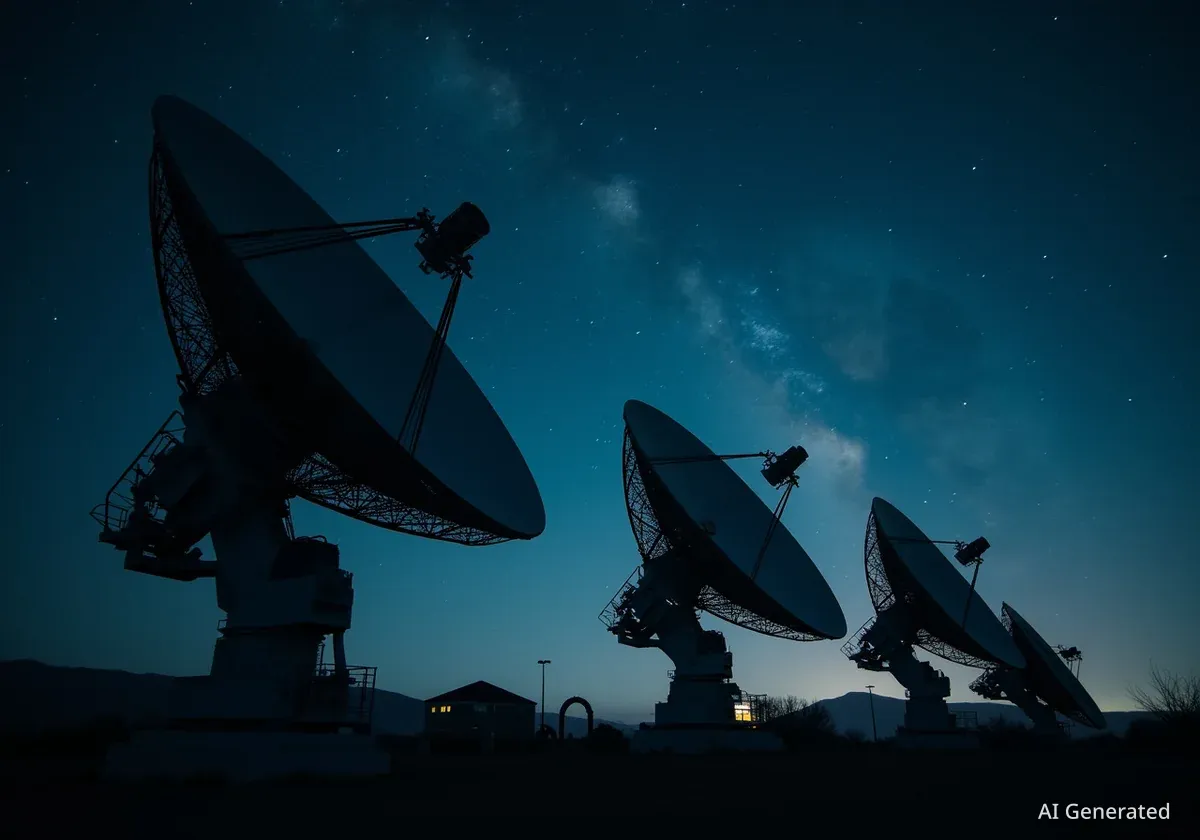
The DSOC system achieved its first successful data link on November 14, 2023. During this initial test, the spacecraft transmitted a near-infrared laser encoded with data over a distance of 10 million miles (16 million kilometers). The signal was received by the Hale Telescope at Caltech’s Palomar Observatory in California, marking the furthest-ever demonstration of optical communications.
Since that first connection, the system has consistently performed, pushing the boundaries of deep space data transfer. In one notable test, it streamed an ultra-high-definition video from 19 million miles (30.5 million kilometers) away, achieving a maximum data rate of 267 Mbps, a speed comparable to terrestrial broadband internet.
The Psyche Mission's Primary Goal
While the DSOC experiment has been a major focus, the Psyche spacecraft's ultimate destination is the asteroid 16 Psyche. Located in the main asteroid belt between Mars and Jupiter, this unique object is thought to be the exposed metallic core of a protoplanet. Scientists believe studying it could offer insights into the formation of terrestrial planets like Earth. The spacecraft is scheduled to orbit the asteroid for approximately 26 months, mapping its surface and studying its properties.
Pushing the Limits of Distance and Speed
Throughout its testing phase, the DSOC experiment has set multiple records and provided invaluable data for NASA engineers. The project demonstrated its capabilities across varying distances as Psyche's orbit carried it both closer to and farther from Earth.
The longest communication link was established when the spacecraft was approximately 307 million miles (494 million kilometers) away. Even at such extreme distances, the system was able to maintain a connection, proving the fundamental concept of pointing and tracking a narrow laser beam across the vastness of the solar system.
By the Numbers: DSOC Performance
- Total Experiments: 65 successful downlinks.
- Total Data Transferred: 13.6 terabytes.
- Final Transmission Distance: 218 million miles (350 million km).
- Farthest Transmission Distance: 307 million miles (494 million km).
- Peak Download Rate: 267 megabits per second (Mbps).
These tests have shown that while data rates decrease with distance, they remain significantly higher than what is possible with radio waves. For example, during a test in April 2024 from a distance of 225 million kilometers, the system still achieved a data rate of 25 Mbps. This is still fast enough to quickly transmit large amounts of scientific data and high-definition imagery.
"Technology unlocks discovery, and we are committed to testing and proving the capabilities needed to enable the Golden Age of exploration," stated acting NASA Administrator Sean Duffy in a blog post about the technology's potential.
Challenges and the Future of Laser Communications
While the DSOC experiment has been declared a success, laser communication presents unique challenges compared to traditional radio systems. The primary difficulty is the need for incredibly precise aiming. A radio signal spreads out widely, making it easier to capture, but a laser beam is highly concentrated. The spacecraft and ground station must be perfectly aligned for the signal to be received.
Another challenge is signal degradation, or attenuation, over long distances. The further the light travels, the weaker it becomes, which reduces the data rate. Despite these hurdles, NASA has demonstrated that the technology is robust and ready for further development.
Implications for Mars and Beyond
The success of DSOC paves the way for a new era of space exploration. Future missions, particularly those involving humans on Mars, will require high-bandwidth communication to transmit large volumes of data, including high-definition video streams, complex scientific measurements, and software updates.
Faster communication links will allow scientists on Earth to receive data from planetary missions more quickly, accelerating the pace of discovery. For crewed missions, reliable high-speed connections are essential for astronaut health monitoring, operational coordination, and connecting explorers with their families back home.
With the DSOC technology demonstration now complete, the Psyche spacecraft will rely on its conventional radio communication system for the remainder of its journey. The data gathered from these 65 laser experiments will now be used to design and build operational optical communication systems for the next generation of NASA's deep space probes and human exploration missions.