


Firefly Aerospace has successfully launched its Alpha rocket, achieving orbit for the first time in nearly a year. The mission, which lifted off from Vandenberg Space Force Base in California, marks a significant step for the company as it recovers from two major failures in 2025.
The flight, designated "Stairway to Seven," was primarily a test designed to validate the rocket's systems before a planned upgrade. The successful outcome clears the path for Firefly to introduce its more powerful Block II configuration on its next mission.
Key Takeaways
- Firefly Aerospace's Alpha rocket successfully reached orbit on March 11 from California.
- The mission, "Stairway to Seven," was a test flight following two significant failures in 2025.
- This was the final flight for the Alpha Block I configuration, validating systems for the upcoming Block II upgrade.
- The rocket reached an altitude of 151 miles (243 kilometers) and deployed a demonstrator payload for Lockheed Martin.
A Crucial Return to Flight
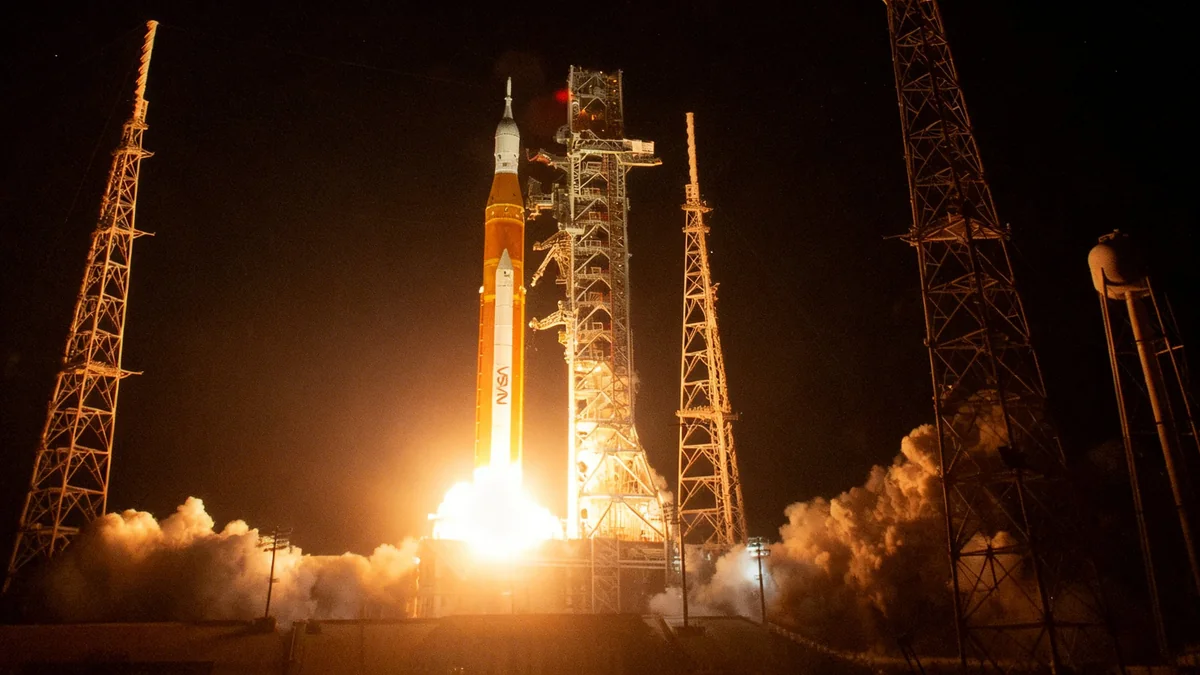
Firefly Aerospace's Alpha rocket soared into the evening sky from Space Launch Complex-2 at Vandenberg Space Force Base on March 11, with liftoff occurring at 8:50 p.m. ET. The launch proceeded without any apparent issues, providing a much-needed success for the Texas-based aerospace firm.
Approximately two minutes and 40 seconds into the flight, the rocket's first stage successfully separated. The upper stage then ignited to continue its journey toward space. The engine cut off as planned about eight minutes after liftoff, placing the vehicle into a stable orbit 151 miles (243 kilometers) above Earth.
Following the successful orbital insertion, Firefly confirmed the mission's success.
"Mission success! Alpha Flight 7 achieved nominal performance and validated key systems ahead of our Block II configuration upgrade," the company stated.
Overcoming Past Setbacks
This successful flight comes after a challenging period for the Alpha rocket program. In 2025, the company experienced two high-profile failures that delayed its launch schedule and raised questions about the vehicle's reliability.
The first incident occurred in April 2025 during the "Message in a Booster" mission, which failed to deliver a satellite for Lockheed Martin to its intended orbit due to an anomaly during stage separation. A second, more dramatic setback happened last September when an Alpha first stage exploded on the test stand during pre-launch preparations for this very mission.
Investigation and Recovery
An investigation into the September 2025 test stand explosion determined the cause was not a fundamental design flaw. Instead, the company traced the failure to a "process error during stage one integration that resulted in a minute hydrocarbon contamination." This finding allowed Firefly to move forward with building a new booster without a major redesign, though it added months to the development timeline.
These events prompted the company to re-evaluate its approach for the seventh Alpha flight, shifting its focus from a commercial payload delivery to a dedicated test mission to ensure all systems were performing as expected.
A Strategic Test for the Future
The primary goal of the "Stairway to Seven" mission was not to deploy an operational satellite but to serve as a comprehensive test flight. Firefly aimed to achieve what it called "nominal first and second stage performance" to gather critical data before moving on to its next-generation rocket.
While the mission was focused on validation, it did carry a small demonstrator payload for Lockheed Martin, continuing the partnership between the two companies despite the previous launch failure. The successful deployment of this payload adds another layer to the mission's success.
Alpha Flight 7 by the Numbers
- Total Launch Attempts: 7
- Successful Missions: 3
- Target Orbit: 151 miles (243 km)
- Time to Orbit: Approximately 8 minutes
- First Stage Separation: ~2 minutes, 40 seconds post-launch
This flight served as a requalification for the Alpha vehicle, demonstrating that the issues from 2025 have been resolved. It provides a critical data set that will inform the final preparations for the rocket's next iteration.
Paving the Way for Alpha Block II
With the successful completion of this mission, Firefly Aerospace has officially retired the Alpha Block I design. The company is now shifting its full attention to the debut of its Block II configuration, which is scheduled for the rocket's eighth flight.
The upgraded Alpha Block II will feature several key improvements designed to enhance its performance and payload capacity. It will stand approximately 7 feet (2.13 meters) taller than its predecessor, which has a height of 96.7 feet (29.6 meters).
Other significant upgrades include:
- Improved avionics systems
- Enhanced power systems
- Better thermal protections for the vehicle
The success of "Stairway to Seven" is therefore a critical bridge to Firefly's future ambitions. By validating the core systems of the Alpha platform, the company has built a foundation of confidence for introducing the more capable and powerful Block II rocket to the commercial launch market.