
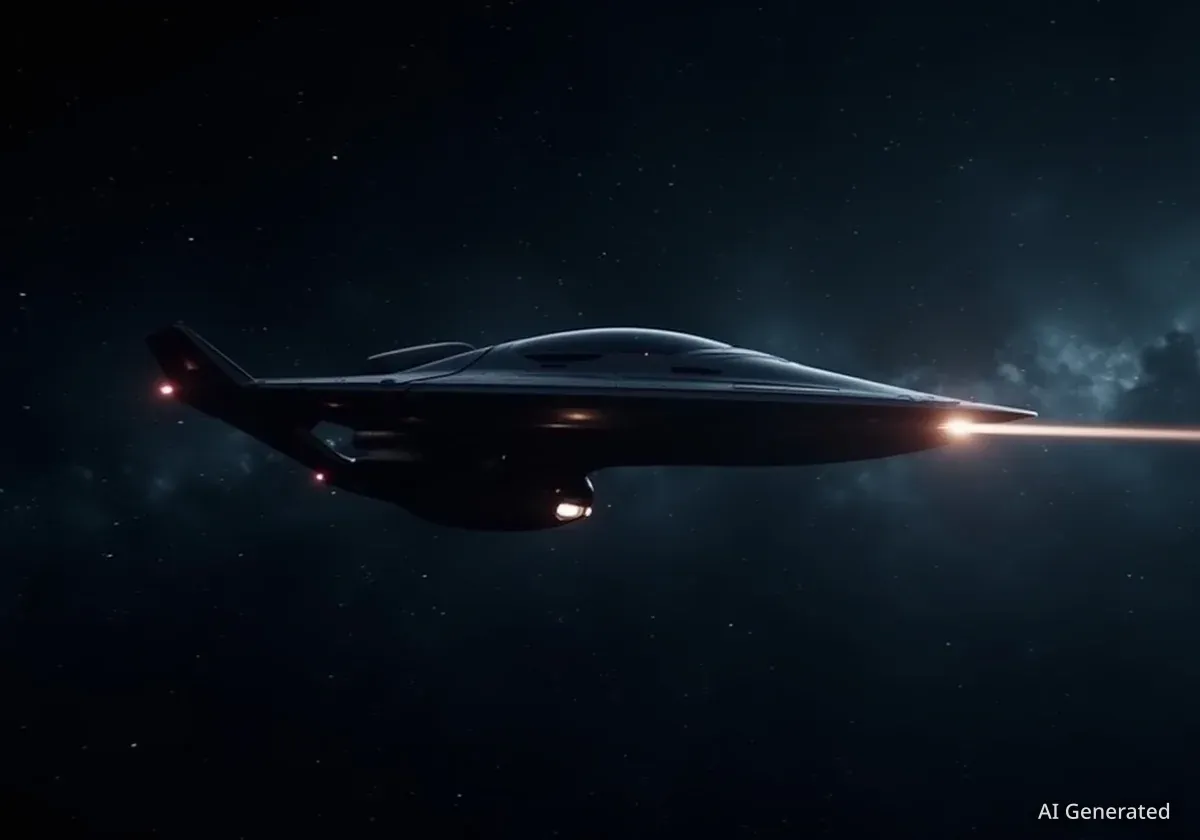
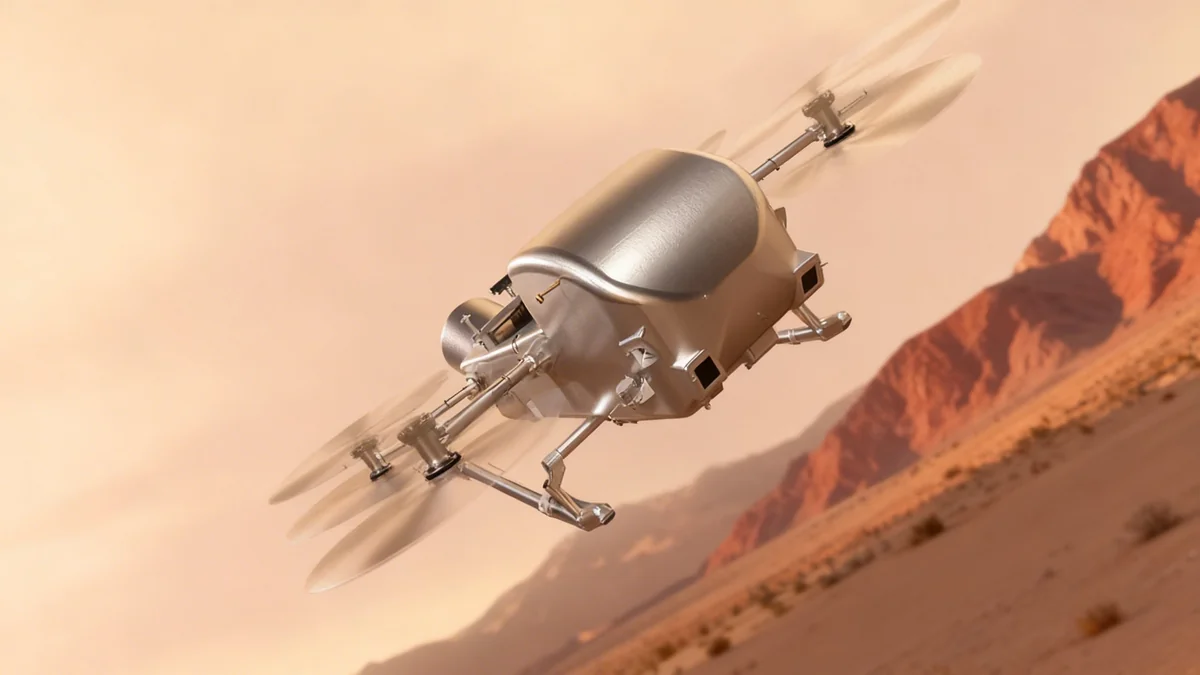


A new generation of spacecraft technology, known as electric propulsion, is fundamentally changing how humanity explores the solar system. By using electricity to generate thrust, these systems offer significantly higher fuel efficiency than traditional chemical rockets, enabling longer and more ambitious missions to distant planets and asteroids.
Key Takeaways
- Electric propulsion systems are far more fuel-efficient than conventional chemical rockets, allowing for longer missions and greater payload capacity.
- Key technologies include ion drives and Hall effect thrusters, which use electricity to accelerate propellant like xenon gas.
- Successful missions like NASA's Dawn and ESA's BepiColombo have already demonstrated the effectiveness of electric propulsion for deep space travel.
- Major challenges remain, including low thrust levels that require long acceleration periods and the need for robust power sources in deep space.
- Future missions, including elements of the Artemis program, will increasingly rely on this technology to explore the Moon, Mars, and beyond.
A New Approach to Space Travel
For decades, space exploration has relied on chemical rockets, which generate immense power by burning fuel rapidly. This method provides the high thrust needed to escape Earth's gravity but is inefficient for long journeys across the vast distances of space.
Electric propulsion represents a different philosophy. Instead of a powerful, short-lived push, it provides a gentle but continuous thrust over months or even years. While the initial acceleration is slow, this sustained force allows a spacecraft to eventually reach very high speeds with a fraction of the propellant required by a chemical engine.
Chemical vs. Electric Propulsion
Think of it as the difference between a sprinter and a marathon runner. A chemical rocket is a sprinter, using a massive burst of energy to get off the starting line quickly. An electric propulsion system is a marathon runner, maintaining a steady, efficient pace that allows it to cover far greater distances over time.
How Electric Propulsion Systems Work
Electric propulsion systems operate by converting electrical power, typically from solar panels or a nuclear source, into kinetic energy. They do this by expelling propellant at extremely high velocities. The two most common types are ion thrusters and Hall effect thrusters.
Ion Drives
Ion drives are one of the most established forms of electric propulsion. They work by using an electric field to ionize, or give an electrical charge to, atoms of a neutral gas like xenon. These charged ions are then accelerated by another powerful electric field and expelled from the back of the engine at speeds up to 90,000 miles per hour (about 145,000 km/h).
According to Newton's third law, for every action, there is an equal and opposite reaction. The force of these ions being pushed out provides a small but constant thrust that propels the spacecraft forward.
Hall Effect Thrusters
Hall effect thrusters also use xenon propellant but employ a different mechanism. In these engines, a magnetic field is used to trap electrons, creating a powerful electric field. When xenon gas is introduced, the electrons ionize it, and the resulting plasma of ions is accelerated out of the thruster, generating thrust.
These thrusters generally offer more thrust than ion drives but are slightly less fuel-efficient, providing engineers with different options depending on mission requirements.
Efficiency Measured by Specific Impulse
The efficiency of a rocket engine is measured by its specific impulse. A higher number means more thrust is generated per unit of propellant. While a typical chemical rocket has a specific impulse of around 450 seconds, an ion thruster can achieve a specific impulse of over 3,000 seconds, making it nearly ten times more efficient.
Proven Technology in Real-World Missions
While the concept may sound futuristic, electric propulsion has already been successfully used on several groundbreaking space missions, proving its value for deep space exploration.
NASA's Dawn Mission
Launched in 2007, NASA's Dawn spacecraft was a landmark mission that relied entirely on ion propulsion. This technology enabled Dawn to do something no spacecraft had done before: orbit two separate celestial bodies. It first entered orbit around the giant asteroid Vesta in 2011 and later traveled to and orbited the dwarf planet Ceres in 2015.
"Without ion propulsion, a mission like Dawn, with its extended duration, multiple targets, and complex orbital maneuvers, would have been impossible with a conventional chemical rocket system of a similar size," a NASA mission overview stated.
The mission's success provided definitive proof that electric propulsion was a viable and powerful tool for exploring the solar system.
BepiColombo's Journey to Mercury
The BepiColombo mission, a joint project between the European Space Agency (ESA) and the Japan Aerospace Exploration Agency (JAXA), is currently on a seven-year journey to Mercury. The spacecraft uses a solar electric propulsion system to navigate one of the most challenging trajectories in the solar system.
Traveling to Mercury requires the spacecraft to constantly brake against the Sun's immense gravity. The continuous, low-thrust capability of its electric engines is essential for performing the delicate maneuvers needed to enter orbit around the planet in 2025.
The Future with the Artemis Program
Electric propulsion is also a key component of NASA's Artemis program, which aims to return humans to the Moon. The Lunar Gateway, a small space station that will orbit the Moon, will use an advanced Solar Electric Propulsion (SEP) system for station-keeping and maneuvering. This system will be critical for maintaining its unique orbit and supporting lunar missions for years to come.
Challenges and Future Directions
Despite its significant advantages, electric propulsion faces several limitations that currently prevent its widespread adoption for all types of missions.
Key Limitations
- Low Thrust: The primary drawback is very low thrust. This means electric propulsion cannot be used to launch a rocket from Earth and requires long periods of operation to achieve high speeds in space.
- Power Requirements: These systems require a large and continuous supply of electrical power. For missions traveling far from the Sun, solar panels become less effective, potentially requiring heavier and more complex nuclear power sources.
- Development Costs: The technology is complex and the initial research and development costs are high, which can be a barrier for some missions.
- Durability: Missions lasting a decade or more place extreme demands on thruster components, and ensuring their long-term reliability in the harsh environment of space remains an ongoing area of research.
Engineers and scientists are actively working to overcome these challenges. Future advancements are focused on developing more powerful and durable thrusters, creating lighter and more efficient power systems, and integrating artificial intelligence to optimize thrust profiles and navigation.
As these technologies mature, electric propulsion is set to play an even larger role in our exploration of the cosmos. It holds the key to enabling ambitious missions to the outer planets, exploring asteroids, and potentially even sending the first robotic probes on interstellar journeys, truly redefining the boundaries of what is possible in space.