

A key U.S. Senate committee has introduced a measure aimed at extending the operational life of the International Space Station (ISS) until at least 2032. The proposal, part of a draft NASA authorization bill, would also prevent the agency from deorbiting the aging outpost until a privately-owned commercial replacement is fully operational.
The move signals growing concern among legislators about a potential gap in American access to low-Earth orbit, a scenario that could leave China as the sole operator of a permanent orbital station.
Key Takeaways
- A Senate committee has drafted a bill to extend ISS operations from 2030 to 2032.
- The proposal forbids NASA from deorbiting the ISS until a commercial space station is active.
- The measure is driven by delays in the development of commercial orbital outposts.
- Lawmakers are pushing for accelerated timelines for NASA to contract with private station builders.
A Legislative Push to Avert an Orbital Gap
The Senate Committee on Commerce, Science, and Transportation has formally included the provision within the NASA Authorization Act of 2026. This legislative effort, led by Senators Ted Cruz and Maria Cantwell, directly addresses the future of the United States' presence in space.
The core of the proposal is twofold: first, to push the station's retirement date back by two years, and second, to create a direct link between the end of the ISS and the beginning of its commercial successors. This effectively creates a safety net, ensuring the U.S. does not prematurely abandon its foothold in low-Earth orbit.
While the bill has yet to pass the full Senate and House of Representatives or receive a presidential signature, its inclusion in the authorization act is a significant statement of intent from lawmakers who oversee the nation's space agency.
The Aging Outpost
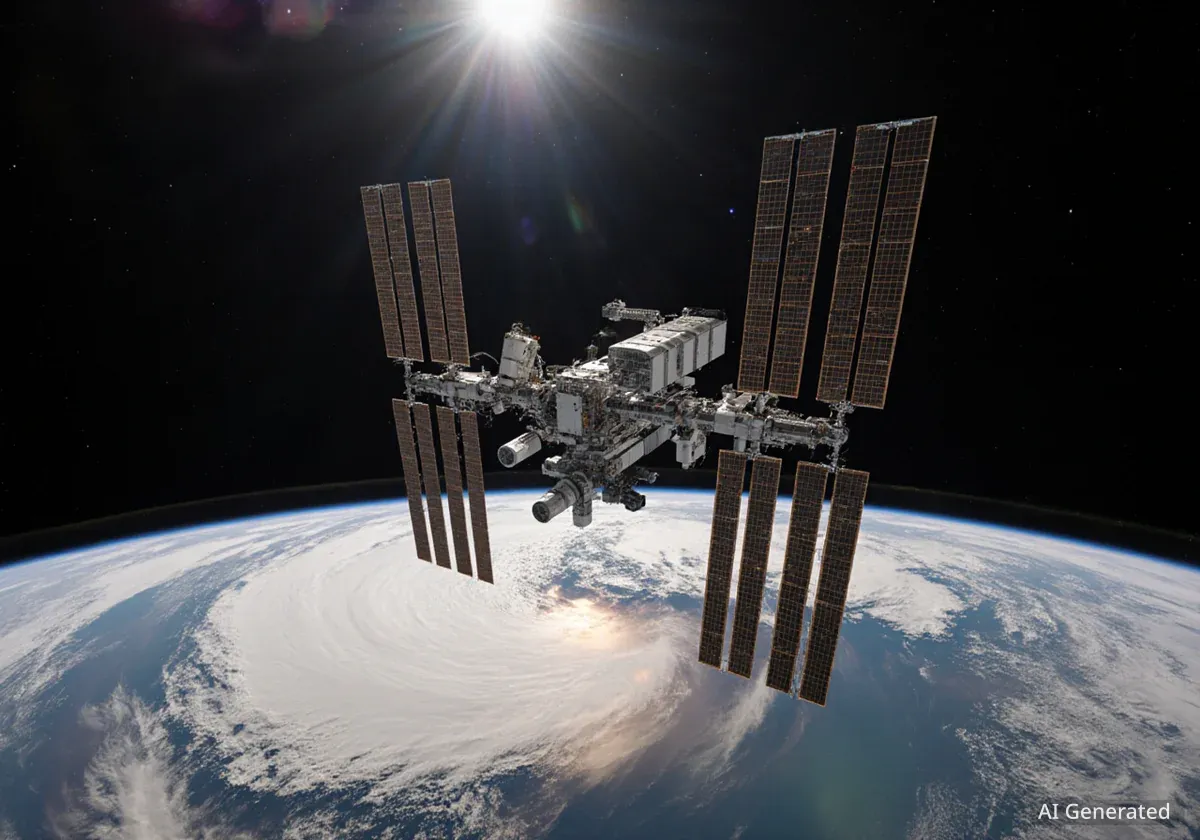
The International Space Station represents a monumental achievement in global cooperation and engineering. Construction began in 1998, and it has been continuously inhabited by astronauts since November 2000. However, the station was originally designed for a 15-year lifespan. The harsh environment of space, with its extreme temperatures and constant radiation, takes a toll on the structure.
The Race for a Commercial Successor
NASA has been actively fostering a commercial market for space stations. The agency's strategy relies on private companies building, owning, and operating new orbital destinations where NASA can be one of many customers, purchasing services for astronaut housing and scientific research.
Companies like Axiom Space are already developing modules intended to first attach to the ISS before separating to become independent stations. However, the timelines for these ambitious projects have experienced delays, a common occurrence in the complex field of spaceflight development.
The Senate bill aims to accelerate this transition. It sets forth an aggressive schedule for NASA, requiring the agency to:
- Release its requirements for commercial stations within 60 days of the bill's passage.
- Issue a final solicitation for proposals within 90 days.
- Enter into contracts with at least two companies within 180 days.
This legislative pressure underscores the urgency felt in Washington to ensure a seamless handover from the government-run ISS to a new era of commercial orbital platforms.
A High-Stakes Retirement Plan
Decommissioning the ISS is a complex and risky operation. In June 2024, NASA awarded a contract worth up to $843 million to SpaceX. The company is tasked with developing a specialized vehicle designed to safely guide the massive structure—roughly the size of an American football field—into a controlled reentry over a remote area of the Pacific Ocean.
Geopolitical and Strategic Implications
The debate over the ISS's retirement extends beyond engineering and finance into the realm of global strategy. For over two decades, the station has been a symbol of international partnership, most notably between the U.S. and Russia, who jointly operate critical systems.
A primary concern for U.S. policymakers is the prospect of ceding low-Earth orbit to other nations. Currently, the only other operational space station is China's Tiangong, which became operational in 2021. If the ISS were to be deorbited before an American commercial replacement is available, the U.S. would lose its capacity for long-duration human spaceflight for the first time in a generation.
The language in the draft bill is stark, explicitly linking the station's retirement to the successful operation of a commercial replacement. This reflects a long-held worry in both NASA and Congress that the end of the ISS could leave the country without a crucial platform for science, technology development, and maintaining leadership in space.
This potential gap could have far-reaching consequences, impacting everything from microgravity research to astronaut training for future deep-space missions to the Moon and Mars.
The Path Forward for the ISS
The future of the International Space Station now rests at the intersection of technical feasibility, commercial readiness, and political will. The station's hardware is aging, and the risk of a critical system failure increases with each passing year. NASA and its international partners must continually assess the structure's viability and safety.
Simultaneously, the pressure is mounting on the private sector to deliver on the promise of commercial space stations. The success of these new ventures is no longer just a business goal; it is now being framed as a matter of national strategic interest.
The proposed legislation from the Senate committee is a clear message to NASA and the aerospace industry: the United States cannot afford a gap in space. By attempting to extend the life of the ISS while simultaneously lighting a fire under the commercial sector, lawmakers are trying to build a bridge to the future of human activity in low-Earth orbit, ensuring the lights stay on, one way or another.