
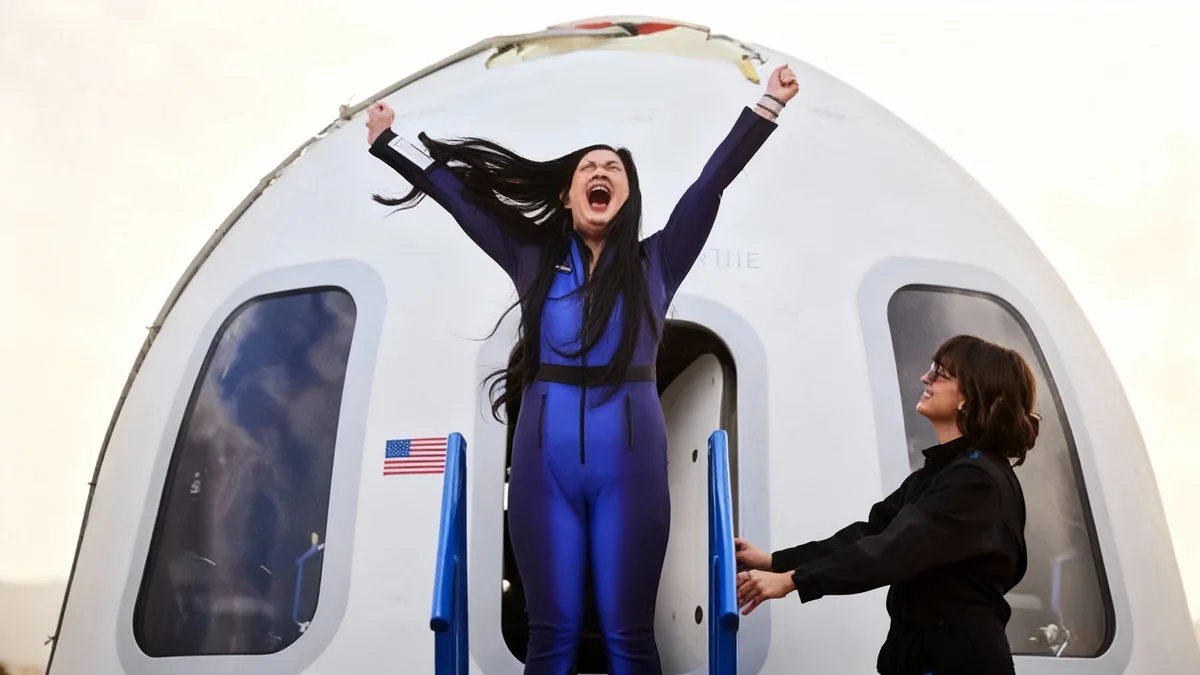


Bioastronautics research scientist Amanda Nguyen has revealed she experienced a severe bout of depression following her historic Blue Origin space flight in April 2025. The 34-year-old activist, who became the first Vietnamese woman to travel to space, described facing a “tsunami of harassment” and an “avalanche of misogyny” that overshadowed her personal and scientific achievements.
In a public statement, Nguyen detailed the profound mental health impact of the backlash, which she said left her unable to get out of bed for a week and struggling with her emotions for months after the 11-minute suborbital flight.
Key Takeaways
- Amanda Nguyen, the first Vietnamese woman in space, suffered from severe depression after her Blue Origin flight.
- She attributes her mental health struggles to a wave of online harassment and misogynistic criticism.
- The backlash overshadowed her scientific work, including women's health experiments conducted in space.
- Despite the negative experience, Nguyen says the flight also brought positive attention to her research and advocacy.
The Aftermath of a Historic Flight
Amanda Nguyen’s journey to space was the culmination of a lifelong dream, one she had deferred after becoming a prominent civil rights activist. As the child of Vietnamese boat refugees, her presence on the flight held deep personal and historical significance, marking the 50th anniversary of the end of the U.S.-Vietnam War.
However, the celebration was short-lived. The all-female crew, which included high-profile figures such as pop star Katy Perry and journalist Lauren Sánchez, became a target for intense public criticism. The flight was scrutinized for its cost and environmental impact, but much of the commentary directed at the crew was personal and, according to Nguyen, deeply misogynistic.
In a statement posted on Instagram eight months after the mission, Nguyen shared the extent of the emotional toll. “I did not leave Texas for a week, unable to get out of bed,” she wrote. The scientist described the experience as an “onslaught no human brain has evolved to endure.”
A Personal Struggle Away from the Public Eye
The harassment had a direct and lasting impact on her well-being. Nguyen recalled a conversation with fellow crew member and U.S. news anchor Gayle King just days after the flight. “I told her my depression might last for years,” she revealed.
The NS-31 Mission
The Blue Origin New Shepard mission, designated NS-31, launched from Texas in April 2025. The fully automated rocket carried its six-woman crew on an 11-minute flight that crossed the Kármán line, the internationally recognized boundary of space. The crew also included aerospace engineer Aisha Bowe and film producer Kerianne Flynn.
The situation remained difficult for weeks. A month after returning to Earth, Nguyen received a call from a senior staff member at Blue Origin. “I had to hang up on him because I could not speak through my tears,” she explained, illustrating the depth of her distress.
An Achievement Buried by Misogyny
For Nguyen, the backlash felt like a deliberate erasure of her professional and personal accomplishments. She is not only an astronaut but also a dedicated scientist who conducted several experiments during the flight, many focused on women's health.
“Everything I had worked for... was buried under an avalanche of misogyny.”
Nguyen listed the achievements she felt were ignored: “my women's health research, the years I had trained for this moment, the experiments I operated in space, the history that was being made as the Vietnamese woman astronaut.” She also highlighted the promise she kept to herself as a survivor of sexual assault, a personal journey that led her to become a Nobel Peace Prize-nominated activist for survivor rights.
A Life of Advocacy
Before training as an astronaut, Amanda Nguyen was widely recognized for her civil rights work. After being raped in college, she navigated a difficult and confusing legal system, which inspired her to found the civil rights organization Rise. Her advocacy led to the creation of the Sexual Assault Survivors' Bill of Rights, which was passed unanimously by the U.S. Congress and signed into law.
The public narrative surrounding the flight largely ignored these details, focusing instead on criticism of the crew and the concept of commercial space tourism. This shift in focus was a significant source of Nguyen's grief.
Finding a Path to Recovery
After months of struggle, Nguyen says the “fog of grief has started to lift.” She credits the support she received from the public and her followers for helping her through the darkest period. “You all saved me,” she wrote in her post, offering thanks to those who sent positive messages.
Despite the immense personal cost, she acknowledges that some good came from the mission. She noted that “there has been overwhelming good that has come out of [the flight].”
These positive outcomes include:
- Increased media attention for her research into women's health.
- New opportunities to meet with world leaders in connection with her civil rights advocacy.
- A platform to continue inspiring others, particularly from underrepresented communities.
Nguyen’s story highlights a growing concern about the mental health of public figures in the digital age, especially women in high-profile fields like science and technology. Her willingness to speak openly about her depression and its cause sheds light on the severe impact of online harassment and the challenges of navigating public life after achieving a monumental goal.