
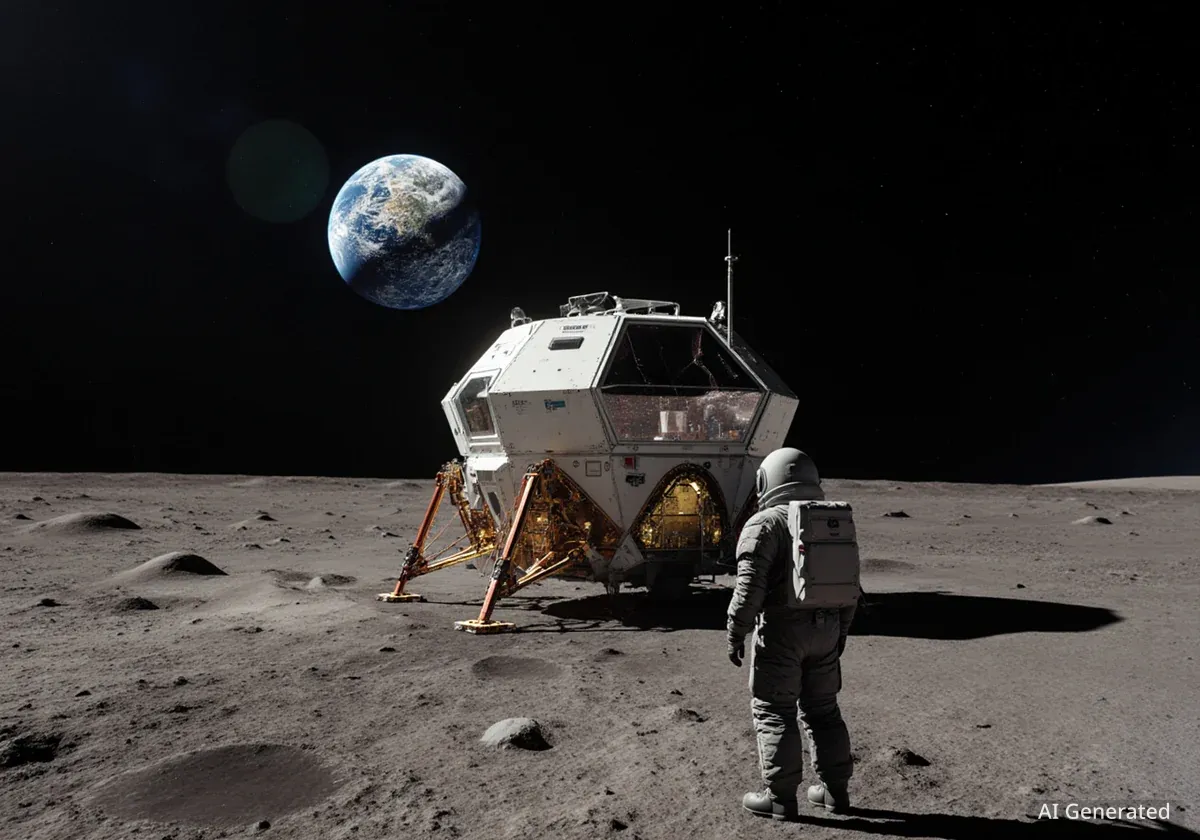
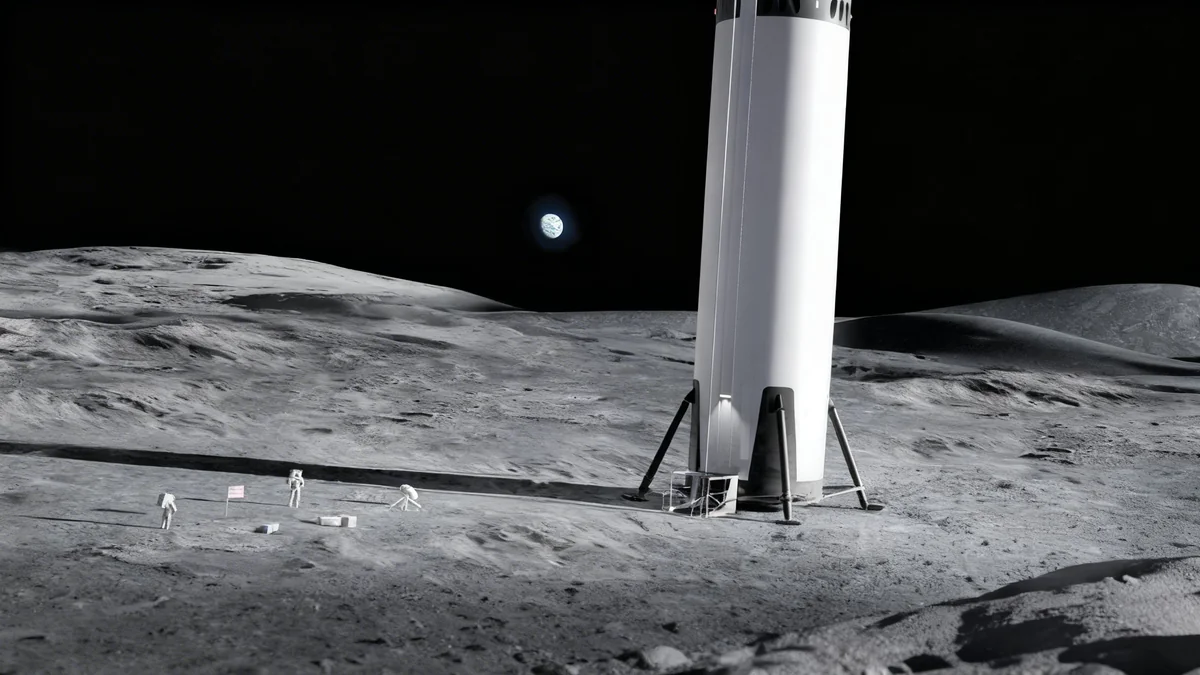


In a significant strategic reversal, Elon Musk announced his company SpaceX will now prioritize establishing a permanent city on the Moon before attempting to colonize Mars. The declaration marks a major shift in the long-term vision for the private spaceflight company, which has for years championed the Red Planet as its ultimate destination.
The pivot comes as NASA grapples with its own lunar ambitions, recently delaying its Artemis II mission until at least March due to technical issues. Meanwhile, routine operations continue, with the upcoming Crew-12 mission to the International Space Station highlighting the complex coordination required in Earth's orbit.
Key Takeaways
- Elon Musk has reversed his long-held "Mars first" strategy, now focusing on building a lunar city.
- The announcement was made public through a post on the social media platform X.
- NASA's Artemis II mission, intended to send astronauts around the Moon, is delayed until at least March because of rocket fuel leaks.
- The Crew-12 mission to the International Space Station remains a priority for NASA and SpaceX.
A New Lunar Focus for SpaceX
For years, the singular goal driving SpaceX's development of its Starship vehicle has been the colonization of Mars. However, a recent announcement from CEO Elon Musk has fundamentally altered that trajectory. According to a post on X, the company will now concentrate its efforts on building a sustained human presence on the Moon.
This change aligns SpaceX's commercial goals more closely with those of NASA's Artemis program, which aims to return humans to the lunar surface. A lunar base would serve as a crucial proving ground for technologies and procedures needed for more distant destinations like Mars.
Developing infrastructure on the Moon presents its own set of formidable challenges, including radiation shielding, resource extraction, and creating life support systems. A lunar settlement would allow scientists and engineers to solve these problems in a location that is only a three-day journey from Earth, offering a significant logistical advantage over a Mars mission that would take many months.
The Strategic Advantage of a Moon Base
Establishing a lunar outpost offers several practical benefits. It can act as a deep-space refueling station, potentially making missions to Mars and beyond more efficient and less costly. Furthermore, the Moon is a rich source of resources, including water ice in its polar craters, which can be converted into breathable air and rocket propellant.
The shift could also accelerate the development of a lunar economy, involving robotics, resource mining, and tourism. By focusing on the Moon first, SpaceX positions itself as a key partner for both government agencies and future commercial ventures in cislunar space.
NASA's Artemis Program
The Artemis program is NASA's multi-stage initiative to return astronauts to the Moon for the first time since the Apollo missions. The long-term goal is to establish a sustainable presence on the lunar surface and in orbit, which will serve as a stepping stone for future human missions to Mars. SpaceX is already a critical partner, with its Starship selected as the human landing system for the Artemis III mission.
The Mars Dream Deferred, Not Abandoned
While the focus has shifted, the goal of reaching Mars has not been discarded. Proponents of the new strategy argue that a lunar city is a necessary and logical step toward the Red Planet. The experience gained from building and operating a base in the harsh lunar environment would be invaluable for a future Martian colony.
A Mars mission presents significantly greater challenges than a lunar one. The travel time is longer, the communication delay is substantial, and the opportunities for emergency resupply or evacuation are virtually nonexistent with current technology. Mastering off-world living on the Moon first mitigates many of the risks associated with the first human missions to Mars.
"Building a city on the moon first allows us to test critical life-support, construction, and resource utilization technologies in a relatively close and accessible environment before taking the much larger leap to Mars," explained a former NASA engineer not authorized to speak publicly.
This pragmatic approach may ultimately increase the probability of a successful Mars colony by ensuring the technology and procedures are thoroughly tested and refined on a closer celestial body.
NASA's Lunar Ambitions Face Delays
Even as commercial interest in the Moon grows, NASA's own flagship lunar program is experiencing setbacks. The highly anticipated Artemis II mission, which is planned to fly a crew of four astronauts on a journey around the Moon, has been pushed back to March at the earliest.
The delay was prompted by the discovery of leaks during a critical "wet dress rehearsal" for the agency's powerful Space Launch System (SLS) rocket. This test involves loading the rocket with its super-cooled liquid propellants to check for any issues before launch. Identifying and resolving these leaks is essential for crew safety.
What is a Wet Dress Rehearsal?
A wet dress rehearsal is a comprehensive pre-launch test where mission controllers and the launch team run through the entire countdown procedure, including filling the rocket's fuel tanks with propellant (the "wet" part). It is designed to uncover any technical or procedural issues before the actual launch day.
This postponement underscores the immense complexity and difficulty of deep-space exploration. The SLS is one of the most powerful rockets ever built, and ensuring its reliability is NASA's top priority before putting astronauts on board.
Coordinating a Busy Orbital Highway
Amidst these ambitious long-term plans, the day-to-day work of space exploration continues. NASA and SpaceX are carefully coordinating launch schedules to ensure the upcoming Crew-12 mission can proceed to the International Space Station (ISS) without conflict.
This intricate scheduling highlights the increasingly busy environment of low-Earth orbit. With multiple government and commercial missions in progress, careful planning is required to manage launch windows, orbital trajectories, and docking procedures at the ISS.
The successful execution of missions like Crew-12 is fundamental to maintaining a human presence in space and conducting vital scientific research. These routine flights provide the operational foundation upon which future, more ambitious goals—whether on the Moon or Mars—will be built.