
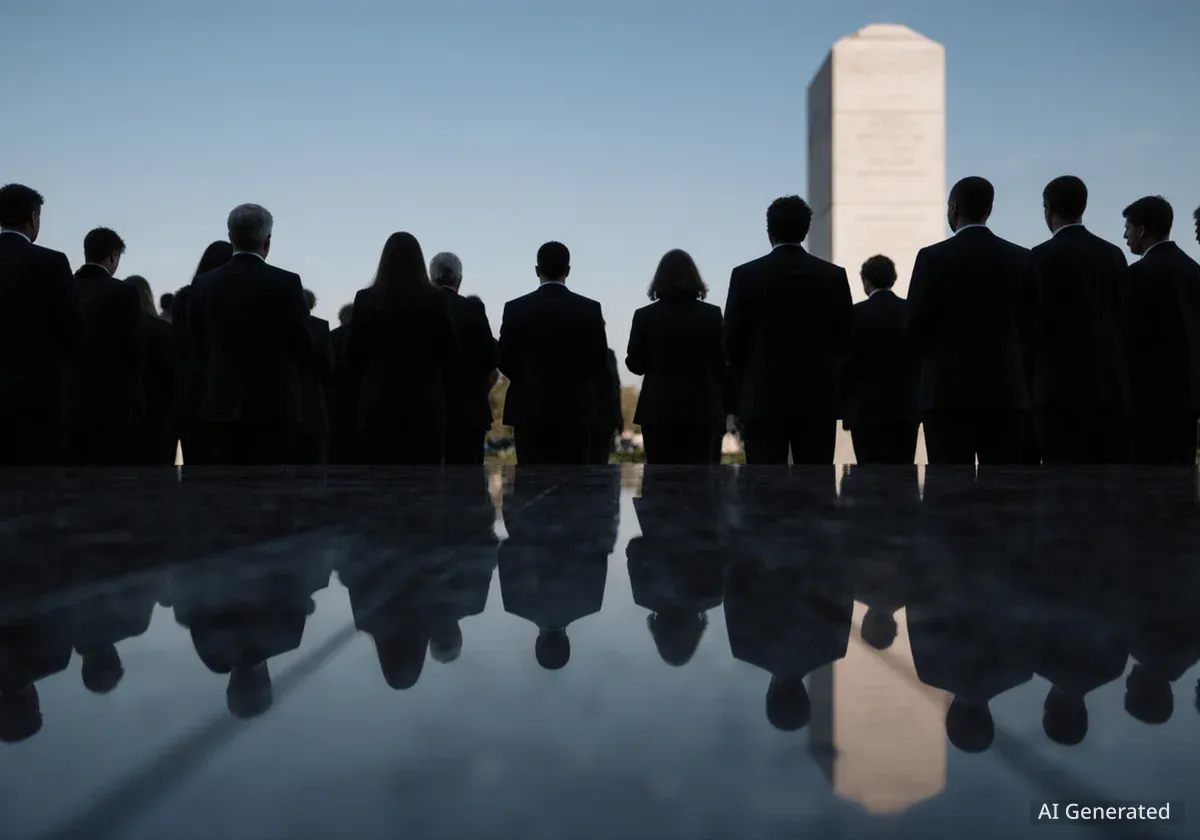

Families, friends, and NASA officials gathered at Kennedy Space Center on Thursday to mark the 40th anniversary of the Space Shuttle Challenger disaster. The solemn ceremony honored the seven astronauts who lost their lives on January 28, 1986, when the shuttle broke apart just 73 seconds after liftoff.
The event was part of NASA's annual Day of Remembrance, a day dedicated to reflecting on the lives lost in the pursuit of space exploration, including the crews of Apollo 1 and Space Shuttle Columbia.
Key Takeaways
- Families of the Challenger crew gathered at Kennedy Space Center for a 40th-anniversary memorial ceremony.
- The event was part of NASA's Day of Remembrance, which also honors the crews of the Apollo 1 fire and the Columbia disaster.
- Speakers emphasized the personal loss that continues to be felt and the critical safety lessons learned from the tragedy.
- The ceremony took place at the Space Mirror Memorial, which is inscribed with the names of 25 astronauts lost in the line of duty.
A Somber Reflection at the Launch Site
At the Kennedy Space Center visitor complex, hundreds gathered before the Space Mirror Memorial, a large black granite wall etched with the names of fallen astronauts. The mood was one of quiet reflection as family members of the Challenger, Columbia, and Apollo 1 crews came together to share their memories.
Alison Smith Balch, daughter of Challenger pilot Michael Smith, spoke through tears about the day her life was forever altered. She described the tragedy not just as a personal loss but as a moment that touched the entire nation.
"In that sense, we are all part of this story," she told the assembled mourners, capturing the collective grief that followed the disaster.
Her mother, Jane Smith-Holcott, shared the enduring nature of her loss. "Every day I miss Mike," she said. "Every day's the same."
The Seven Members of Crew STS-51-L
The Challenger mission, designated STS-51-L, was notable for its diverse crew, which included the first civilian to fly into space, schoolteacher Christa McAuliffe. Her inclusion was part of the Teacher in Space Project, a NASA program designed to inspire students and spur interest in science and math.
The seven crew members lost were:
- Francis R. "Dick" Scobee, Commander
- Michael J. Smith, Pilot
- Judith A. Resnik, Mission Specialist
- Ellison S. Onizuka, Mission Specialist
- Ronald E. McNair, Mission Specialist
- Gregory B. Jarvis, Payload Specialist
- S. Christa McAuliffe, Payload Specialist and Teacher in Space
Two retired teachers who were contenders for the Teacher in Space program, Bob Veilleux and Bob Foerster, attended the memorial. Foerster, who was one of the 10 finalists, expressed gratitude that space education expanded after the accident, ensuring the crew's legacy was not just one of tragedy but of inspiration.
A Technical Failure with Devastating Consequences
The investigation into the disaster determined that unusually cold temperatures on the morning of the launch compromised the integrity of the O-ring seals in the shuttle's right solid rocket booster. This failure allowed hot gas to escape, leading to the structural breakup of the spacecraft 73 seconds into its flight.
Lessons in Vigilance and Safety
The Challenger disaster, and later the Columbia accident in 2003, forced a difficult period of introspection at NASA. Investigations revealed not only technical failures but also a dysfunctional organizational culture that downplayed safety concerns.
Kelvin Manning, Deputy Director of the Kennedy Space Center, spoke at the ceremony about the importance of these "humble and painful lessons." He stressed that a commitment to safety and vigilance is required "now more than ever," especially with the current high frequency of rocket launches and upcoming astronaut missions to the moon.
NASA's Day of Remembrance
Held annually on the fourth Thursday of January, NASA's Day of Remembrance honors members of the NASA family who lost their lives while furthering the cause of exploration and discovery. The day serves as a reminder of the risks of spaceflight and the sacrifices made by the crews of Apollo 1 (January 27, 1967), Challenger (January 28, 1986), and Columbia (February 1, 2003).
A Legacy Carved in Granite
The names of the Challenger crew are permanently inscribed on the Space Mirror Memorial alongside 18 other astronauts who died in service to the space program. This includes the three astronauts from the Apollo 1 fire and the seven from the Columbia disaster.
Lowell Grissom, brother of Apollo 1 commander Gus Grissom, also attended the Florida ceremony. Reflecting on the immense potential of those who were lost, he captured the sentiment of many family members present.
"You always wonder what they could have accomplished," he said. "There was a lot of talent there."
As NASA pushes forward into a new era of space exploration, the memory of these crews serves as a powerful and permanent reminder of the human cost of reaching for the stars and the unwavering need to prioritize the safety of those who dare to make the journey.