
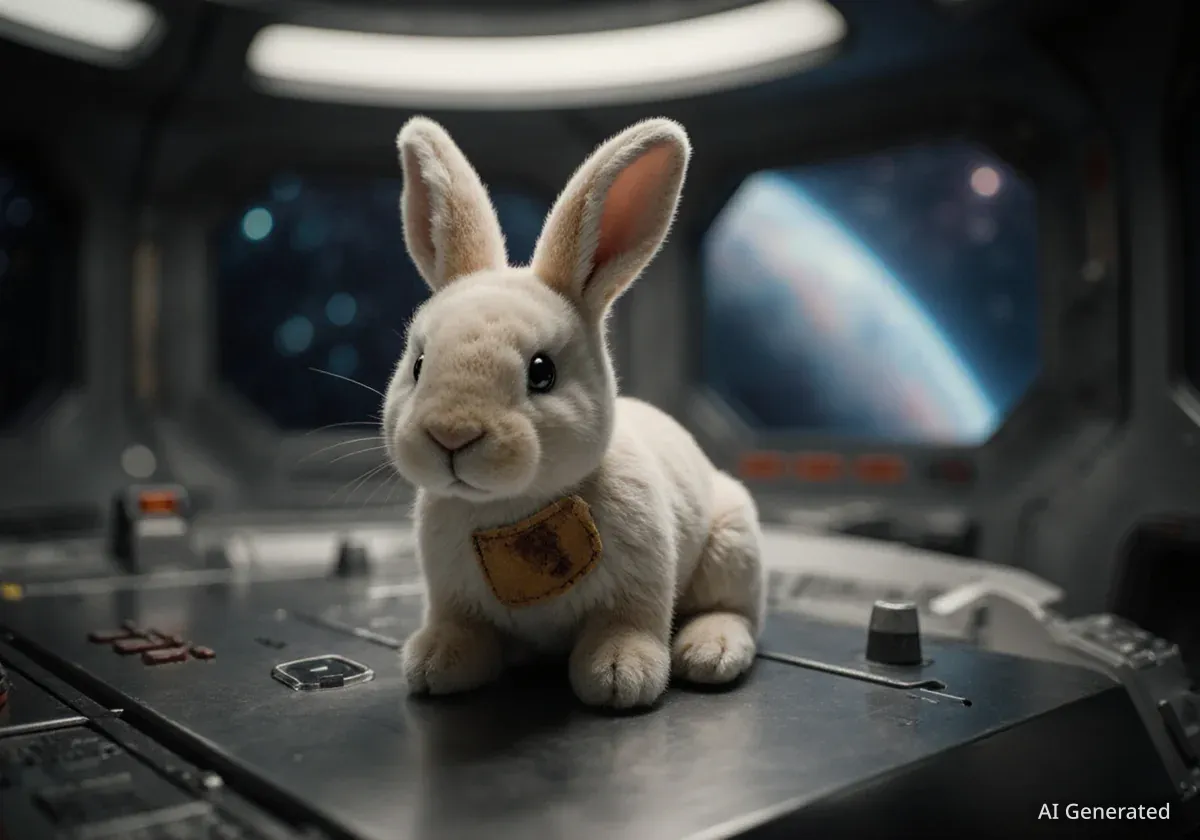

The upcoming SpaceX Crew-12 mission to the International Space Station will carry a special piece of cargo: a small stuffed rabbit belonging to the three-year-old daughter of NASA astronaut Jessica Meir. The personal item highlights the human side of space travel as the crew prepares for a long-duration stay in orbit.
The four-person international crew is scheduled to launch aboard a SpaceX Falcon 9 rocket from Cape Canaveral, Florida, early next Wednesday. Their mission marks one of the final long-term expeditions to the aging space station before its planned retirement.
Key Takeaways
- NASA astronaut Jessica Meir will bring her 3-year-old daughter's stuffed rabbit to the International Space Station (ISS).
- The SpaceX Crew-12 mission is set to launch next week from Florida for an eight-month stay.
- The international crew includes astronauts from NASA, the European Space Agency, and Roscosmos.
- This mission is one of the last scheduled for the ISS, which is set to be deorbited in 2030.
A Comforting Companion in Orbit
Astronauts often take small, personal items with them on long missions to maintain a connection to home. For Jessica Meir, a 48-year-old marine biologist and veteran astronaut, the choice was a small stuffed rabbit that holds special significance.
Meir explained that her daughter has an identical rabbit that will remain on Earth. The plan is to create a shared experience between mother and child, separated by 250 miles of space. "One will stay down here with her, and one will be there with us, having adventures all the time," Meir stated during a recent news conference.
She added that the crew will send photos of the space-bound rabbit back to her family, creating a unique and continuous link during her extended absence. This simple gesture underscores the profound personal challenges astronauts face, particularly those with young children.
A Tradition of Personal Mementos
Taking personal items, or the "Personal Preference Kit" (PPK), is a long-standing tradition in spaceflight. These small packages allow astronauts to carry items like family photos, wedding rings, or university flags. These mementos serve as a crucial psychological link to their lives on Earth during months of isolation.
Challenges of a Spacefaring Parent
This mission is Meir's first since becoming a mother. She previously served as a flight engineer during a 2019-2020 expedition, where she participated in the first all-female spacewalks. Now, she faces the emotional weight of leaving her young daughter for what is expected to be an eight-month mission.
"It does make it a lot difficult in preparing to leave and thinking about being away from her for that long, especially when she's so young, it's really a large chunk of her life," Meir shared.
Despite the difficulty, Meir hopes the experience will have a lasting positive impact. She views her work in space as a meaningful endeavor that her daughter can one day understand and appreciate. "I hope that one day, she will really realize that this absence was a meaningful one, because it was an adventure that she got to share into... and hopefully it will inspire her and other people around the world," she added.
The International Crew-12 Mission
Meir is part of a diverse, four-person team. The Crew-12 mission roster includes:
- Jessica Meir: NASA Astronaut, Mission Specialist
- Jack Hathaway: NASA Astronaut, Pilot
- Sophie Adenot: European Space Agency (ESA) Astronaut
- Andrey Fedyaev: Roscosmos Cosmonaut
The crew will launch from Florida and travel to the ISS to replace the returning Crew-11. The previous mission, Crew-11, returned to Earth a month ahead of schedule following the first medical evacuation in the space station's history, adding another layer of significance to the incoming crew's duties.
The International Space Station: By the Numbers
- Altitude: Orbits approximately 250 miles (400 kilometers) above Earth.
- Size: Spans the area of a football field.
- Occupancy: Continuously inhabited by humans for over 25 years.
- Future: Scheduled for a controlled deorbit into the Pacific Ocean in 2030.
Final Expeditions to an Orbiting Landmark
The Crew-12 mission is taking place during a transitional period for the ISS. The orbiting laboratory, a symbol of international cooperation for a quarter-century, is nearing the end of its operational life. NASA and its international partners have scheduled the station to be decommissioned and guided into a remote area of the Pacific Ocean in 2030.
As one of the last crews to call the ISS home, the astronauts of Crew-12 will be responsible for conducting vital scientific research while also preparing the station for its eventual retirement. Their work continues the legacy of scientific discovery that has been the hallmark of the ISS program.
The mission serves as a reminder that while humanity's presence in low-Earth orbit is evolving, the personal stories of the individuals who venture there remain a powerful and inspiring part of the journey.